The Relationship of Trust Between Sendai Girls and Its Fans
Thursday Women’s Pro Wrestling
November 5, 2026 (Installment #479)
By Hirotsugu Suyama
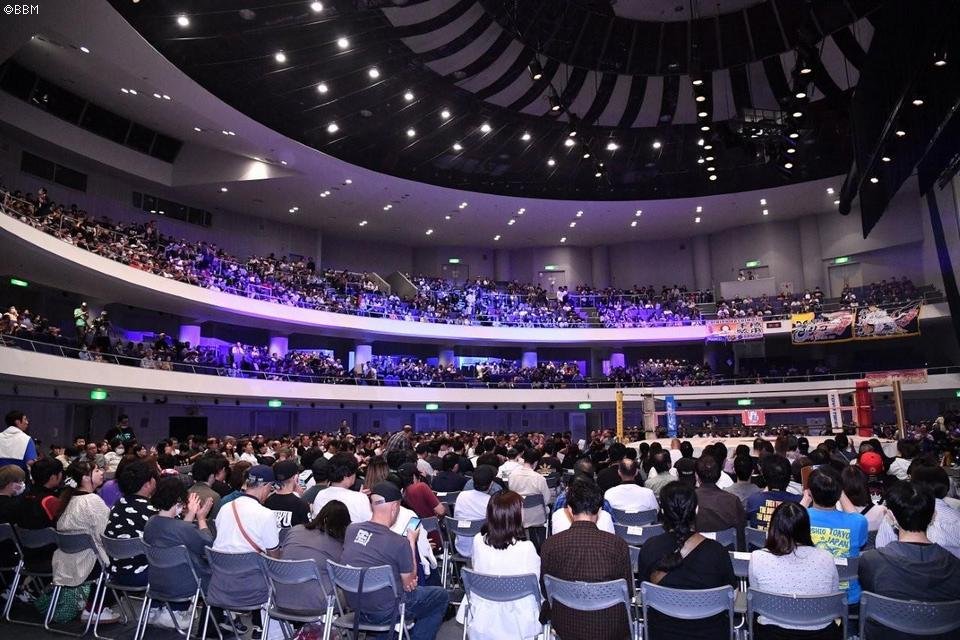
Although I only cover events in person within the Tokyo metropolitan area, Sendai Girls has been drawing a string of sellout crowds lately. When I looked into it, out of the 24 events held since June, a remarkable 21 of them drew full houses. Moreover, that includes not only their home base of Sendai and the Tokyo metropolitan area, but also Osaka, Nagoya, Niigata, Aizu, and Fukuoka, among others.
Among the events that packed the house, some took place in large arenas like Xebio Arena Sendai, while others were held in relatively small venues. Even so, regardless of the location or size of the venue, the fact that they are stringing together one full house after another is a wonderful thing.
Yet over the more than 20 years since its founding, Sendai Girls has also gone through numerous periods where it struggled at the box office. One event that stands out in particular is the Korakuen Hall show held on July 11, 2021.
Because this event took place right in the middle of the COVID-19 pandemic, seating capacity had already been reduced to one-third of its normal setup to prevent infection, and on top of that, Meiko Satomura, who had signed with WWE, was not on the card. Although the official attendance figure was not announced, it is believed to have been the lowest-drawing Korakuen Hall show since the promotion was founded.
Chihiro Hashimoto, who successfully defended the World Championship by defeating Mio Momono in the main event of that show, shed tears of frustration as she looked out at the sparse crowd. It was also a period when young wrestlers were leaving the promotion one after another, and there was no sign whatsoever of a so-called V-shaped recovery.
Attendance for Sendai Girls clearly began turning upward starting in the summer of 2024. The biggest factor was Meiko Satomura’s retirement road, which kicked off in July of that year. Partly because Satomura’s matches in Japan had dropped drastically after she signed with WWE, her retirement tour generated tremendous drawing power.
However, while a retirement tour for a popular star like Satomura brings a special boom in demand for a promotion, in the vast majority of cases there is a backlash once that wrestler retires, resulting in a drop in attendance. Yet with Sendai Girls, even after Satomura retired, attendance did not fall at all; in fact, it grew even further. This is an exceptional case, even when including men’s promotions.
It goes without saying, but to attend a pro wrestling show, you first have to buy a ticket that is by no means cheap. Attending a single event also requires spending a considerable amount of time, including the round trip to and from the venue. For fans, therefore, adding another promotion to the list of ones they attend regularly is a decision with a fairly high hurdle.
The reason Sendai Girls’ attendance increased despite this is likely because fans who visited a venue for the first time, or for the first time in a long while, felt a strong desire to see what would come next after Satomura’s retirement and became repeat attendees.
The reasons fans choose which promotions to attend vary widely, including the quality of the lineup, the participating wrestlers, and the travel time from home or work. Naturally, how satisfying an event feels is also crucial, and after the main event of a show that really delivers, the ticket counter is always bustling with activity.
The sum total of all these factors amounts to the level of trust fans have in a promotion. A trusted promotion can sell tickets even before announcing a card, whereas a promotion that has lost that trust will struggle with sluggish ticket sales even when it announces a strong lineup.
One reliable indicator for measuring the level of trust in each promotion is the trend in attendance. Attendance for a trusted promotion either trends upward or remains stable at a high level. Of course, attendance is influenced not only by trust, but also by the lineup, the date of the show, and even wrestlers being sidelined by injury or absence, so using it as a gauge requires comparing figures over at least a three-month period.
At the risk of ruffling some feathers, I sometimes see or hear wrestlers and promotion officials making comments or social media posts along the lines of, “Our attendance may be underwhelming, but our shows are great.” It is true that in the short term, match quality is not always reflected at the box office. However, when that situation drags on for three months or more, it is all too common that a nasty disconnect has opened up between how the promotion and wrestlers evaluate themselves and how the fans see them.
Recently in Sendai Girls, the event that truly put the fans’ high level of trust on full display was the October 10 show at Sendai Sunplaza. The main event of this show was a World Championship match in which champion Chihiro Hashimoto was challenged by Spike Nishimura, who came to Japan from the United States, joined the promotion last August, and has just over three years of experience under her belt.
Even though Spike is a rapidly improving prospect who combines size with athleticism, it was still a very bold main event to book for a major show. Yet the Sunplaza event drew a full house that surpassed last year’s attendance. Naturally, tickets for an event do not sell on the strength of the main event alone, but many of the fans who came to the venue put their faith in Sendai Girls and in champion Hashimoto, who had accepted Spike’s challenge.
Incidentally, at the opening of this show, President Satomura announced that she would make a major announcement at the November 22 Korakuen Hall event. Since President Satomura had a smile on her face at the time, it is unlikely to be bad news. In fact, nine out of ten people must have predicted that the major announcement will be the official confirmation of a show at Nippon Budokan, a cherished dream she has held for a decade.
If that prediction proves right, wouldn’t it be an inspiring story that gives courage to many people? After all, having overcome countless crises since their founding through steady, persistent effort, these women are now on the verge of fulfilling their long-held dream through the trust they have earned from their fans.
Translation Notes:
- 木曜女子プロレス (Mokuyō Joshi Puroresu / Thursday Women’s Pro Wrestling): Hirotsugu Suyama’s long-running weekly editorial column on the Weekly Pro Wrestling (Shūkan Pro Wrestling) mobile site, published every Thursday. This installment marks the 479th entry in the series.
- 超満員 (Chō-man’in): A standard Japanese pro wrestling attendance designation meaning “super full house” or “sellout crowd.” In paragraphs 1 and 2, Suyama highlights that 21 out of 24 Sendai Girls shows since June have reached this benchmark across both major arenas like Xebio Arena Sendai and smaller regional touring stops. Note also that the original Japanese text in paragraph 1 contains a minor typographical double comma (
大阪、、名古屋), which has been smoothed out in English. - 間引かれていた (Mabikarete ita) & ワーストの入り (Wāsuto no iri): Mabiku literally refers to thinning out seedlings or crops, and became standard terminology during the COVID-19 pandemic in Japan for spacing out venue seating (leaving empty seats between ticket holders) to comply with infection-control mandates. Wāsuto no iri (“worst turnout/attendance”) is localized as “lowest-drawing.”
- V字回復 (V-ji kaifuku): “V-shaped recovery,” a Japanese business and economic term commonly used in puroresu journalism to describe a promotion bouncing back sharply from a severe slump in attendance or roster departures.
- 引退ロード (Intai rōdo) & 特需 (Tokuju): Intai rōdo (“retirement road” or “retirement tour”) refers to the multi-month farewell campaign leading up to a major star’s final match—in this case, Meiko Satomura’s run from July 2024 until her retirement in April 2025. Tokuju (“special demand” or “windfall boom”) is an economic term denoting a temporary spike in sales driven by a one-off event, which normally leads to a post-event slump (handō, “backlash/rebound drop”) once the star retires.
- カドが立つことを書いてしまえば (Kado ga tatsu koto o kaite shimaeba): The idiom kado ga tatsu (“corners stand out”) means to cause friction, offend people, or make things awkward. Suyama uses this preface in paragraph 13 (“At the risk of ruffling some feathers”) before delivering a pointed critique of wrestlers and promoters who excuse prolonged poor attendance by insisting their in-ring product is strong.
- タチが悪い乖離 (Tachi ga warui kairi): Kairi means divergence, gap, or disconnect, while tachi ga warui means bad-natured, malignant, or troublesome. Suyama argues that if poor box office numbers persist for three months or longer despite self-praise from the locker room, it signals a “nasty disconnect” between internal self-evaluation and fan perception.
- 進境著しい大器 (Shinkyō ichijirushii taiki) & かなり攻めたカード (Kanari semeta kādo): Shinkyō ichijirushii means making rapid, remarkable progress, and taiki (“great vessel”) refers to a major talent or high-ceiling prospect. Semeta kādo (literally an “aggressive/attacking match card”) is industry vernacular for an ambitious, risky, or bold booking decision—specifically, putting Spike Nishimura (who joined Sendai Girls in August 2025 with just over three years of career experience) in the main event of a major Sendai Sunplaza Hall show against reigning World Champion Chihiro Hashimoto.
- 10年来の悲願 (Jūnen-rai no higan): Higan (originally a Buddhist term for a vow of deep compassion, now used in sports and journalism for a long-cherished dream or ultimate goal). Running an event at Nippon Budokan has been a stated goal of Meiko Satomura and Sendai Girls’ Pro Wrestling for a decade.