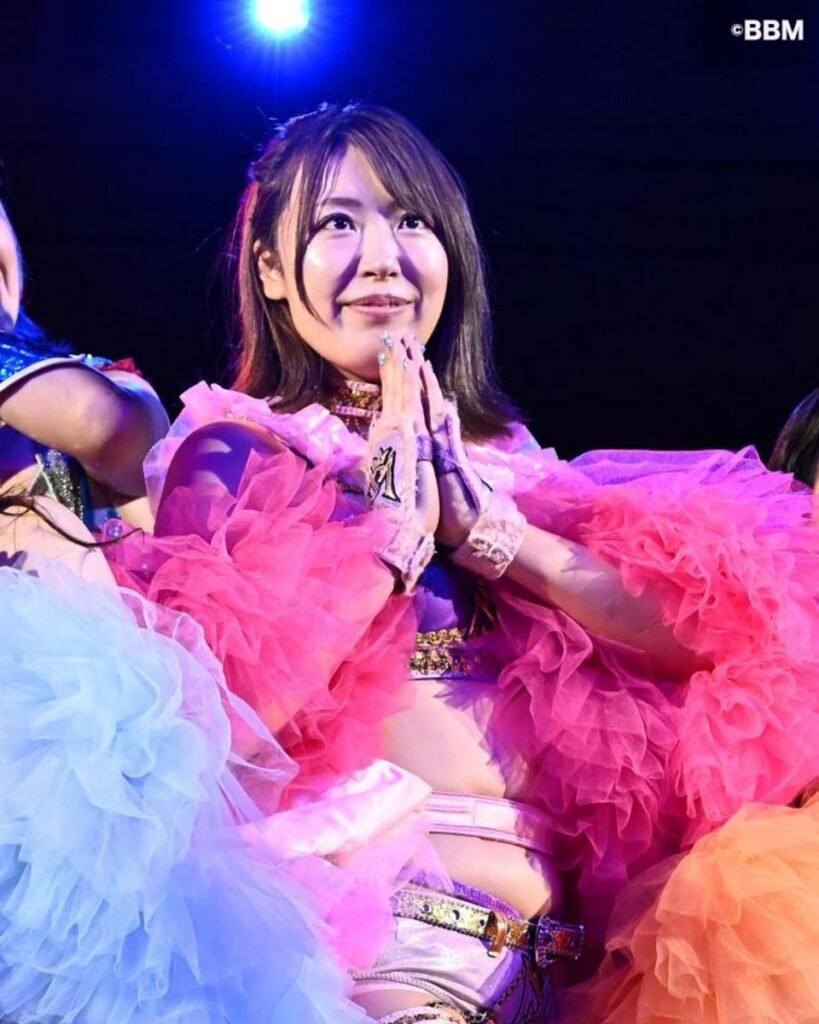
Thoughts Upon Hearing the News of Mai Sakurai’s Departure
After competing in the opening match of Marigold’s October 3 show in Osaka, Mai Sakurai took the microphone in the ring to announce that she will be leaving the promotion following the October 24 event at Ryogoku Kokugikan. Coming on the heels of Utami Hayashishita’s departure in April, this marks yet another sudden exit announcement.
While I will leave the full play-by-play details to Weekly Pro Wrestling’s match reports, Sakurai did not share the specific reasons behind her decision to step away. However, her post-match comments hinted at struggles with both her physical and mental condition, and it was announced that she will miss both the afternoon and evening shows in Sapporo on the 18th. Further updates regarding her future plans may be announced around the October 10 show at Korakuen Hall.
When asked about Sakurai’s departure announcement, President Rossy Ogawa offered comments that can be summarized as follows:
“People talk about how our founding members keep leaving one after another, but there’s no point fixating solely on that. What’s done is done. That said, every promotion has mountains of things happening behind the scenes that can never be made public. I just want the fans to enjoy what is presented to them out in the open.”
For fans already reeling from the abruptness of the announcement, reading these remarks likely poured fuel on the fire of their anger. Depending on how one reads between the lines, his words could easily be taken to imply that the fault lay with Sakurai. Yet at the same time, I suspect many promotion heads read that quote and nodded along in sympathy, thinking, “I know that feeling all too well!”
Leaving a promotion is a monumental decision for any wrestler. Doing so inevitably leaves some fans disappointed, and whether a talent goes freelance afterward or makes another promotion their primary battleground, future success is never guaranteed.
Even so, setting aside extreme cases like unpaid wages, the primary reasons wrestlers choose to walk away typically come down to a desire to bet on the broader possibilities waiting outside the promotion, or a shift in their relationship with their home promotion (which does not necessarily mean a change for the worse). However, personal circumstances behind the scenes often play a major role in tipping the scales.
By its very nature, the relationship between a wrestler and a promotion out of the public eye is built on countless small, day-to-day interactions, making it nearly impossible to unpack in full detail at a press conference. Furthermore, when personal matters weigh heavily into the decision, it ceases to be an issue involving only the wrestler herself, making a candid public explanation all the more difficult.
Outside of clear-cut cases like Giulia or Mina Shirakawa, where a move to a major American promotion is already locked in, these underlying complexities are precisely why wrestlers often sound somewhat vague or guarded during departure press conferences. Precisely because leaving a promotion is a life-altering crossroads for a wrestler, spelling out the exact reasons in public tends to be fraught with difficulty.
Every time fans hear or read comments to the effect of, “I am leaving the home of my promotion to set off on a new adventure,” plenty of people no doubt roll their eyes and think, “Here we go again… What’s the real story?” Yet within the confines of a departure press conference—where so much must remain unsaid—those words are also filled with the utmost sincerity a wrestler can muster, distilling their genuine, unvarnished feelings into the only phrasing they can publicly share.
As for the “things that can never be made public” that President Ogawa mentioned, I view that remark as the result of decades of pent-up frustration—accumulated over a long career in the wrestling business whenever talents depart—finally boiling over and slipping out.
The reason I believe so many other promotion executives would sympathize with President Ogawa’s words is that anyone who has ever sat beside a departing wrestler at a press conference has undoubtedly experienced that exact same sense of helplessness. Much like a married couple, parting ways cleanly is rarely a simple matter for a wrestler and a promotion.
In any case, with Sakurai’s exit now official, out of the seven wrestlers who attended Marigold’s inaugural press conference back in April two years ago (excluding the former Actwres girl’Z contingent who crashed the conference to appeal for roster spots), only two will remain with the promotion past October 24: Victoria Yuzuki and Nao Ishikawa. What’s more, Ishikawa remains sidelined for an extended period with no public explanation given for her absence.
Roster turnover is practically an inevitability in professional wrestling. In fact, it is precisely because veterans retire or move on that younger talents get more opportunities to step up, keeping a promotion fresh and revitalized. Even so, there is no denying that for a promotion less than two and a half years removed from its launch, Marigold has experienced a remarkably high number of departures.
In my view, the biggest factor behind this steady stream of exits from Marigold lies in President Ogawa’s core philosophy: “Never chase after those who choose to leave.” Specifically, once a wrestler expresses an intention to depart, he makes zero effort to talk them into staying (to my knowledge, the sole exception to this rule was Mayu Iwatani). While there are other promotion heads who aren’t overly aggressive about talking talent out of leaving, President Ogawa is the only one who refuses to do so altogether.
His refusal to talk wrestlers into staying is by no means out of apathy or laziness. In President Ogawa’s vision, a women’s pro wrestling promotion is a constantly evolving collective where new forces are always rising to the forefront. Within that kind of environment, if a wrestler feels her spot is shrinking or sees greater potential on the outside, parting ways is ultimately for the best of both parties. Some may find that approach cold and unsentimental, but for President Ogawa, it is a non-negotiable line in the sand.
The real question now is whether he can fill the void left by departing wrestlers with rising young talent and guide Marigold toward sustainable growth and renewal. President Rossy Ogawa’s process of “scrap and build” marches on.
Translation Notes
- 熱戦譜 (Nessenpu — “Match Reports”): In Paragraph 2, Suyama refers readers to Nessenpu (literally “Record of Fierce Battles”). This is the longstanding proprietary name for the match results and play-by-play archive section on Weekly Pro Wrestling. It has been localized naturally as “match reports” to preserve flow.
- 怒りに油が注がれた (Ikari ni abura ga sosogareta): Literally “oil was poured onto their anger”. Localized to the natural English idiom “poured fuel on the fire of their anger”.
- 歯切れが悪い (Hagire ga warui): Literally “poor crispness when biting/speaking,” an idiom used when someone speaks evasively, hesitantly, or without clear resolution. In the context of departure press conferences, it captures the guarded, roundabout way wrestlers speak when bound by non-disclosure agreements or personal privacy, and is localized here as “sound somewhat vague or guarded.”
- ことほどさように (Kotohodo sayō ni): A slightly literary, old-school Japanese phrase meaning “to such a degree” or “as this illustrates,” characteristic of veteran columnist Hirotsugu Suyama’s writing style. Integrated smoothly into “parting ways cleanly is rarely a simple matter.”
- The Inaugural Press Conference Seven & Former Actwres girl’Z Contingent: Suyama notes that of the seven founding roster members introduced at Dream Star Fighting Marigold’s April 15, 2024 launch press conference (Giulia, Utami Hayashishita, MIRAI, Mai Sakurai, Victoria Yuzuki, Nao Ishikawa, and Nanae Takahashi), only Victoria Yuzuki and Nao Ishikawa will remain after October 24, 2026. He explicitly separates this initial group from the six former Actwres girl’Z members (Miku Aono, Misa Matsui, Kouki Amarei, Chika Goto, Natsumi Showzuki, and CHIAKI) who famously interrupted the end of that press conference alongside Fuka to demand entry into the promotion.
- 去る者は追わず (Saru mono wa owazu): A classic Japanese proverb meaning “Do not chase those who leave”. In joshi puroresu journalism, this phrase is famously associated with Rossy Ogawa’s management philosophy dating back to his tenure running STARDOM, contrasting with promoters who aggressively counter-offer or guilt talent into re-signing.
- ドライ (Dorai): A wasei-eigo (Japanese-coined English) term derived from “dry.” Rather than literal dryness, it describes a pragmatic, unsentimental, or strictly businesslike attitude—contrasted in Japanese culture with wetto (“wet”), which implies emotional attachment and personal sentimentality. Localized as “cold and unsentimental”.
- 拡大再生産 (Kakudai saiseisan) & スクラップ&ビルド (Sukurappu & Birudo): Kakudai saiseisan (“expanded reproduction”) is an economic term widely used in Japanese business writing to describe reinvesting resources to achieve continuous, compounding organizational growth, localized here as “sustainable growth and renewal”. Scrap and build is a favored Japanese business and wrestling-journalism loan-phrase describing the deliberate cycle of dismantling/moving on from an older generation of talent to rebuild around youth.