Date: November 1, 2026
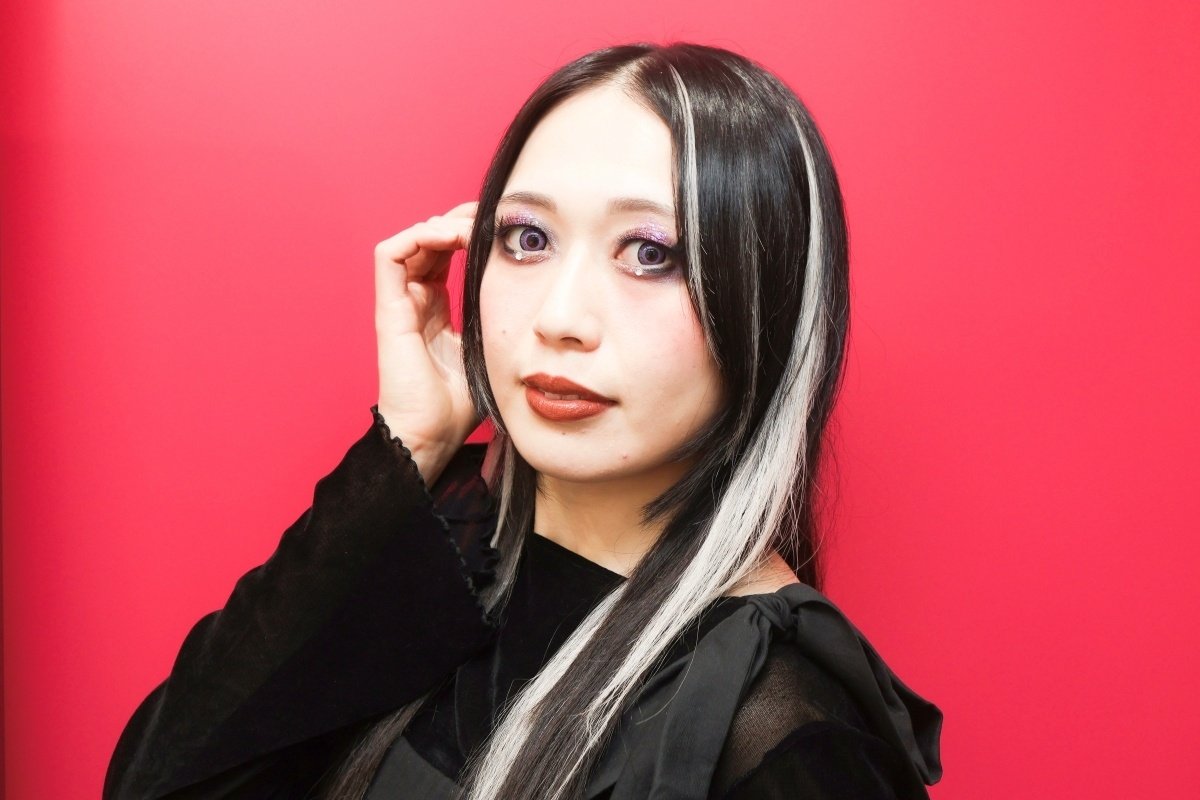
In a new feature interview with Masaki Hamase for SKY PerfecTV!’s 30th-anniversary series, Stardom standout and HATE heel member Saya Kamitani opened up about her life both inside and outside the ring. Now a regular presence across mainstream Japanese media, “Saya-sama” discussed her current entertainment obsessions, her transition from aspiring idol to pro wrestler, and her ultimate ambitions for the future of her career.
Interviewer: Tell us about the entertainment you enjoy.
Kamitani: When it comes to sports, I love volleyball! When I happened to catch it on TV a few years ago, I thought, “Wait, volleyball has this many tall, cool-looking players?!” It’s a pretty shallow reason (laughs), but I started watching mostly the pro volleyball team Tokyo Great Bears. I’ve even gone to the arena in person to cheer on the Bears and the national team.

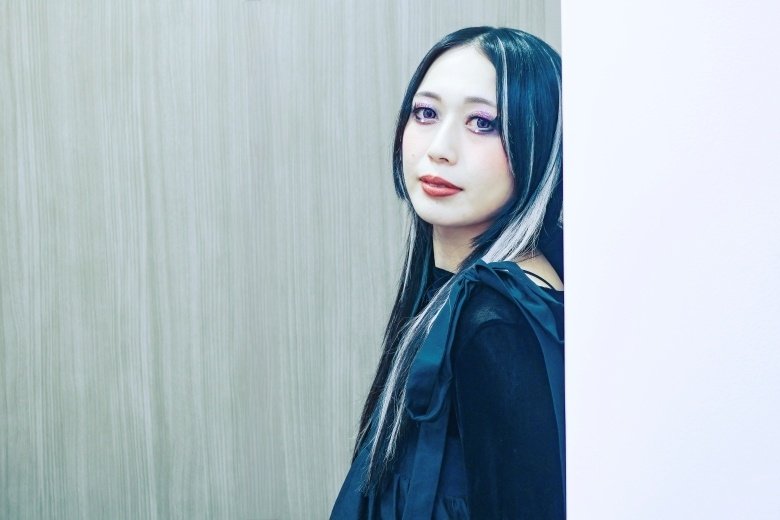
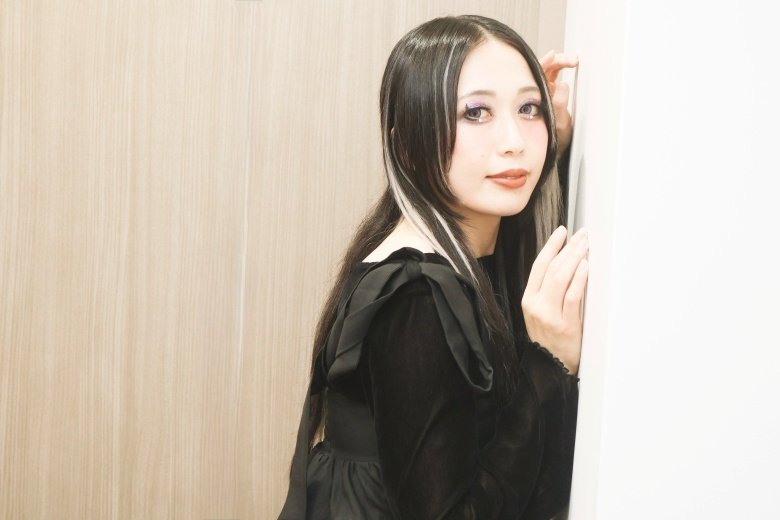
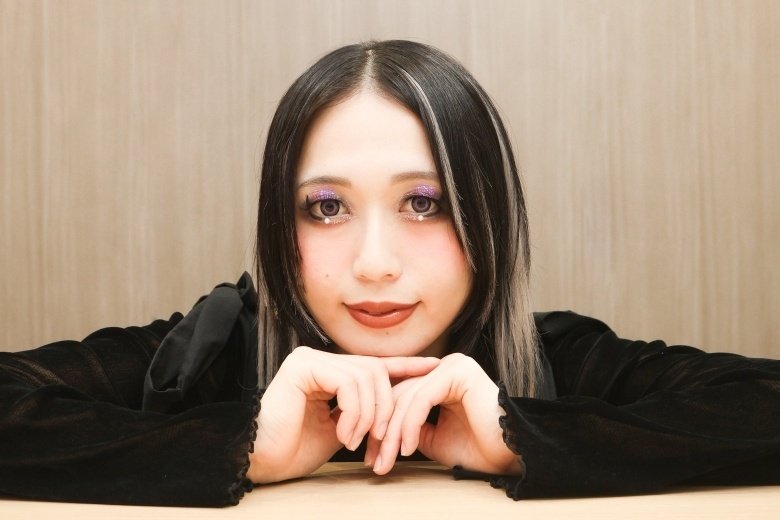
Photo Caption: Saya Kamitani discusses her dreams as a pro wrestler and her passion for entertainment.
Interviewer: What drew you to the sport?
Kamitani: Of course there are detailed rules, but the basic premise of returning the ball within three touches without letting it hit the floor… that’s easy even for a beginner to understand, and because each point is decided so quickly, it’s thrilling and fun to watch.
Interviewer: Watching live at the venue must make cheering them on even more exciting.
Kamitani: It’s the same with pro wrestling, too, where the heat from the crowd is incredible. That feeling of the entire venue being filled with the fans’ energy, something that can’t be fully conveyed through a screen, is irresistible.
At a Bears game, they had sound and video production where the players struck poses as they made their entrances onto the court, and it was wonderful. It’s a competitive sport, yet it’s also entertainment… that common ground with pro wrestling left a strong impression on me.

Interviewer: Who is your favorite player?
Kamitani: Ran Takahashi. Watching him pull the team forward as their ace outside hitter is so cool…! His ability to put points away with his serve is incredible, and his powerful spikes keep my eyes glued to him.
Interviewer: If you were to launch a show on SKY PerfecTV!, which is celebrating its 30th anniversary, what kind of program would you want to do?
Kamitani: I’d love to do a Stardom show. Match broadcasts go without saying, but a variety program lets people see a different side of the wrestlers, and I think viewers would take notice and think, “Oh, so they have girls like this, too.”
Interviewer: What kind of segments would you like to try, for example?
Kamitani: Since I don’t think the general public knows what everyone is like, we’d start by sitting in chairs in the studio and introducing ourselves (laughs). Mini-games would be good, too. My unit mate Natsuko Tora even said, “I want to try taking the electric shock chair on a variety show.”
Interviewer: Everyone has such distinct personalities, so a Stardom show sounds like it would be hilarious.
Kamitani: Right? Everyone in HATE is funny. For instance, Natsuko and Momo Watanabe can put away a ton of food, so a competitive eating segment would be great for them, Konami is surprisingly the type to play the goofy comic role on her own initiative, and Rina is always getting teased by everyone (laughs). I hope we can all do a show together someday.
Interviewer: You are currently appearing across a wide range of media. What are your impressions after experiencing a world outside of pro wrestling?
Kamitani: It’s truly something to be grateful for. TV personalities, comedians, models, athletes… the people at the very top of their respective industries all gather there. Being able to work alongside such amazing people makes me happy, inspires me, and exchanging ideas with them is fun. In terms of personal connections, it enriches my life, too. Having more places where I can give it my absolute all while keeping pro wrestling at my core is something I’m thankful for, and I find it really fulfilling.

Interviewer: Among the co-stars you’ve worked with during your media appearances, is there anyone who left a particularly strong impact on you?
Kamitani: The person who has looked after me the most is Kirin’s Akira Kawashima. Kawashima-san is like a wizard who can make anyone funny!
Because he brings out the best in a person’s natural qualities, I can just be myself and perform freely on the show. Even when I accidentally say something a little weird, a single remark from Kawashima-san completely changes the atmosphere in the studio and turns it into comedy. There are so many people who have been saved by Kawashima-san. To me, he is like a god.
Interviewer: Tell us about someone who has influenced your life.
Kamitani: In pro wrestling, it would be Kota Ibushi. When I became a trainee, I didn’t know anything about pro wrestling at all, and just when I was thinking, “It looks scary, it looks painful, and I don’t want to do this,” seeing Ibushi soaring so gracefully through the air changed my whole impression and made me realize, “Pro wrestling has a world like this, too.”
At the time, I was a few months into my debut, with my mind still struggling to catch up with everything. While I was researching pro wrestling, I happened to see Ibushi’s Phoenix Splash and Shooting Star Press. I still remember how blown away I was by all of his aerial moves.
Interviewer: You transitioned into a pro wrestler after working as a backup dancer for EXILE and a member of Baito AKB. Changing the path toward your dreams must have come with inner conflict. Why were you able to take that step onto a different path?
Kamitani: I was failing audition after audition and living a rock-bottom kind of life, so the biggest factor was thinking, “I want to change this weak version of myself; I want to become strong.” When I encountered pro wrestling, my intuition told me, “If I work hard at pro wrestling, I might be able to see a glimmer of hope,” and there was no future in sight for the idol activities I was doing alongside it, either. Thinking, “I want to try taking a step forward,” was what set it all in motion.
Interviewer: Later on, you made a heel turn—becoming a villain—after being a babyface, or fan favorite. Did changing your style open up the road ahead for you even further?
Kamitani: When I was a babyface, I had to act like a model student, and I kept doing reckless moves, injuring myself or injuring my opponents… Even though I was supposed to be getting closer to the person I wanted to become, it felt like I was slowly strangling myself with my own hands.
After all sorts of things piled up and I agonized over it completely, I turned heel. As a heel, I can do bad things, I can still fly, and I can express myself in a free style. In the end, being a heel who can act purely on her own emotions suited me to a tee.
Interviewer: What kind of place is the “ring” to you, Kamitani-san?
Kamitani: The ring is where I feel most at home. When I’m at my house, I inevitably end up thinking negative thoughts, but when I’m in the ring, that version of me is the only time I can love myself 100 percent. That’s the kind of place it is.
Interviewer: Finally, please tell us about your outlook for the future.
Kamitani: My goal as a pro wrestler is to hold a Tokyo Dome show with Stardom. To make that happen, I have to appear across media a lot, not just in the ring. Right now, I believe I’m the number one women’s wrestler capable of breaking into mainstream media, so I want to become even more famous.
If I become a bigger star, the popularity of women’s pro wrestling will naturally rise with me. That’s exactly why I want to become a superstar who transcends the pro wrestling world. I’m going to work hard to make that happen, so don’t you bastards dare take your eyes off Saya-sama from here on out, got it?
Translation Notes:
- Character Persona & Speech Register (“Saya-sama” and “Omaera”): Following her betrayal of Queen’s Quest and alignment with the heel faction HATE in 2024, Saya Kamitani adopted the haughty aristocrat-heel moniker “Saya-sama” (using the exalted honorific -sama). Throughout the interview, she mostly speaks in casual, friendly conversational Japanese (ending sentences with -da yo and -da ne), reflecting her mainstream variety-show persona. However, in the final sentence of the interview, she snaps back into her in-ring heel persona, addressing the readers as omaera (“you bastards” / “you lot”) and issuing the imperative command “me wo hanasu na yo?” (“don’t take your eyes off me, got it?”).
- Editorial Parenthetical Clarifications: Because this interview was published for a general entertainment audience celebrating the 30th anniversary of the Japanese satellite broadcasting service SKY PerfecTV! (Sukapaa!), the editor inserted several parenthetical glosses for non-sports and non-wrestling readers. In the opening response, “(puro bareebooru chiimu no) Tokyo Gureeto Beaazu” was smoothly integrated as “the pro volleyball team Tokyo Great Bears.” Similarly, in the question about her persona shift, the interviewer’s text included parenthetical definitions for bebiifeisu (zendama, literally “good guy” / “fan favorite”) and hiiru taan (akuyaku ni tenshin, “turning into a villain”), which have been woven naturally into the question.
- Tokyo Great Bears & Ran Takahashi: The Tokyo Great Bears are a professional men’s volleyball club based in Tokyo competing in Japan’s SV.League, known for heavy arena entertainment production modeled after pro wrestling and basketball. Ran Takahashi is one of Japan’s most famous men’s national team volleyball stars and outside hitters, whose crossover mainstream popularity in Japan parallels Kamitani’s own media ambitions.
- Japanese Variety Show Tropes (Biribiri Isu, Oogui, Boke, and Ijirareru): When pitching a hypothetical Stardom variety show on SKY PerfecTV!, Kamitani references several staple Japanese television formats and owarai (comedy) dynamics:
- Biribiri isu (“electric shock chair”): A staple punishment game on Japanese variety programs (most famously on TBS’s morning variety show Love It!, hosted by Akira Kawashima, where Kamitani became a regular guest) in which a hidden buzzer sends a sharp static jolt through the seat of a wooden chair.
- Oogui (“competitive eating” / “big eater challenge”): A popular Japanese TV genre where guests consume massive platters of food against the clock or each other.
- Boke and Ijirareru: In Japanese comedy, the boke is the instigator who intentionally says or does something absurd or goofy to set up a laugh, which Kamitani notes Konami surprisingly initiates on her own (jibun kara bokeru taipu). Conversely, ijirareru refers to being affectionately teased, ribbed, or made the butt of the joke by the rest of the group, which Kamitani notes is teenage heel Rina’s constant role within HATE.
- Akira Kawashima of Kirin: Akira Kawashima is half of the veteran Yoshimoto Kogyo comedy duo Kirin and one of Japan’s most respected television MCs, best known for hosting TBS’s morning variety show Love It! (Ravit!). In Japanese entertainment journalism, Kawashima is widely praised for rescuing nervous or unconventional guests whose jokes fall flat by reframing their comments with quick wit (hitokoto de zenbu kuuki wo kaete omoshiroku shite kureru — “with a single remark, he completely changes the atmosphere and makes it funny”).
- Pre-Wrestling Career (EXILE Support Dancer & Baito AKB): Before entering the Stardom dojo as a trainee under the short-lived Starlight Studio idol-wrestling project, Kamitani worked as a backup tour dancer for the pop/dance group EXILE in 2014 and later passed the audition for Baito AKB, a temporary sub-unit of the idol group AKB48 created in partnership with the part-time job recruitment site Baitoru.
- Idiom — “Jibun no kubi wo shimeru”: When describing the pressure of being a clean-cut babyface (yuutousei, “model student” or “honor student”) and performing high-risk aerial maneuvers that led to injuries, Kamitani uses the idiom dondon jibun no kubi wo shimete iru you na kankaku (“a feeling like I was slowly strangling my own neck” / “digging my own grave”), capturing how her pursuit of her ideal babyface self was actively suffocating her career.
- Chronological Nuance on Discovering Kota Ibushi: In her response about Kota Ibushi, Kamitani first speaks broadly about her early days entering the dojo (renshuusei ni natta toki, “when I became a trainee”) knowing nothing about wrestling, and then clarifies in the second paragraph that the exact moment she discovered videos of Ibushi’s Phoenix Splash and Shooting Star Press was a few months after her July 2019 debut (debyuu shite suukagetsu no koro), when she was emotionally overwhelmed and researching aerial moves—a discovery that directly led to her adopting the Phoenix Splash as her signature championship finisher.