Pro Wrestling WAVE: Prime wave ’26 | Korakuen Hall Dispatch
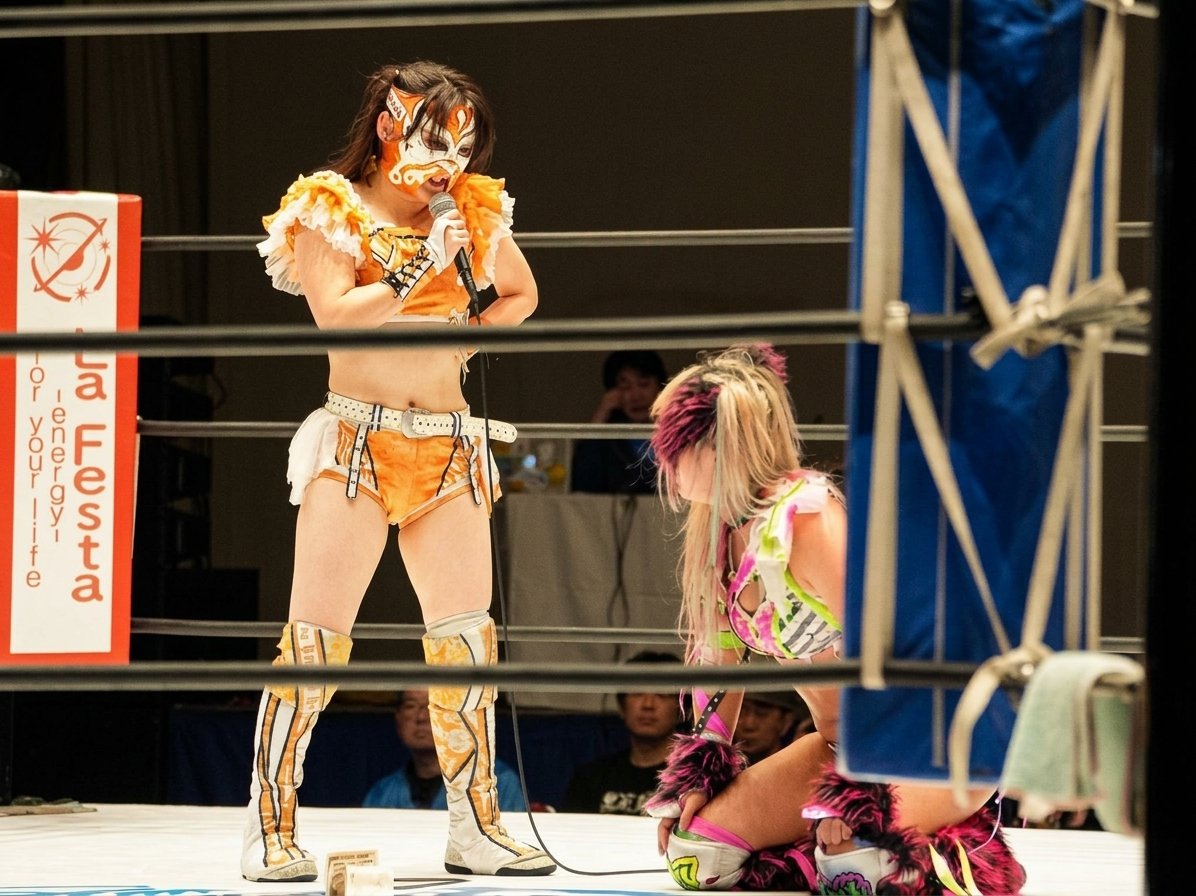
If you spend enough time watching independent pro wrestling, you learn pretty quickly that the real story is rarely just about who got their hand raised at the end of the night. Wins and losses are the surface language of the business, sure, and they matter. Underneath that, though, every big Korakuen Hall show is really a negotiation about power, visibility, and who gets to decide what a promotion looks like next year.
On November 21, 2026, Pro Wrestling WAVE ran Prime wave ’26 inside Tokyo’s Korakuen Hall, and on paper, the headline sounds like a classic pro wrestling swerve. Honoka defeated Unagi Sayaka in the main event, swept the promotional war for WAVE, turned down a crisp 100,000 yen payout, and shockingly joined Papapa Reiwa Party anyway. Easy to read as pure chaos if you are just skimming results on your phone.
Step back a few paces, though, and something much more interesting comes into focus. Every match on this six-bout card sat right at the intersection of two competing realities in modern joshi wrestling. On one side, you have homegrown institutional pride, represented by a company like WAVE, where veterans, rookies, and longtime regulars protect a distinct house style built on equal parts sharp technical work and unapologetic comedy. On the other side, you have the modern freelance economy, where roving units, cross-promotional alliances, and entrepreneurial personalities treat every ring as a stage to build leverage and chase bigger buildings like Ryogoku Kokugikan. When those two worlds share a card at Korakuen Hall, you do not just get a rivalry. You get a snapshot of how talent actually navigate career growth when the old rules of staying in one lane no longer cover all the bills.
To understand why that main event swerve landed the way it did, you have to sit with the entire ecosystem WAVE put on display from the opening bell.
Archival Dossier
- Event: Pro Wrestling WAVE, Prime wave ’26
- Date & Venue: November 21, 2026, Korakuen Hall, Tokyo
- Card Format: Six matches, featuring a 2-out-of-3 falls six-woman tag, a 15-minute singles clash between Catch the Wave semifinalists, Chapter 4 of Hikari Noa’s 7-Match Trial Series, and a No Time Limit main event
- Promotional Stakes: ZABUN’s corporate registry certificate (including company debt, per GAMI) vs. Unagi Sayaka’s 100,000 yen payout pledge
- War Tally: WAVE swept Papapa Reiwa Party across the night’s interpromotional stakes bouts (Yumi Ohka over Hikari Noa, Cohaku & Momoka Hanazono over Kakeru Sekiguchi & Ayame Sasamura, and Honoka over Unagi Sayaka)
- Upcoming Dates Set on the Card: November 29 in Kariya (WAVE Tag Team Championship defense: Cohaku & Momoka Hanazono vs. Noamin) and December 10 at Shinjuku Kabukicho Chance (Natsu Bar Chance)
Wild Cards, Shared Culture, and the Economy of the Opening Match
Match 1: PRIDE wave ~WILD CARDS~ (20-Minute Time Limit)
Natsu Sumire, YuuRI & Maika Ozaki def. Kaho Kobayashi, ZONES & Saito (18:30, Bronco Buster)

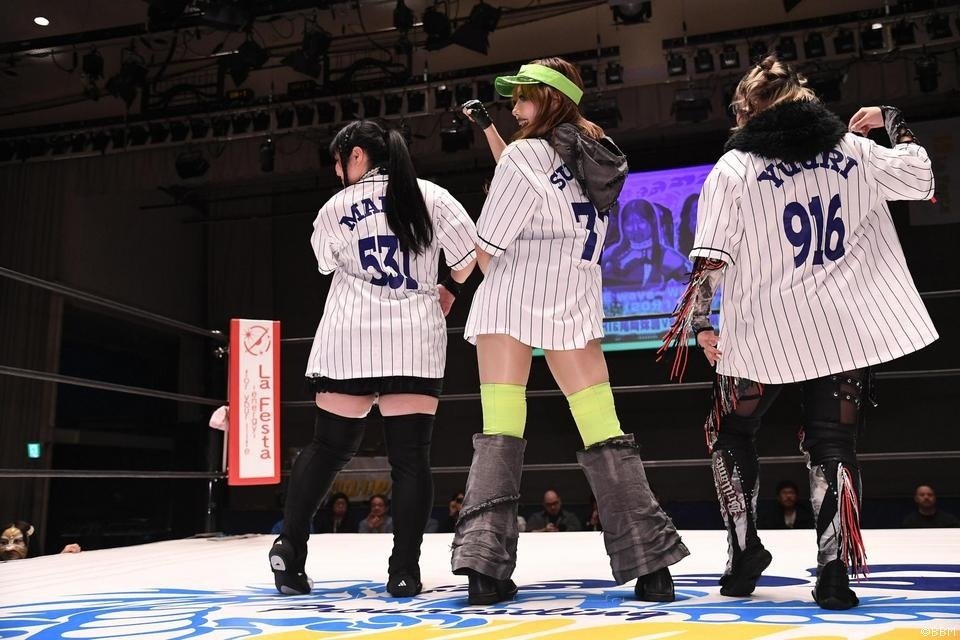
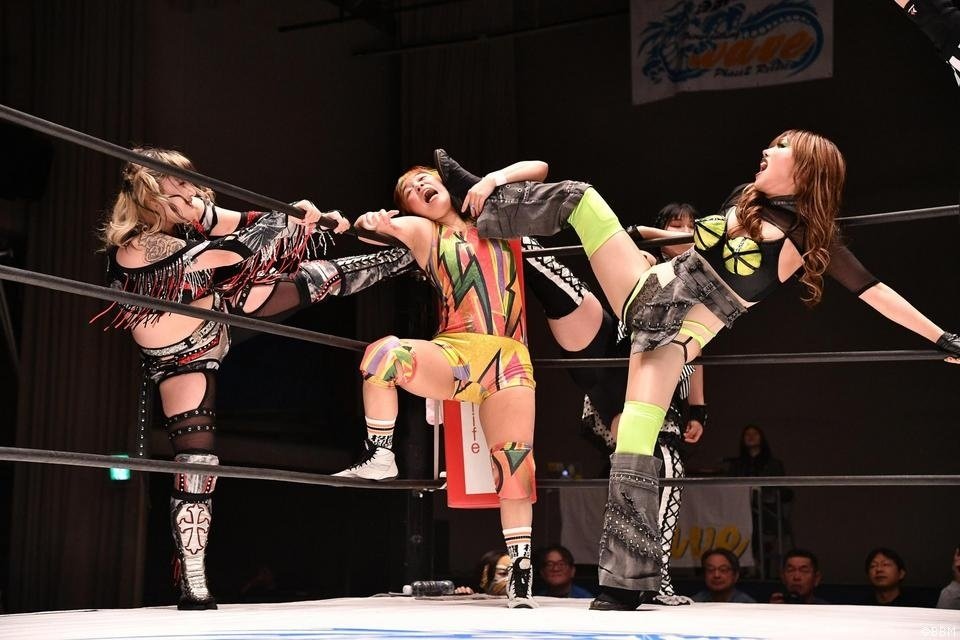

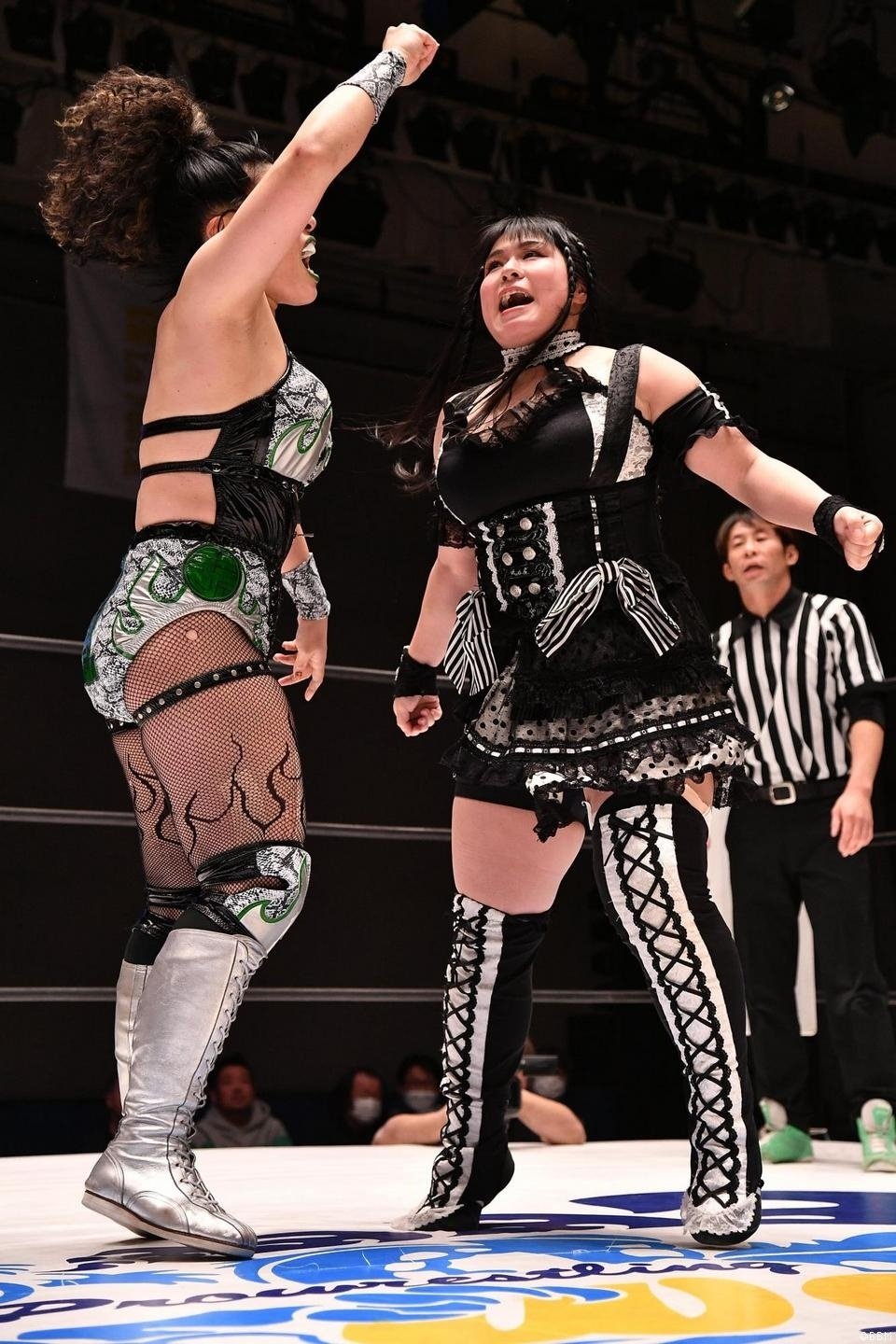
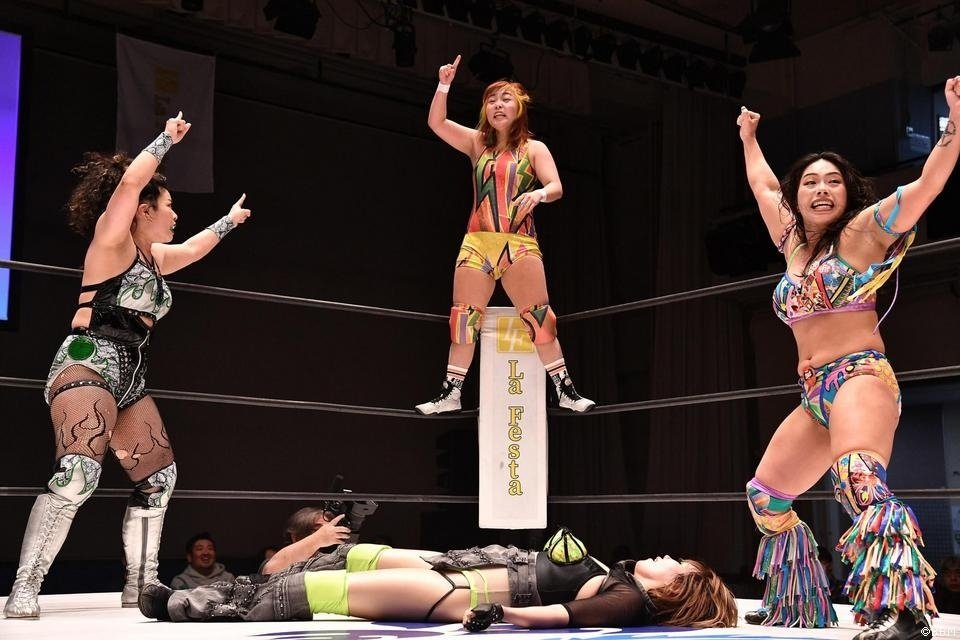
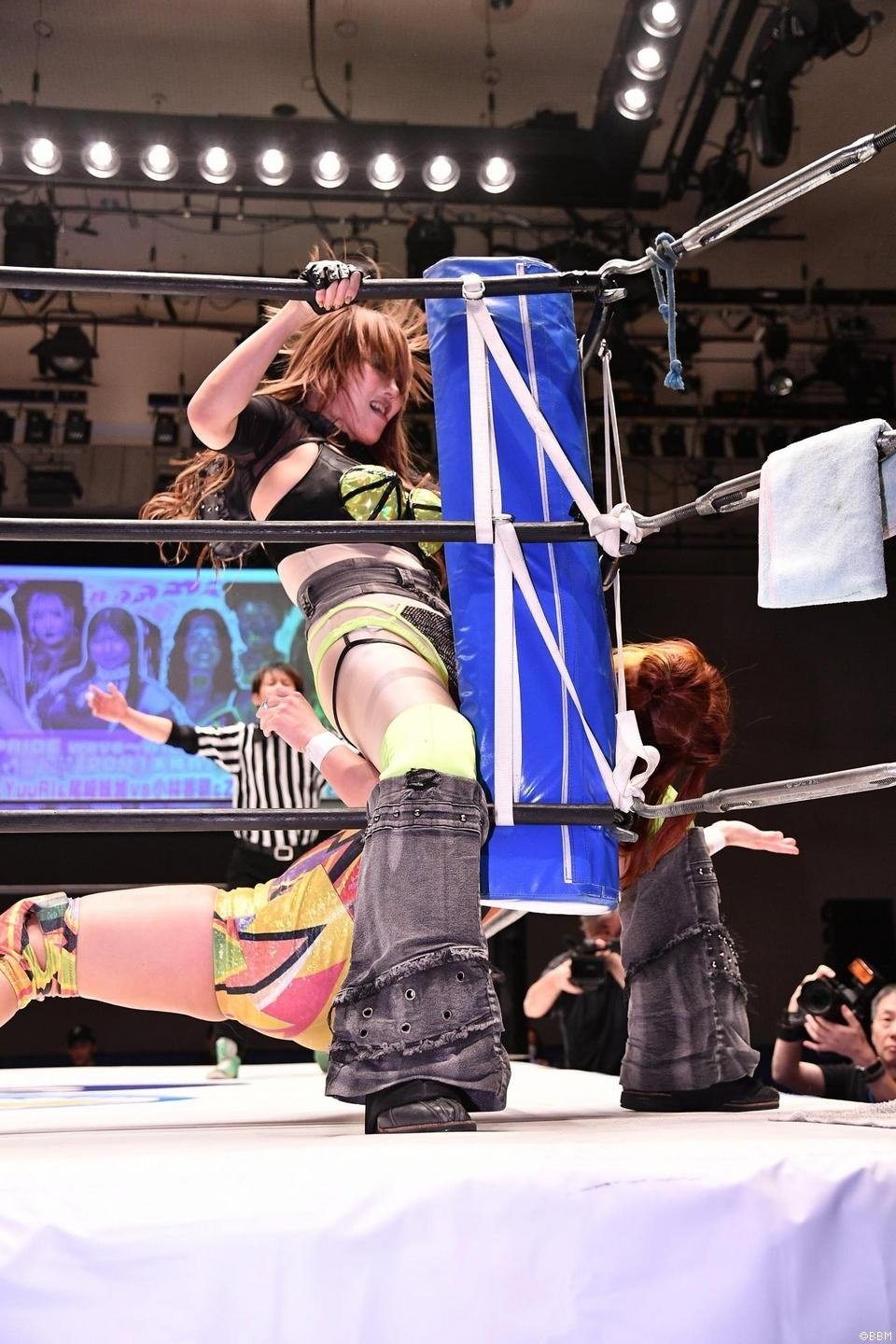
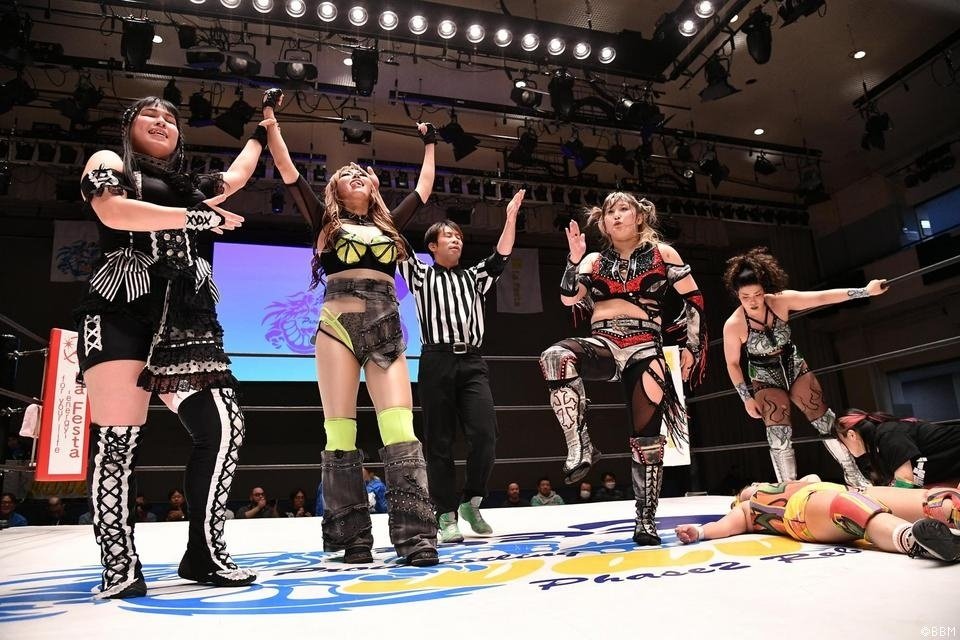
Every promotion has a signature rhythm, and WAVE has always understood that opening a big hall means getting the crowd invested as active participants before you ask them to care about the heavy stakes later. Here, the opener ran a generous 18 minutes and 30 seconds, pairing Natsu Sumire, YuuRI, and Maika Ozaki against Kaho Kobayashi, ZONES, and Saito.
Right from the jump, Saito and YuuRI set the tone as chants of “Shu! Shu!” rolled through Korakuen Hall, turning a standard opening exchange of shoulder tackles into a communal bit. Natsu immediately complained about the crowd’s chants and went looking for her Bronco Buster, only for Kobayashi and ZONES to shut that down in a hurry. The two hoisted Natsu up with her legs spread wide, tossed her into the air, and dumped her with a backdrop. From there, Saito found herself caught and isolated for a stretch, though she eventually fought out with a shoulder tackle to YuuRI to make the tag to Kobayashi.
And to be fair, this is where WAVE’s particular balance of silliness and physicality does its best work. Kobayashi tore in with a flurry of sentons before missing a running senton and crashing hard to the mat. Then she and ZONES leaned straight into absurdity with three consecutive muscle-posing attacks (?), chaining that right into consecutive elbow drops and a double elbow drop. YuuRI fired back with a missile dropkick, and Ozaki followed up with an elbow drop of her own, shifting the match back into heavy-hitting territory. ZONES and Ozaki went straight into a lariat exchange, with Ozaki hitting a side suplex and hoisting ZONES up for an Argentine backbreaker until Kobayashi jumped in to break it up.
ZONES answered with a fallaway slam, setting up Natsu and Saito to collide in another round of shoulder tackles. Saito knocked Natsu down and landed a running body press for a two-count. After Natsu’s team won a battle of suplexes and Natsu linked up with YuuRI for double-team offense, Natsu repeatedly kicked Saito away, yet Saito kept coming back up and caught her with a counter haraigoshi for a close two-count. Kobayashi and ZONES set up Saito for a diving body press, only for it to miss the mark.
Here is where the shared comedy of the promotion took over again. Kobayashi’s squad kept pressing in on Natsu chanting “Shu! Shu!”, which spiraled into both teams mysteriously repeating “Shu! Shu!” back and forth at each other. Ultimately, Natsu caught Saito with the Bronco Buster and forced a referee stoppage to take the win.
Even after the bell, the opener tied directly into the wider business calendar of the promotion. Cohaku and Momoka Hanazono walked out to the ring with the tag titles to remind Natsu and YuuRI that championship losses carry consequences outside the ropes, too.
Cohaku: “Hold on a second. Aren’t you guys forgetting something important? We fought in Hokkaido recently, and the fact that we have these belts right here means what? On December 10 at Shinjuku Kabukicho Chance, we’re doing Natsu Bar Chance!”
It is a small moment, easily glossed over, yet it speaks to how independent wrestling actually sustains itself. A tag title match in Hokkaido feeds a Korakuen Hall confrontation, which feeds a December 10 bar event in Shinjuku Kabukicho. Every piece of the ecosystem keeps the lights on for the next one.
When Promotional Roots Collide Inside a Two-Out-of-Three Falls Frame
Match 2: PRIDE wave ~ROOTS COLLIDE~ (30-Minute Time Limit, 2-out-of-3 Falls)
SAKI, Yuko Sakurai & Rina Amikura def. Saran, Arisa Shinose & Mochi Natsumi (2-1)
Fall 1: Amikura def. Natsumi (0:16, Samson clutch)
Fall 2: Natsumi def. Amikura (7:55, Mocchiri Body Scissors)
Fall 3: SAKI def. Saran (13:40, pinfall)

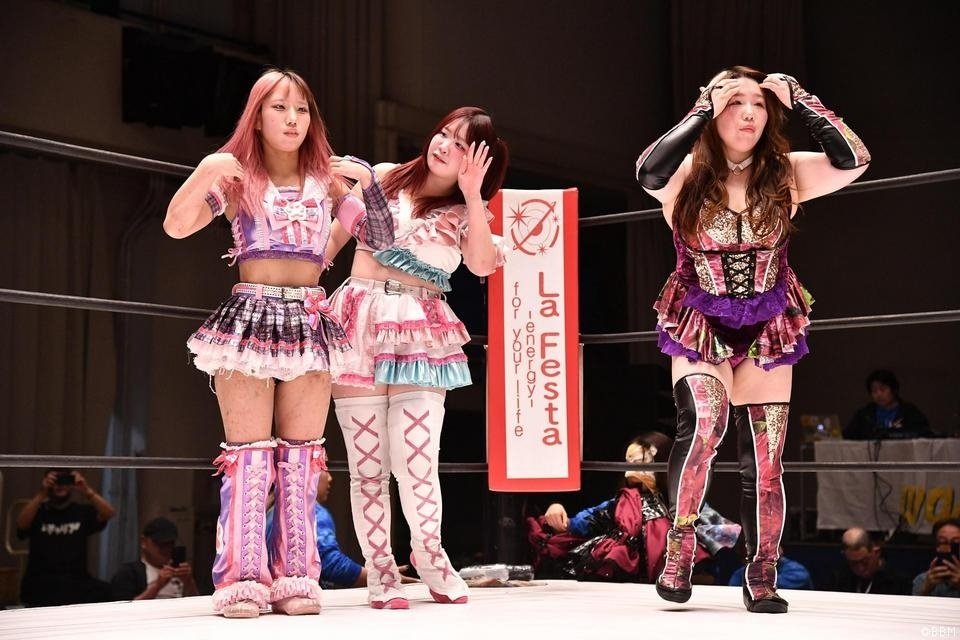
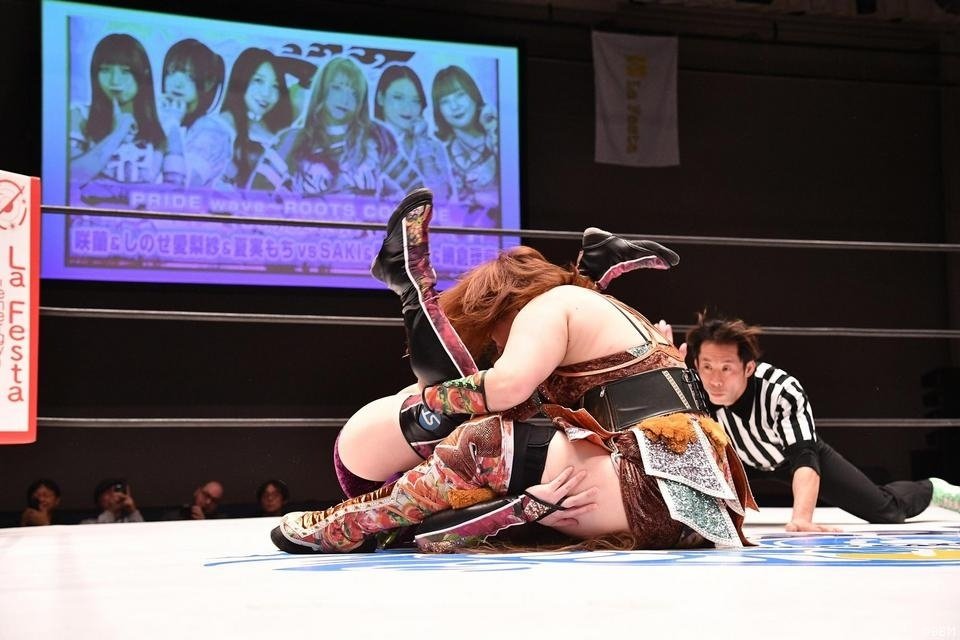
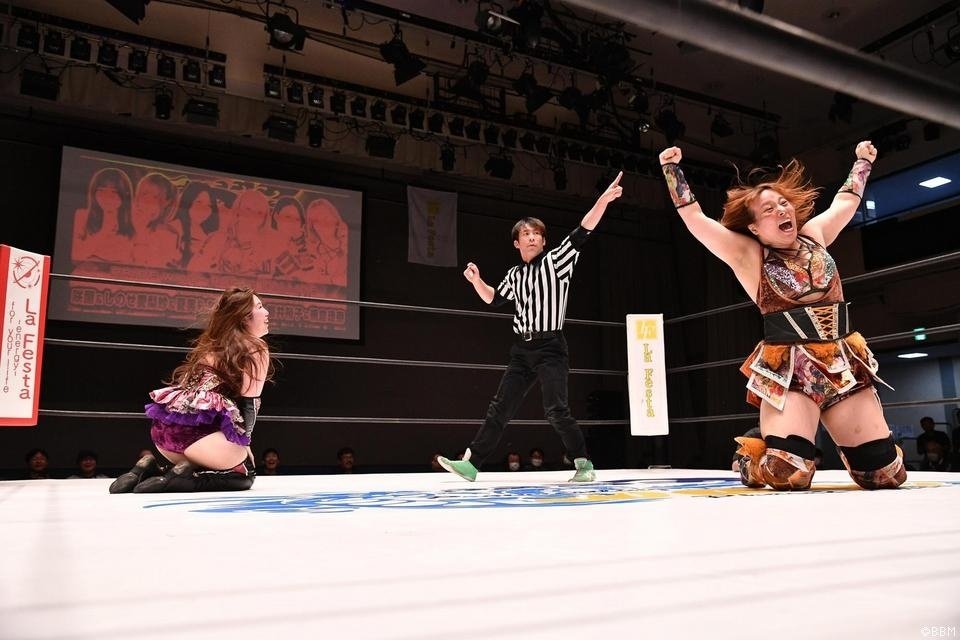
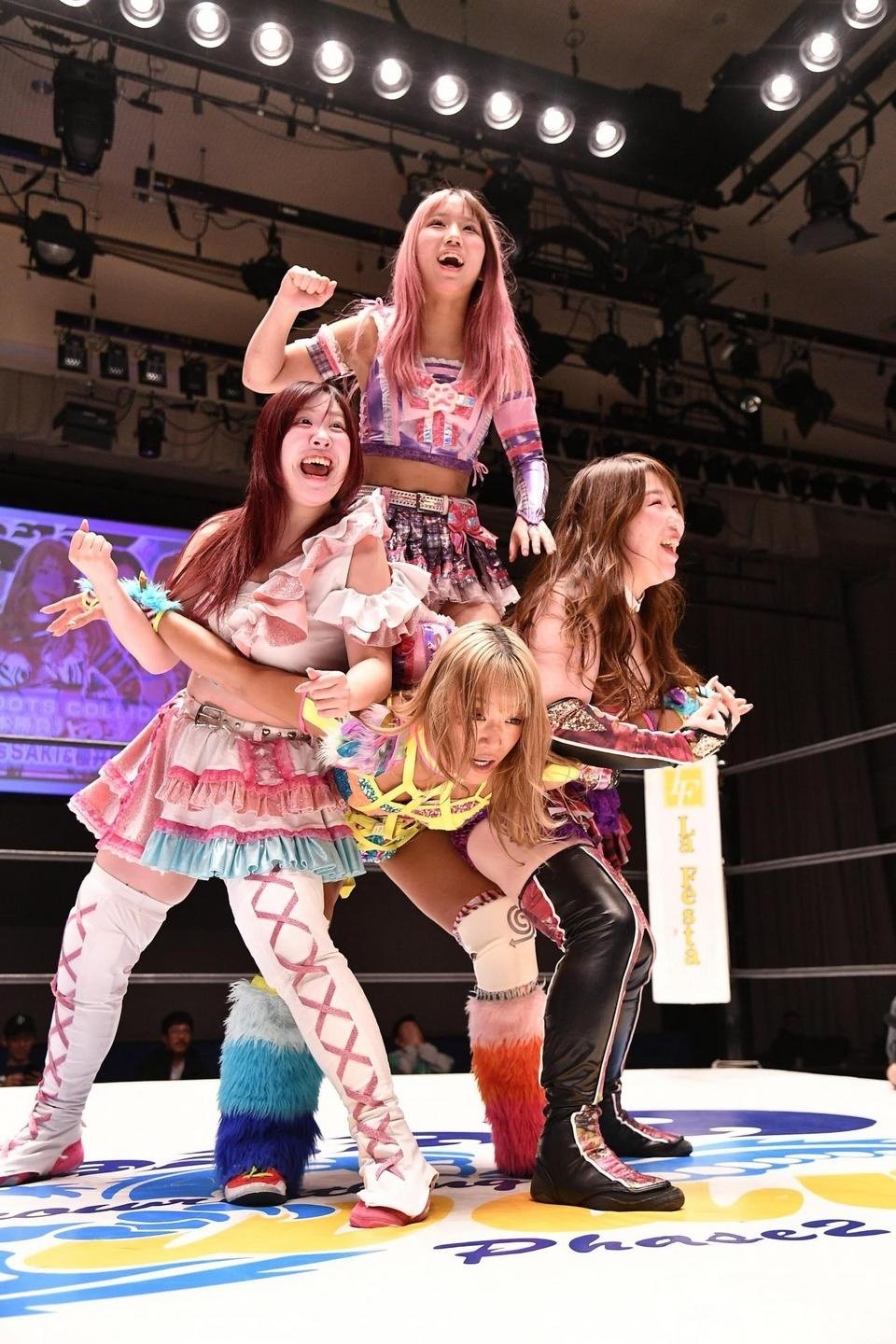
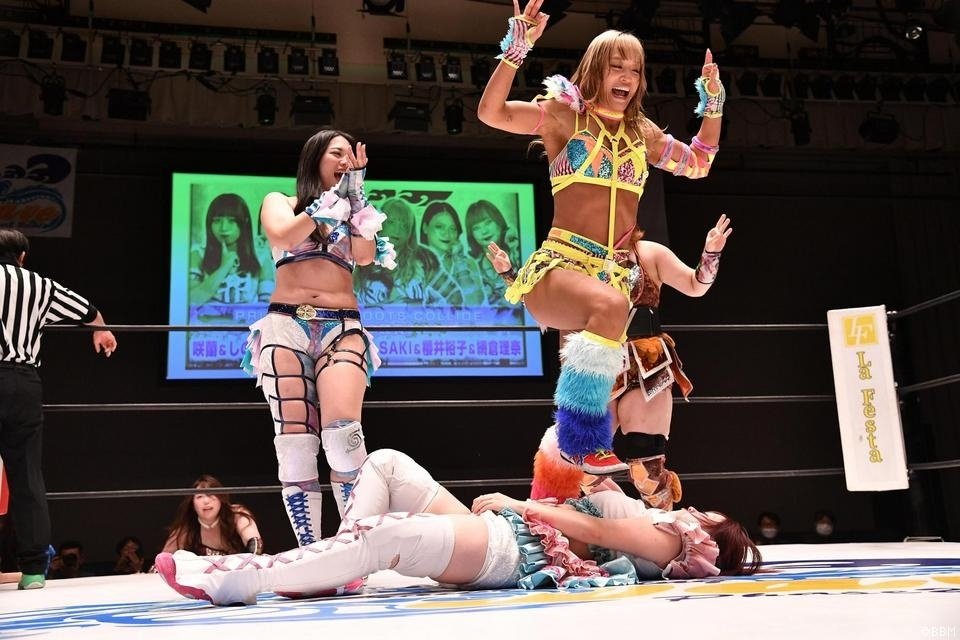
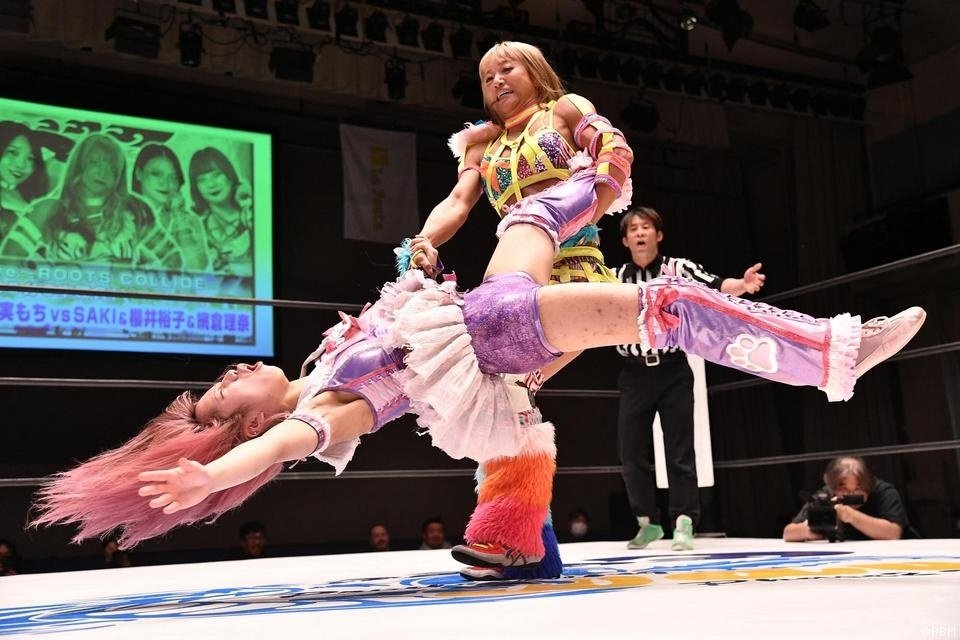
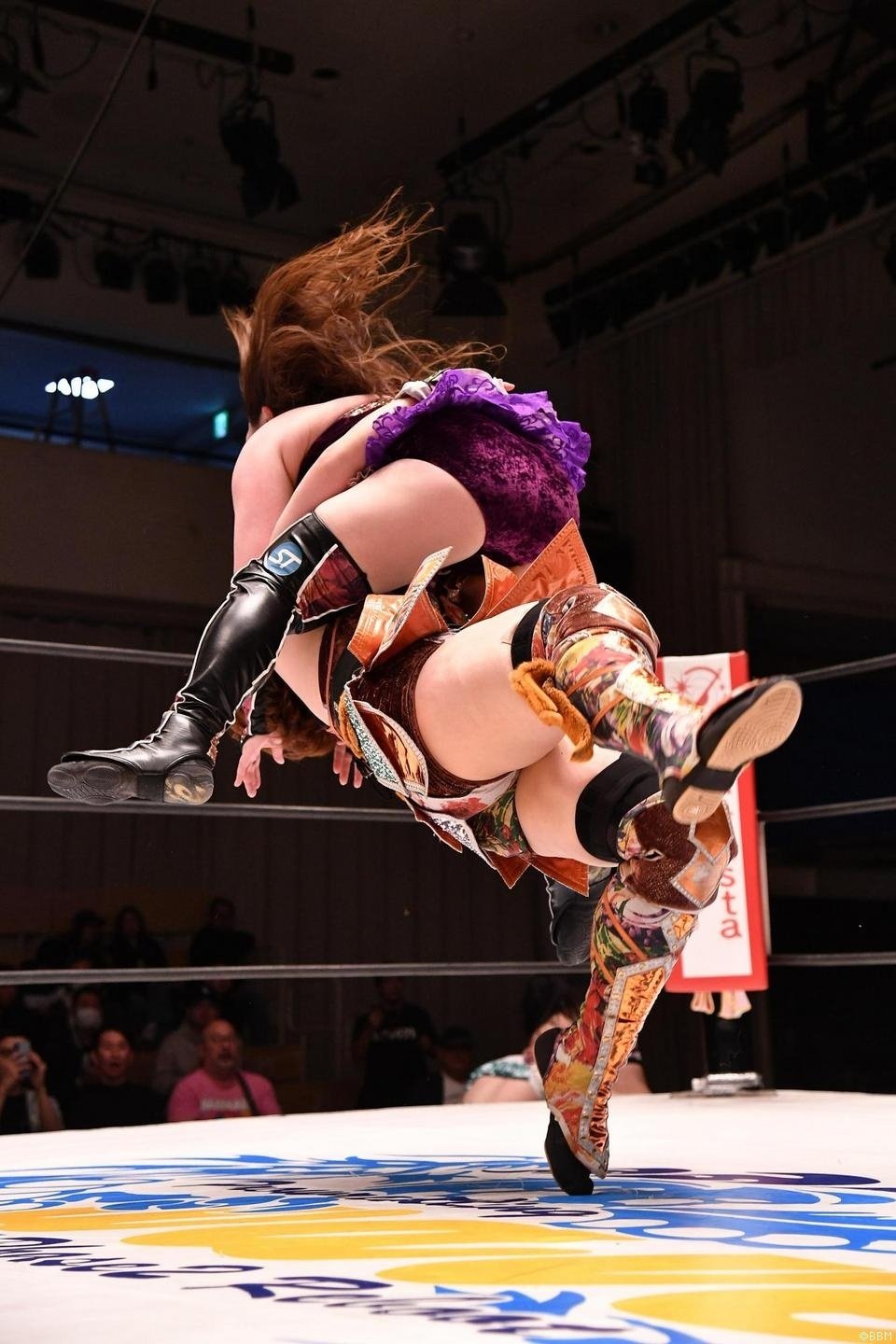
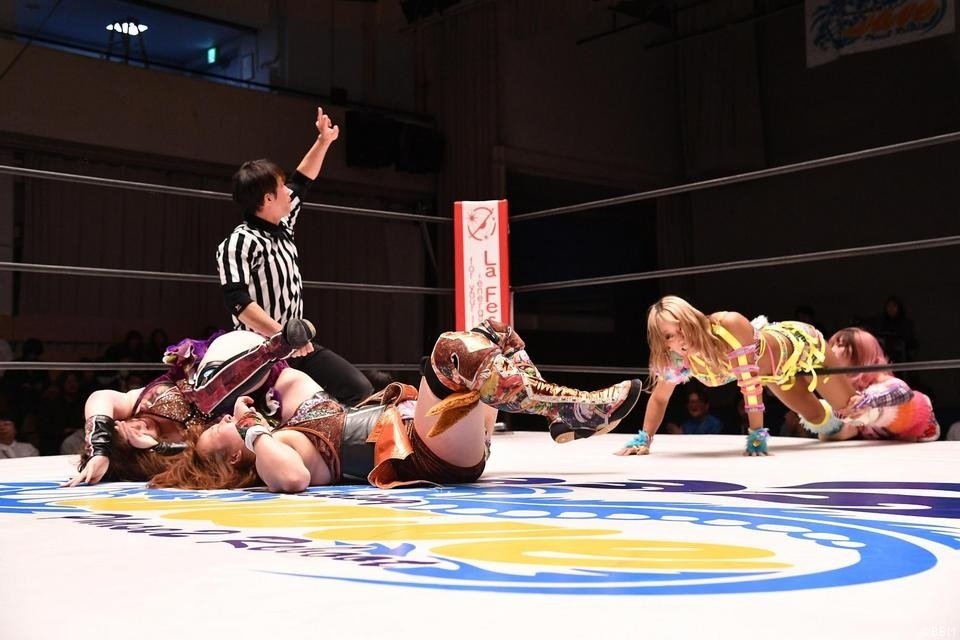

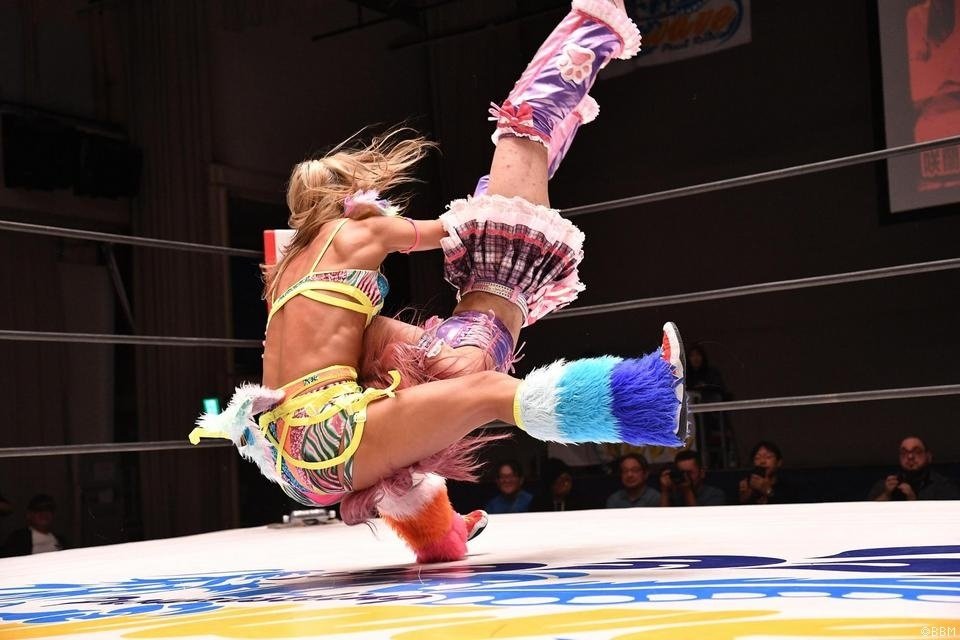
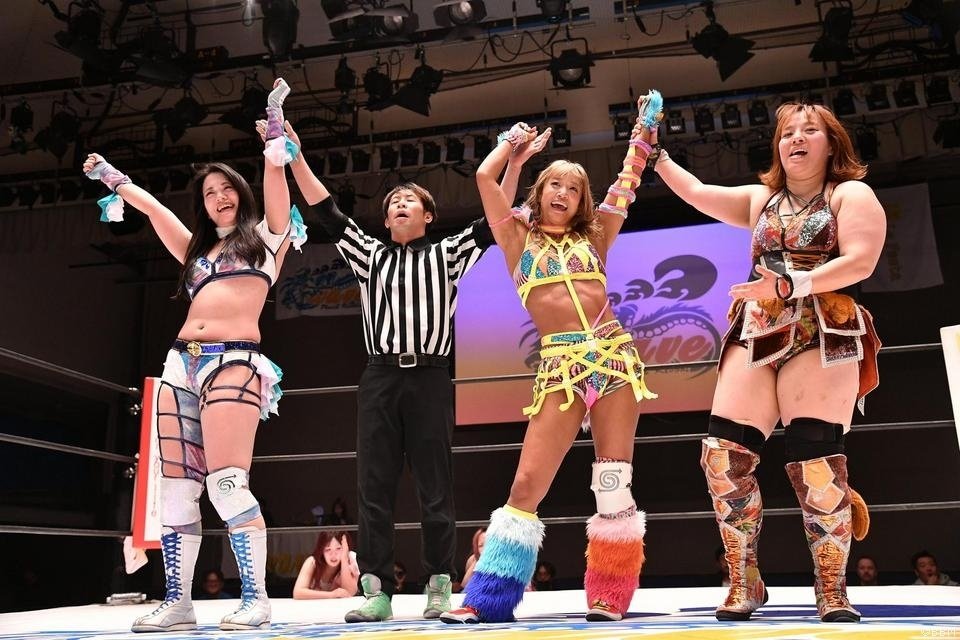
When a card puts a two-out-of-three falls six-woman tag in the second slot under the banner “ROOTS COLLIDE,” it is inviting the audience to pay attention to lineage. In joshi wrestling, where you trained and who you came up alongside stays stitched into your wrestling DNA long after rosters shift and units spin off. Here, COLOR’S (SAKI, Yuko Sakurai, and Rina Amikura) met Saran, Arisa Shinose, and Mochi Natsumi under special rules where the first trio to secure two falls took the match.
Amikura wasted zero time testing Natsumi’s footing. The two started off the opening fall, and just 16 seconds in, Amikura trapped Natsumi in a Samson clutch to steal the first point before anyone in the building had even settled into their seats.
Going into the second fall, identity and catchphrases came right to the front. SAKI hit Shinose with a “Scissors! Safe!” spot before the COLOR’S trio hit their signature “We are COLOR’S!” pose. Saran’s team tried to answer with their own trio pose shouting “Happy with pro wrestling…”, only for COLOR’S to cut it off before they could finish the line. Saran still found room to fire off classic joshi pro-wrestling sequences and yell “That was three!” at the referee. SAKI responded by grabbing one of Saran’s arms and legs for a modified giant swing, while Natsumi swung momentum back by dropping two opponents at once with a running neckbreaker drop.
Saran’s side landed a triple-team press for a two-count, only for Amikura’s double chop to open the door for a COLOR’S triple low dropkick. Amikura planted Natsumi with a suplex for a near fall, looking to close the match in two straight falls, but Natsumi countered back with the Mocchiri Body Scissors at 7:55 to pin Amikura and tie things up at one fall apiece.
With the score even at 1-1, the deciding third fall turned into a proper sprint. Shinose opened with a low crossbody and a chin crusher, though Amikura answered with a rolling chop and hoisted her up into a Canadian backbreaker. Saran and Shinose linked up for simultaneous dropkicks, followed by a 619 from Saran and simultaneous diving crossbodies. SAKI broke that rhythm with a big boot, setting up Sakurai for a front high kick that earned a two-count.
Shinose tried to steal it with a flurry of roll-ups before Sakurai halted her with a suplex. SAKI then connected with a low knee strike and a Michinoku Driver II, forcing Shinose to dive in for the save. When SAKI went for the Kentucky Bomb, Saran managed to counter out of it. Shinose connected with a Shining Wizard to set up Saran’s diving double foot stomp, which Sakurai broke up just in time. From there, COLOR’S locked in the finish as Amikura blasted through with a lariat and SAKI sealed the three-count on Saran with a Michinoku Driver II at 13:40.
That match worked because it respected the structure of the stipulation. A 16-second ambush created immediate urgency, the second fall rebalanced the story around personal pride, and the third fall showed why an established unit like COLOR’S is so hard to beat when their timing locks in.
Two Semifinalists, Fifteen Minutes, and the Politics of Holding Your Ground
Match 3: PRIDE wave ~AMBASSADOR CLASH~ (15-Minute Time Limit)
Itsuki Aoki vs. MIRAI ended in a time-limit draw (15:00)
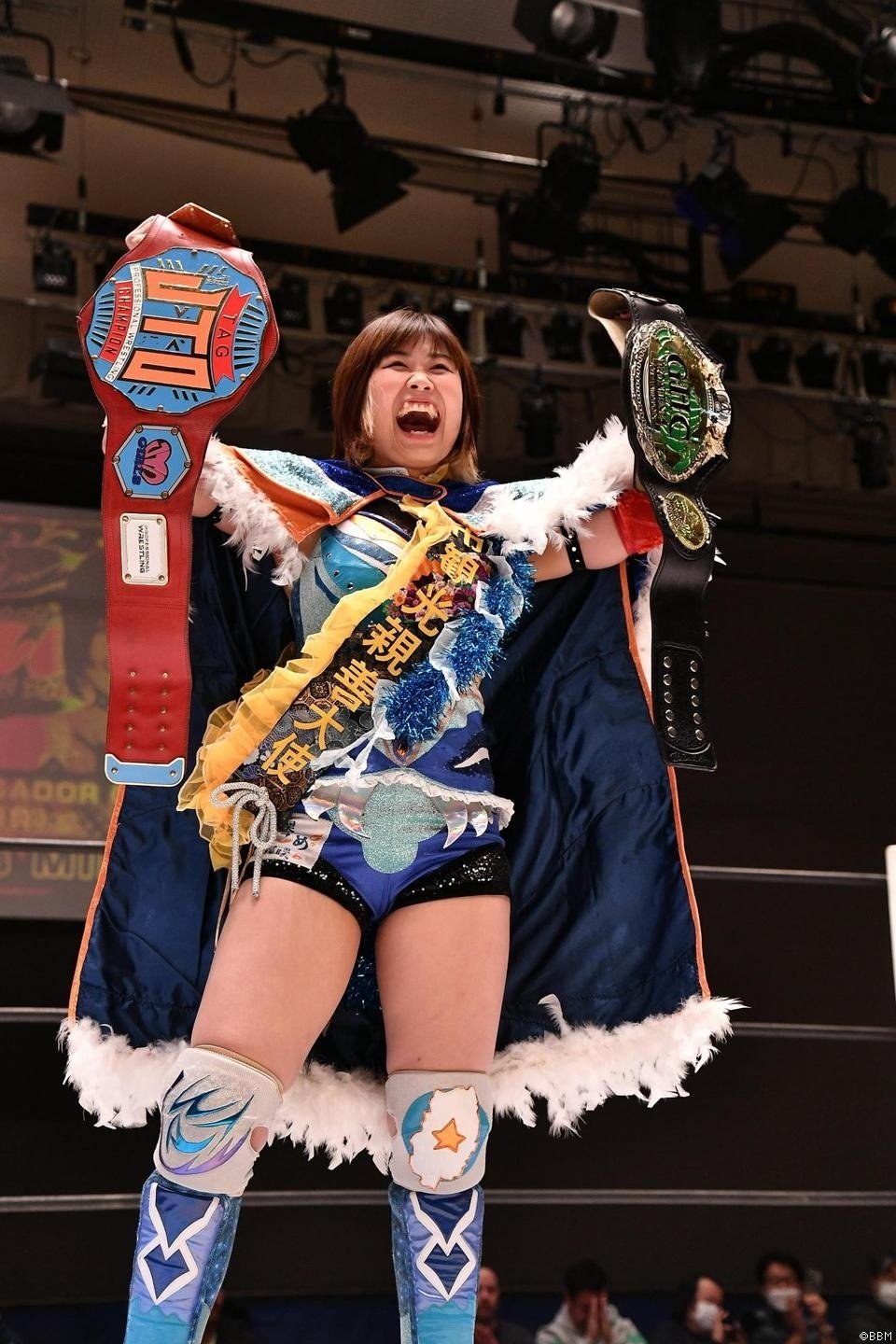
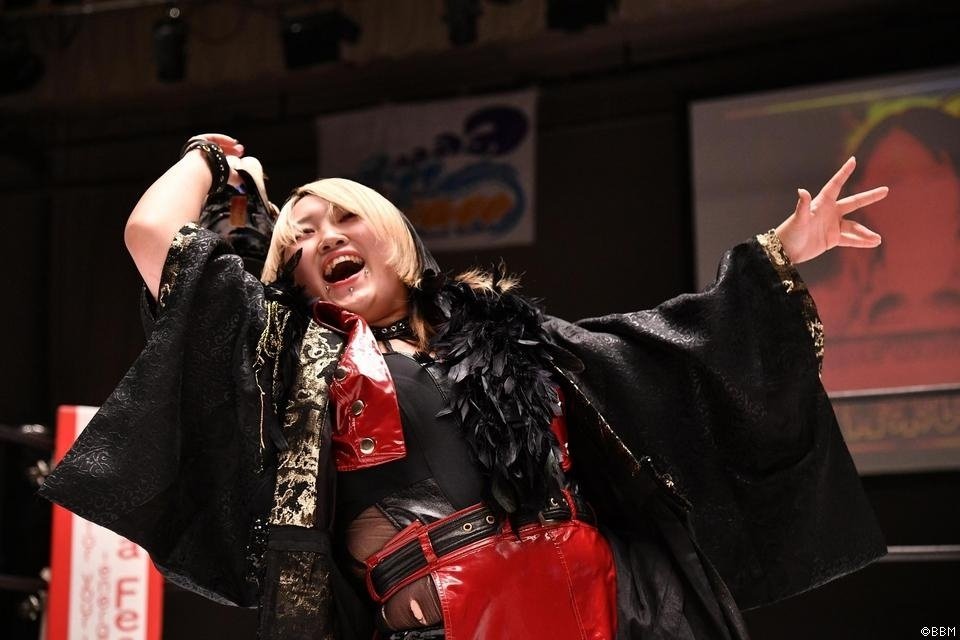

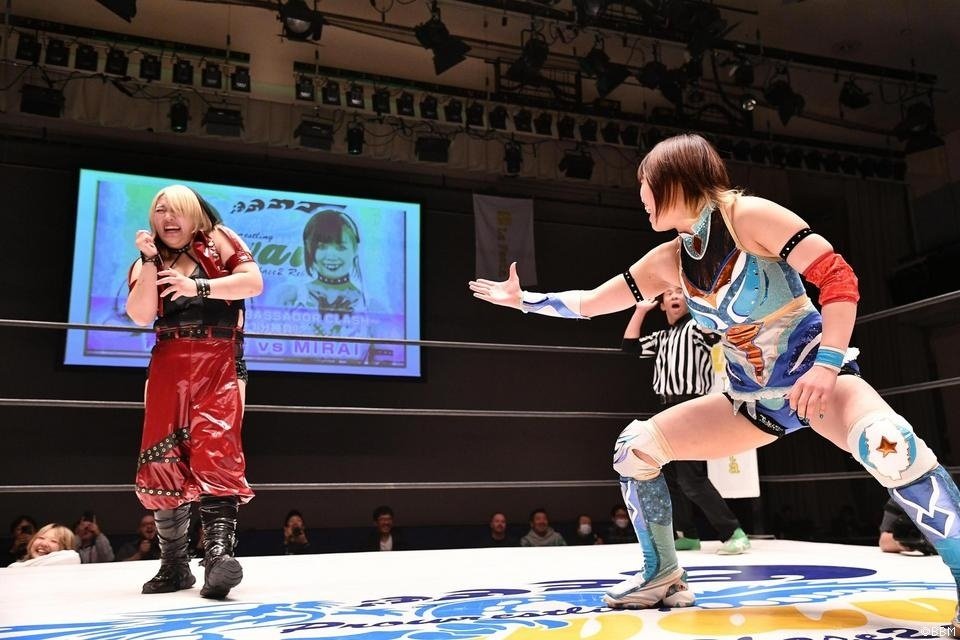
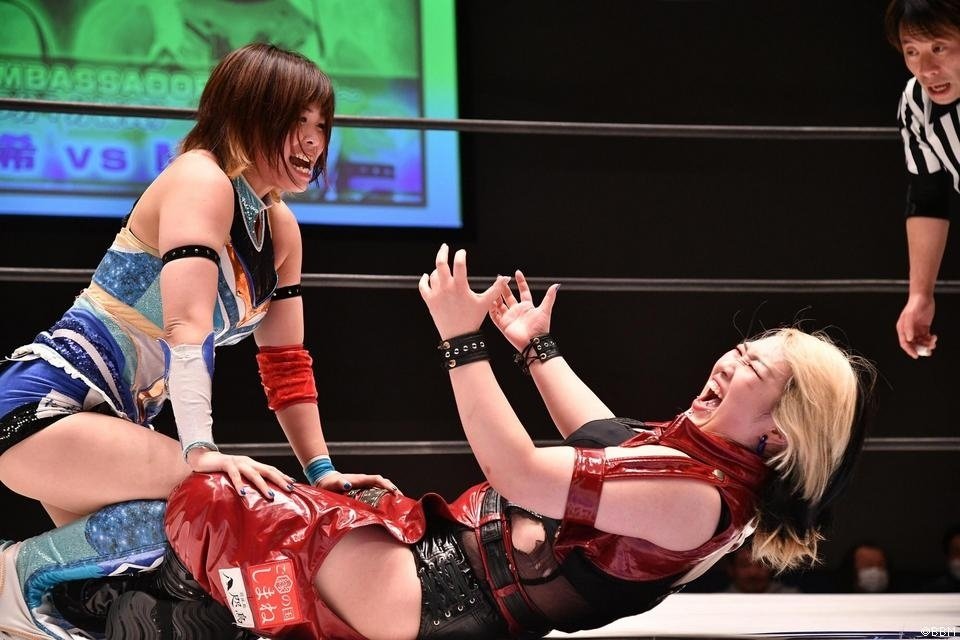
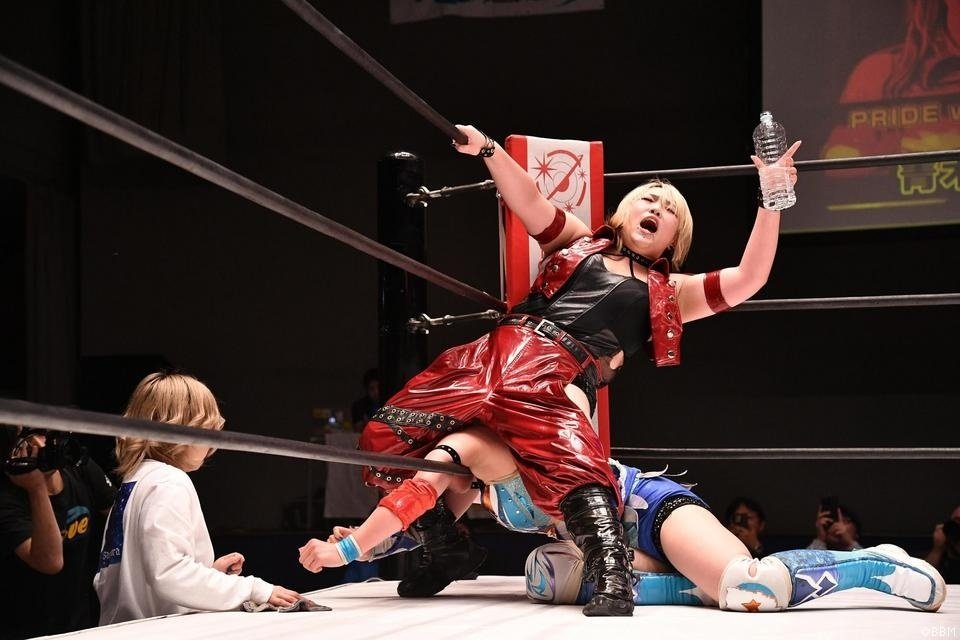
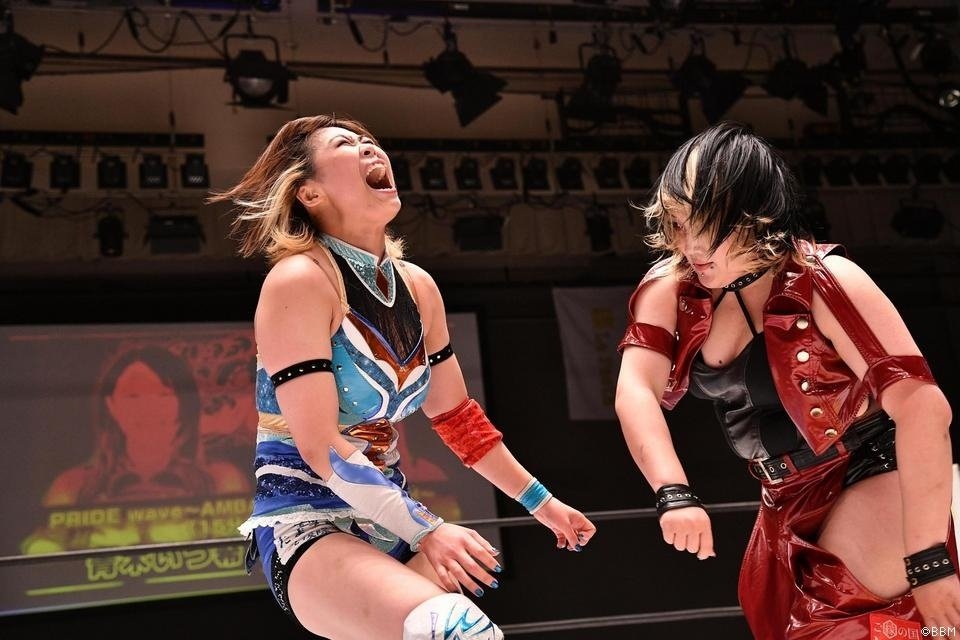


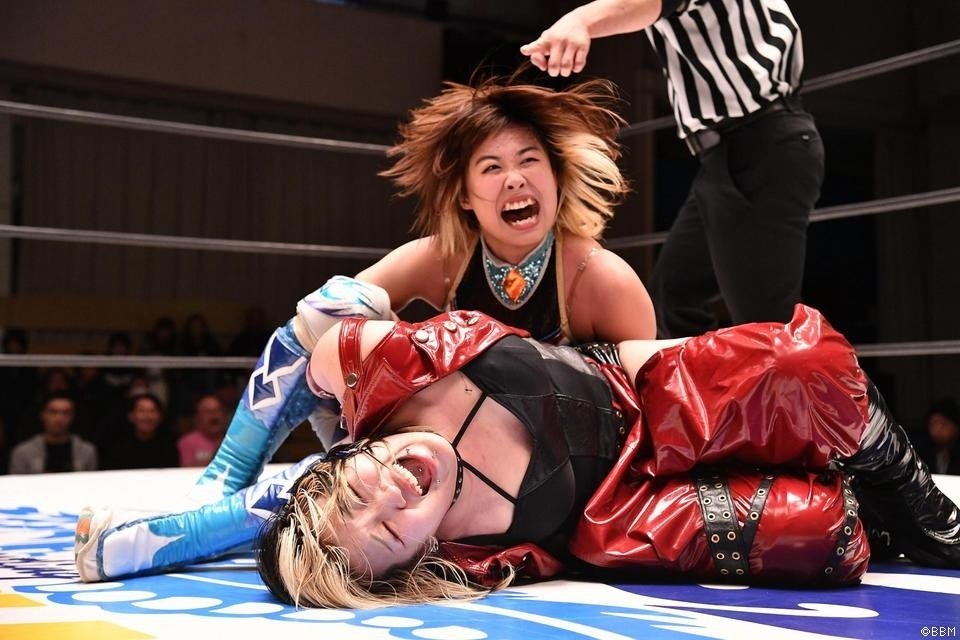
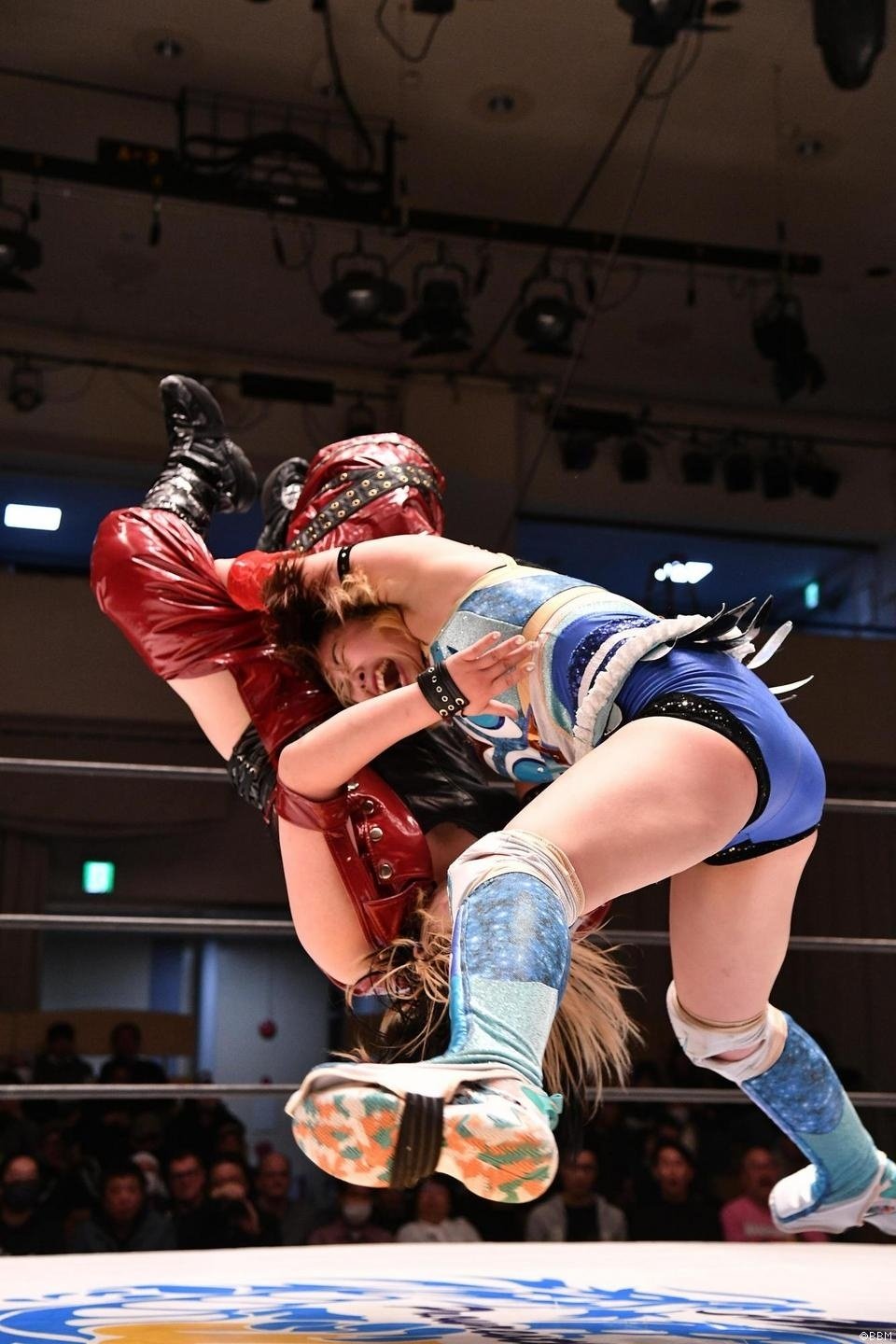
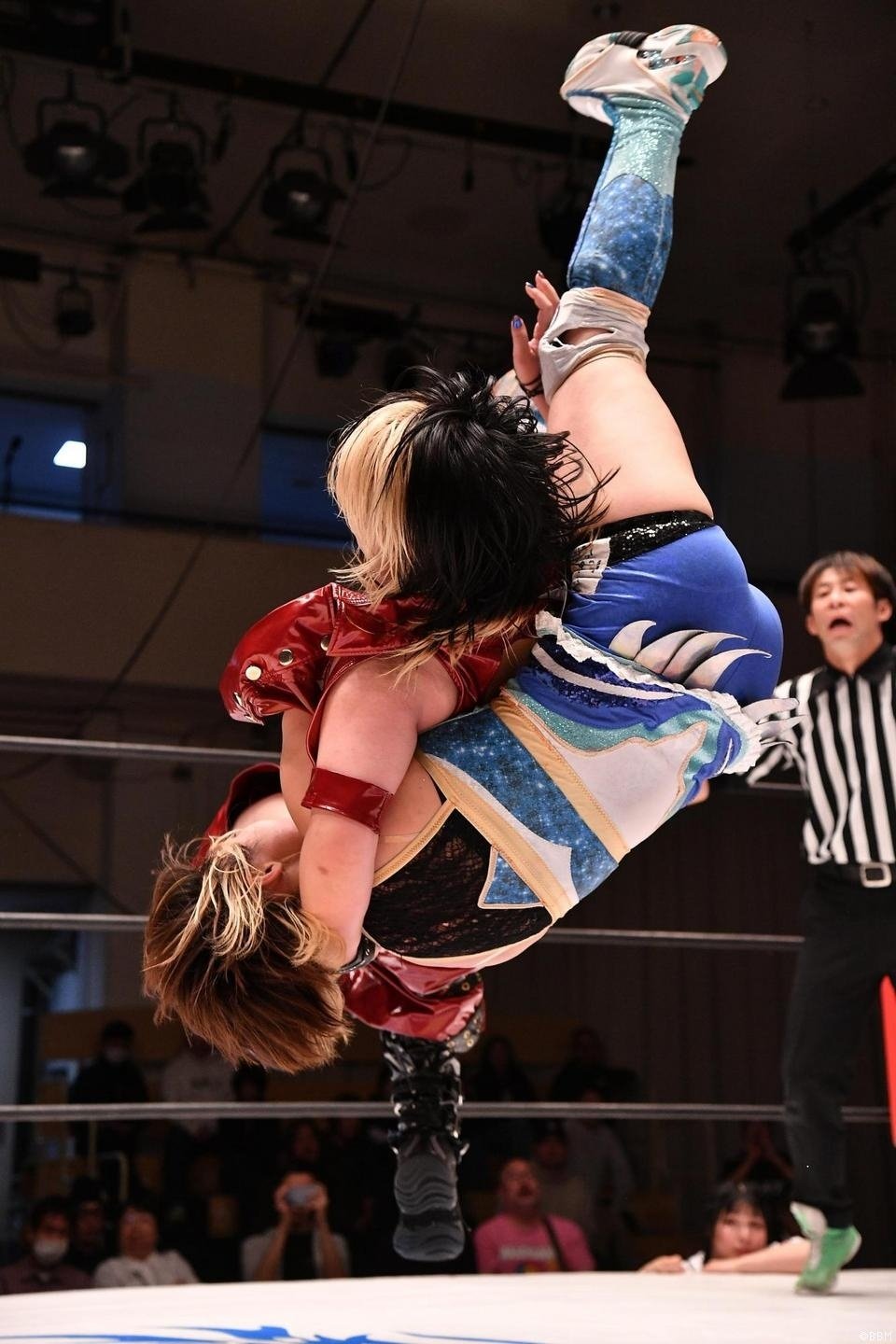
Every once in a while, a booking tells you exactly how a promotion values two wrestlers without needing a single post-match promo to spell it out. Both Itsuki Aoki and MIRAI reached the semifinals of this year’s Catch the Wave before falling short and finishing in third place. Meeting here for the first time ever in singles competition with a tight 15-minute time limit meant neither woman had time to waste, and neither had room to blink.
Catch the Wave (キャッチ・ザ・ウェーブ): Pro Wrestling WAVE’s annual flagship singles tournament. Reaching the semifinals places both Aoki and MIRAI in the promotion’s upper competitive tier, turning a 15-minute first-time singles bout into a high-stakes tiebreaker.
Even the pre-match ritual became a contest for the room’s oxygen. Aoki let loose her trademark booming greeting of “Let’s have a good maaaatch!”, trying to claim the hall before the bell even rang. MIRAI did not back down for a second. She called out “Lend me your strength, everyone!” and rallied the entire Korakuen crowd into an even louder “Let’s have a good maaaatch!” that visibly threw Aoki off her rhythm, prompting her to protest, “Don’t outdo me like that!”
Once the bell sounded, the bout opened deliberately. Aoki locked in a headscissors, and MIRAI slipped her head free to transition directly into a leg lock. After trading holds on the head and wrist, the pace jumped without warning into a hard collision of shoulder tackles. Aoki tried to assert her own brand of veteran poise by stomping MIRAI in the corner while pausing to drink water, only for MIRAI to twist her wrist, exclaim “Too bad!”, take her down, and blast her with a low dropkick.
From there, MIRAI went to work with clear strategic intent, hitting a corner lariat and using the ropes for an arm breaker, then continuing to grind down Aoki’s right arm on the ropes as the 10-minute mark went by. That kind of limb targeting matters when you are facing a lariat specialist, because you are trying to take away her heaviest tool before the closing stretch arrives. An elbow exchange broke out before MIRAI threw Aoki down and climbed the corner, only for Aoki to recover and bring her crashing back down with a deadly drive.
Aoki surged ahead with a corner lariat and a Shinkansen Attack, then climbed up for a diving body press, which MIRAI intercepted with raised knees with three minutes left on the clock. What followed was a stubborn test of willpower. A lariat battle broke out with neither woman giving an inch as they traded strikes and follow-up lariats. Aoki hit a short-range lariat and followed with another lariat, yet MIRAI caught her arm and dragged her into a llave, pouring on pressure until Aoki barely scrambled to the ropes.
Llave (ジャベ, Spanish for “key” or “lock”): A technical submission hold rooted in lucha libre, widely adopted across Japanese wrestling to describe intricate, multi-limb grappling traps.

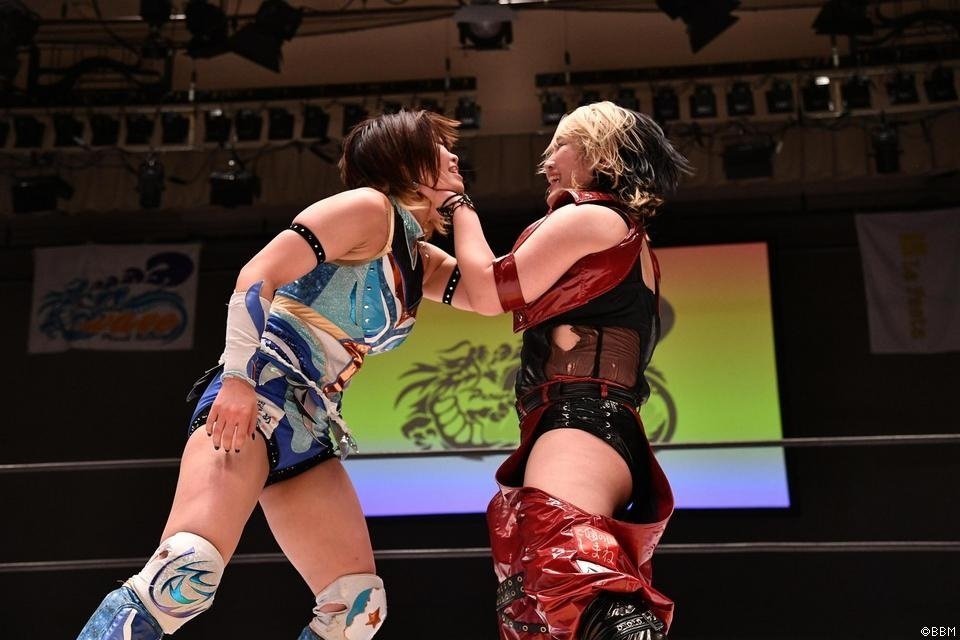
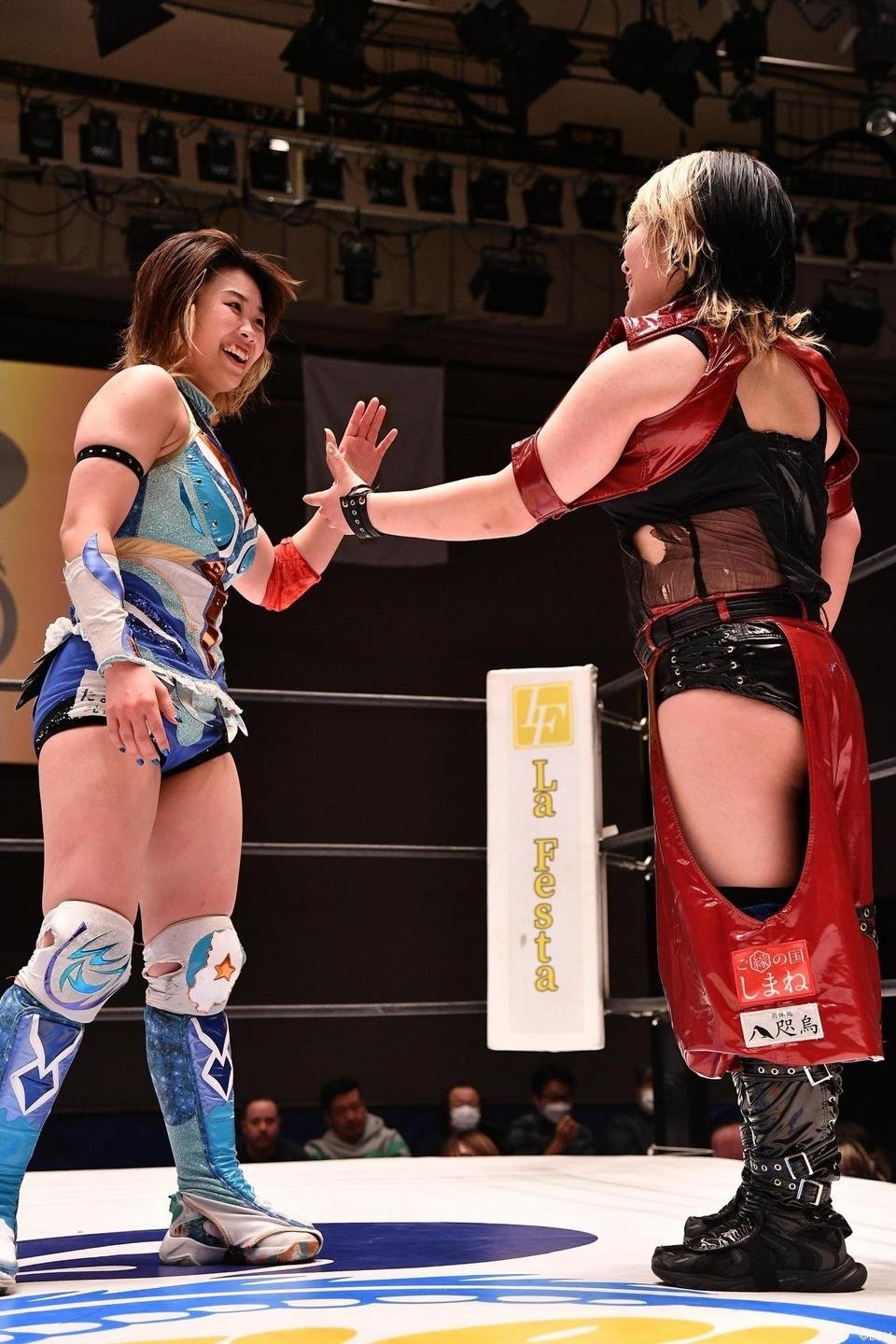
MIRAI threw an elbow, and Aoki countered with a release German suplex. MIRAI popped straight back up to strike with a lariat into the Miramare Shock for a two-count, and Aoki fired right back with the Rashabasami for a two-count of her own. Right at the buzzer, Aoki drove home a sliding lariat as the bell rang for a 15-minute time-limit draw.
In an era where audiences sometimes complain about draws feeling like non-finishes, this is a good reminder of what a well-constructed time-limit draw actually does. It protects two powerhouse performers who finished side by side in the promotion’s flagship tournament and leaves a clear, unfinished debt between them whenever their paths cross again.
Corporate Debt, Trial Series, and the Weight of the First Crown
Match 4: PRIDE wave ~Hikari Noa 7-Match Trial Series / CUARTA ~Inaugural Regina~~ (15-Minute Time Limit)
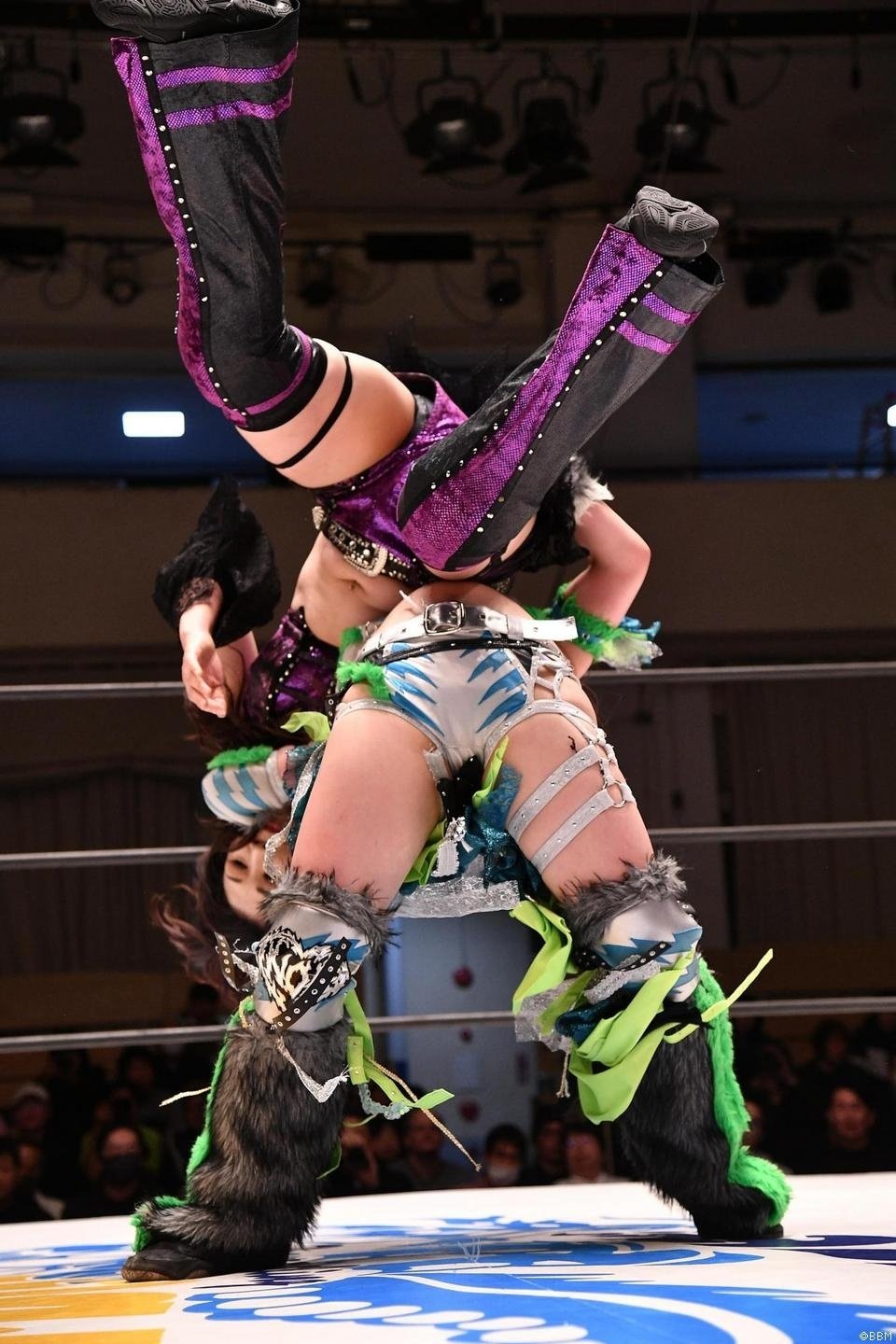
Yumi Ohka def. Hikari Noa (10:29, pinfall)
Densho Tower Hacker Bomb


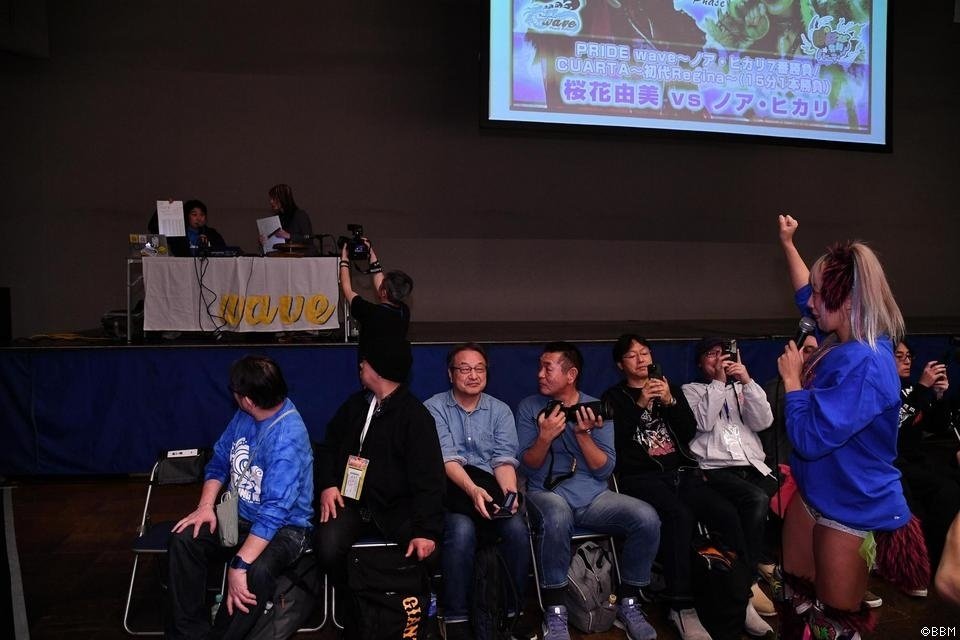

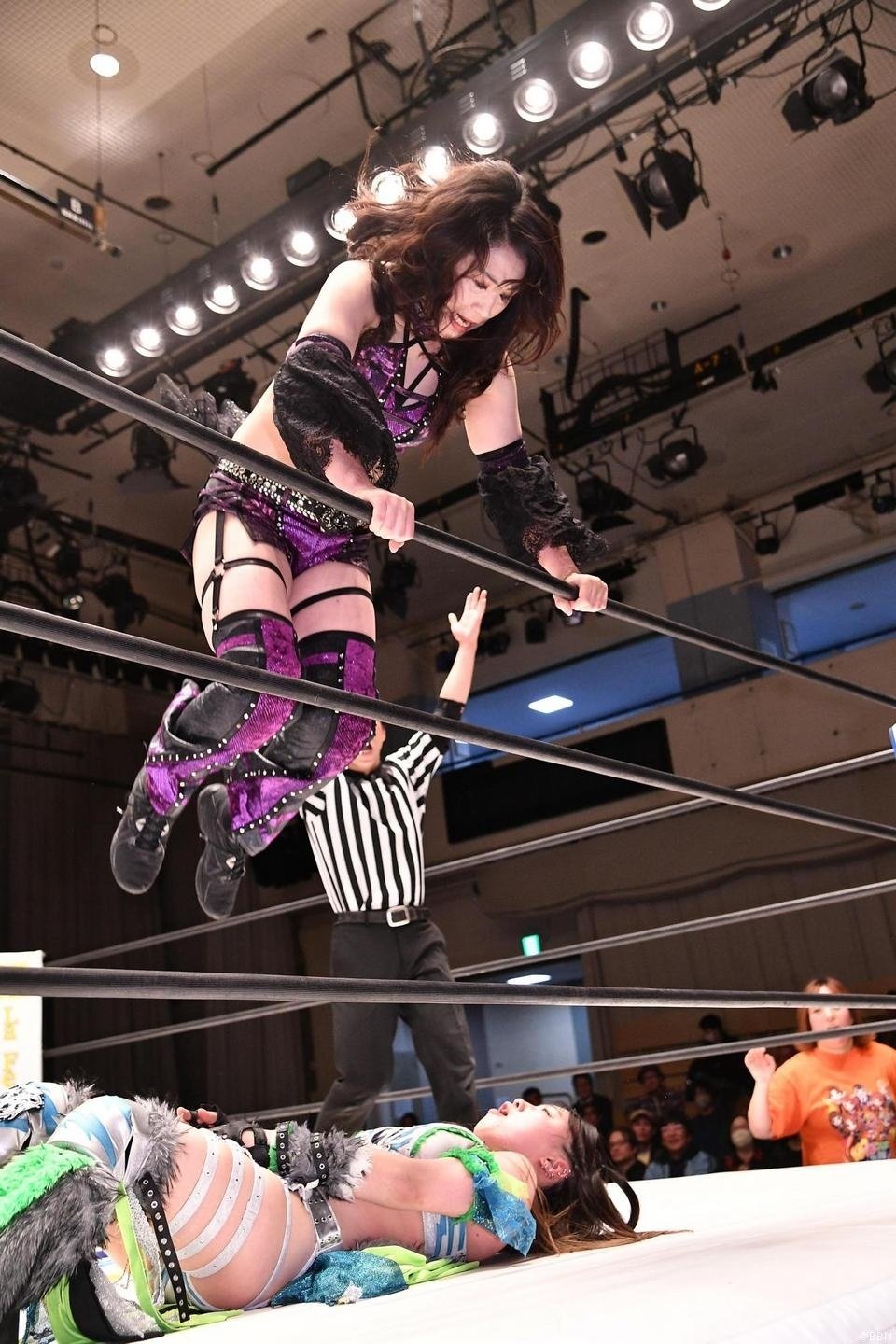


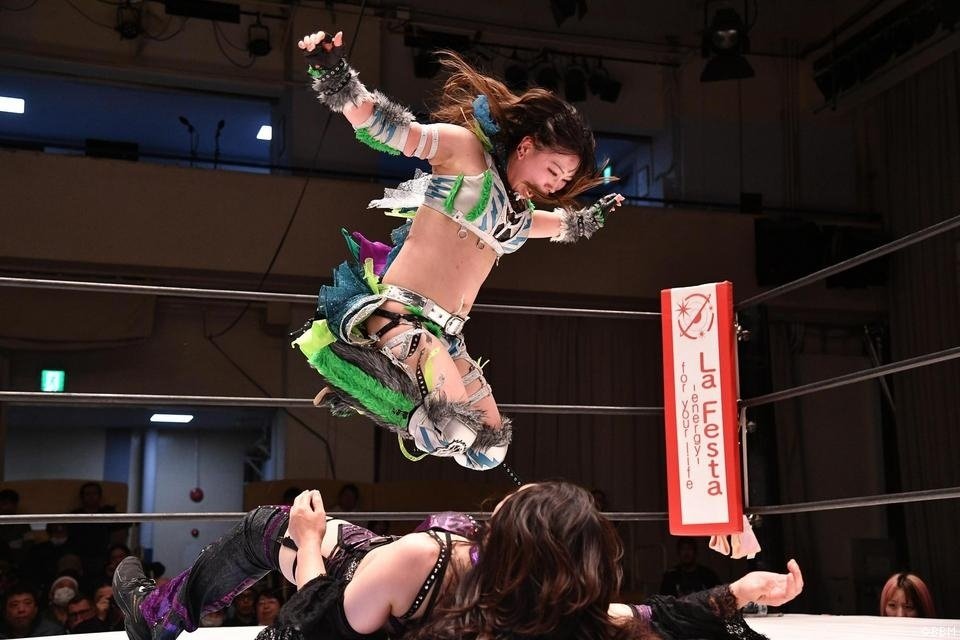
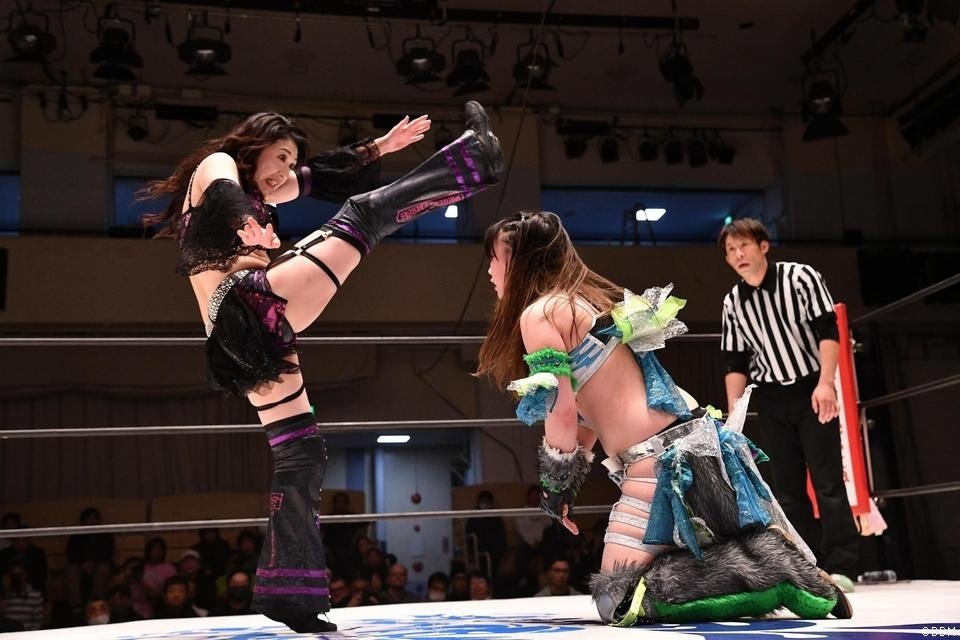

Now, pay close attention to what happened before the bell rang in Match 4, because this little exchange tells you more about the honest, unvarnished reality of independent pro wrestling economics than ten corporate press releases ever could.
This was the fourth chapter of Hikari Noa’s WAVE-style seven-match trial series, pitting her against Yumi Ohka, the inaugural Regina di WAVE Champion. Unagi Sayaka came out to second Noa at ringside, and she immediately went after GAMI over the bigger stakes hovering over the night.
Unagi: “Hey, GAMI! Did you bring what we talked about?”
GAMI: “That’s GAMI-san to you. Here’s ZABUN’s corporate registry certificate, and please take the debt as a package deal!”
Unagi: “There’s debt too…? Still, we can pay that off, right? (laughs wryly) Papapa is winning every match tonight! Go get her, Hikari!”
Think about the humor sitting right on top of a very real business truth there. People love the romantic storyline of winning the deed to a wrestling promotion, like it is a stack of gold sitting in a vault. GAMI immediately punctures that fantasy by reminding Unagi that owning a company also means inheriting ZABUN’s debt as a package deal. Independent wrestling is a labor of love operating on thin margins, and even in the middle of a Korakuen Hall storyline, WAVE is never too proud to laugh at its own ledger.
ZABUN (株式会社ZABUN): The parent operating company behind Pro Wrestling WAVE. Bringing its official corporate registry certificate to ringside grounded the promotional deed stipulation in real Japanese corporate paperwork, liabilities included.
“Here’s ZABUN’s corporate registry certificate, and please take the debt as a package deal!”
GAMI
Once the match got underway, though, Yumi Ohka reminded everyone why institutional veterans remain the ultimate measuring stick in a trial series. Ohka charged at the bell, and Noa evaded cleanly with a bridge. Ohka responded by stomping on both of Noa’s arms, shouting “Just because you’re a little cute!” and twisting her hair for a hair whip, before hitting two consecutive corner big boots punctuated by her signature “Oh!”
Noa did not fold under the veteran’s pace. She fired back with a dropkick into a leg lock, then followed with two low dropkicks to the leg and went straight back to the leg lock. Ohka swung control back her way with a stun gun, a corner big boot, and a big boot from the floor into the ring, chaining into a Bloody EX using the corner and a low big boot with another “Oh!” for a two-count.
Noa kept chipping away, connecting with a low dropkick into a DDT, a double knee drop to the leg, and another leg lock that forced Ohka to kick her in the face just to break free. Ohka answered with a DDT and an axe kick, while Noa came right back with a low thrust kick and a Blizzard Suplex for a two-count. When Ohka threw an upkick and a spinning heel kick, Noa caught her in a roll-up for two, then immediately tried a Japanese Leg Roll Clutch Hold for another near fall.


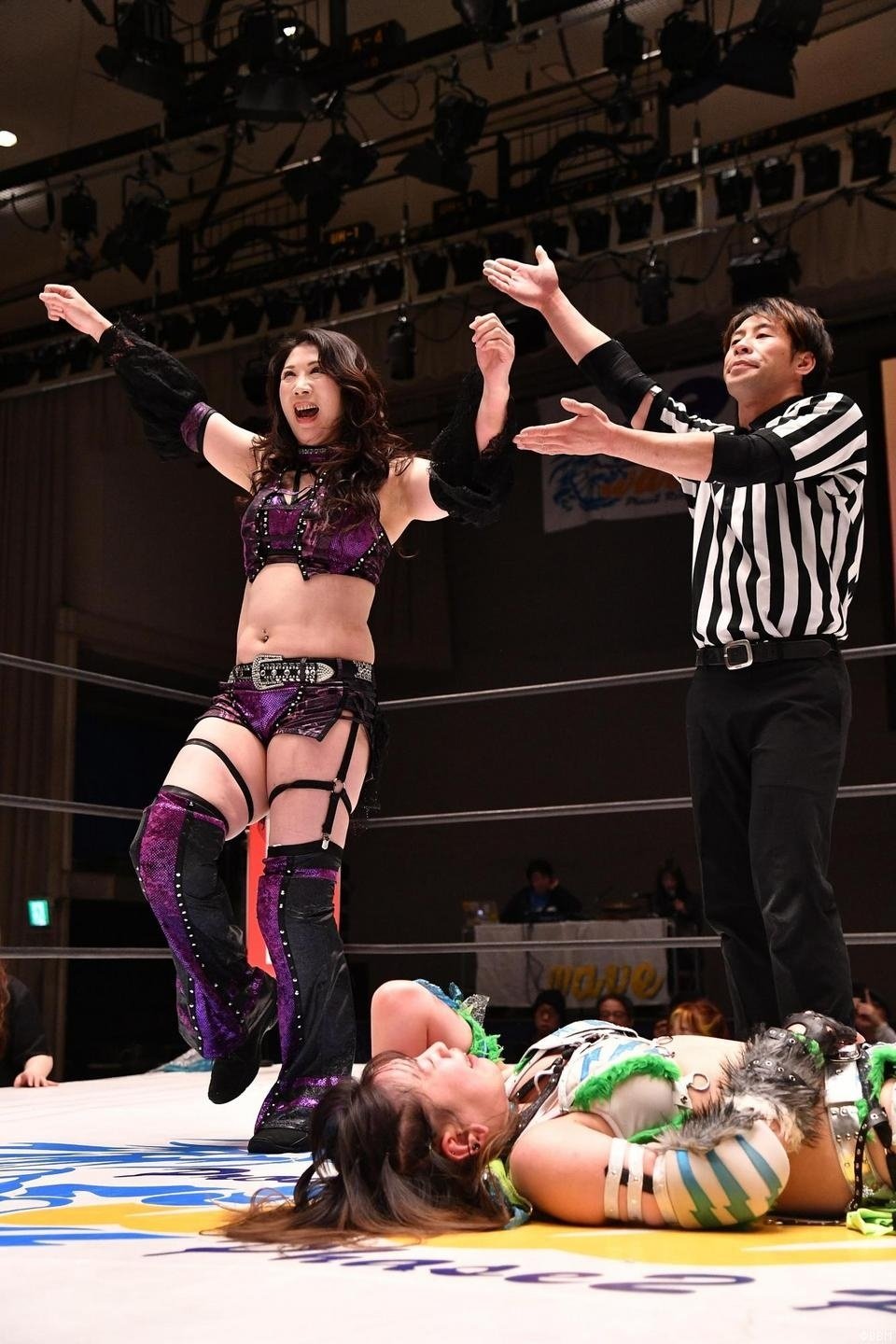
Noa followed a flying lariat with one more roll-up attempt, only for Ohka to reverse it into a pin of her own and blast her with a big boot for two. Ohka hit a sheer-drop brainbuster, and Noa still had enough left to bridge out just as the match passed the 10-minute mark. Recognizing that Noa was not going to stay down for anything less than her absolute best, Ohka spiked her with the Densho Tower Hacker Bomb at 10:29 for the three-count.
A trial series is supposed to test whether a challenger can adapt when the standard playbook fails. Noa pushed the inaugural Regina champion past ten minutes, attacked the base, and forced Ohka to dig deep into her arsenal. Still, Ohka held the line for WAVE, keeping the score tilted firmly in the home promotion’s favor heading into the final two bouts of the night.
Same-Class Peers, Controlled Chaos, and Looking Beyond One Ring
Match 5: PRIDE wave ~Doki no Sakura~ (20-Minute Time Limit)
Cohaku & Momoka Hanazono def. Kakeru Sekiguchi & Ayame Sasamura (18:51, La Magistral)
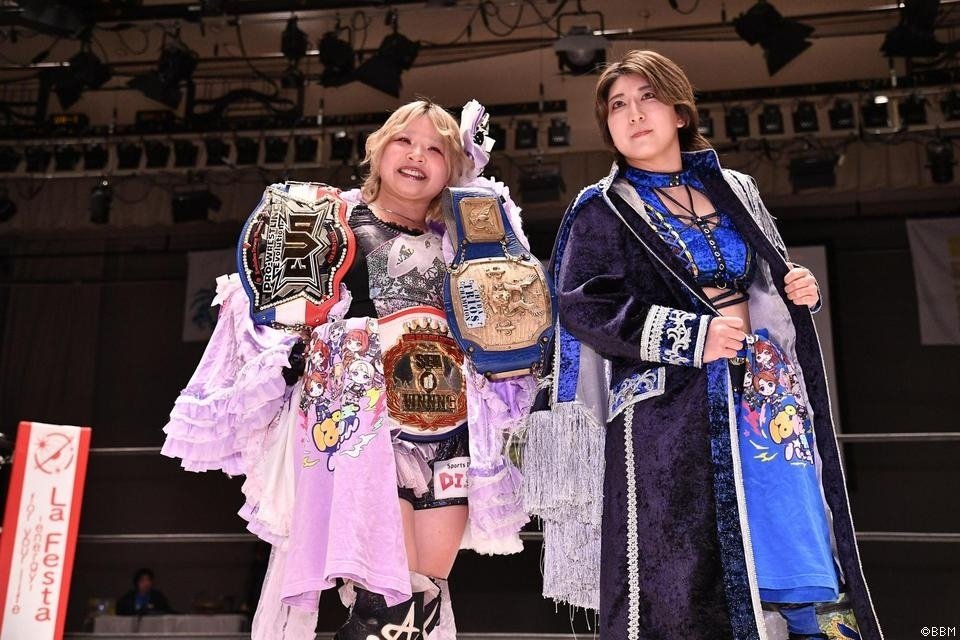
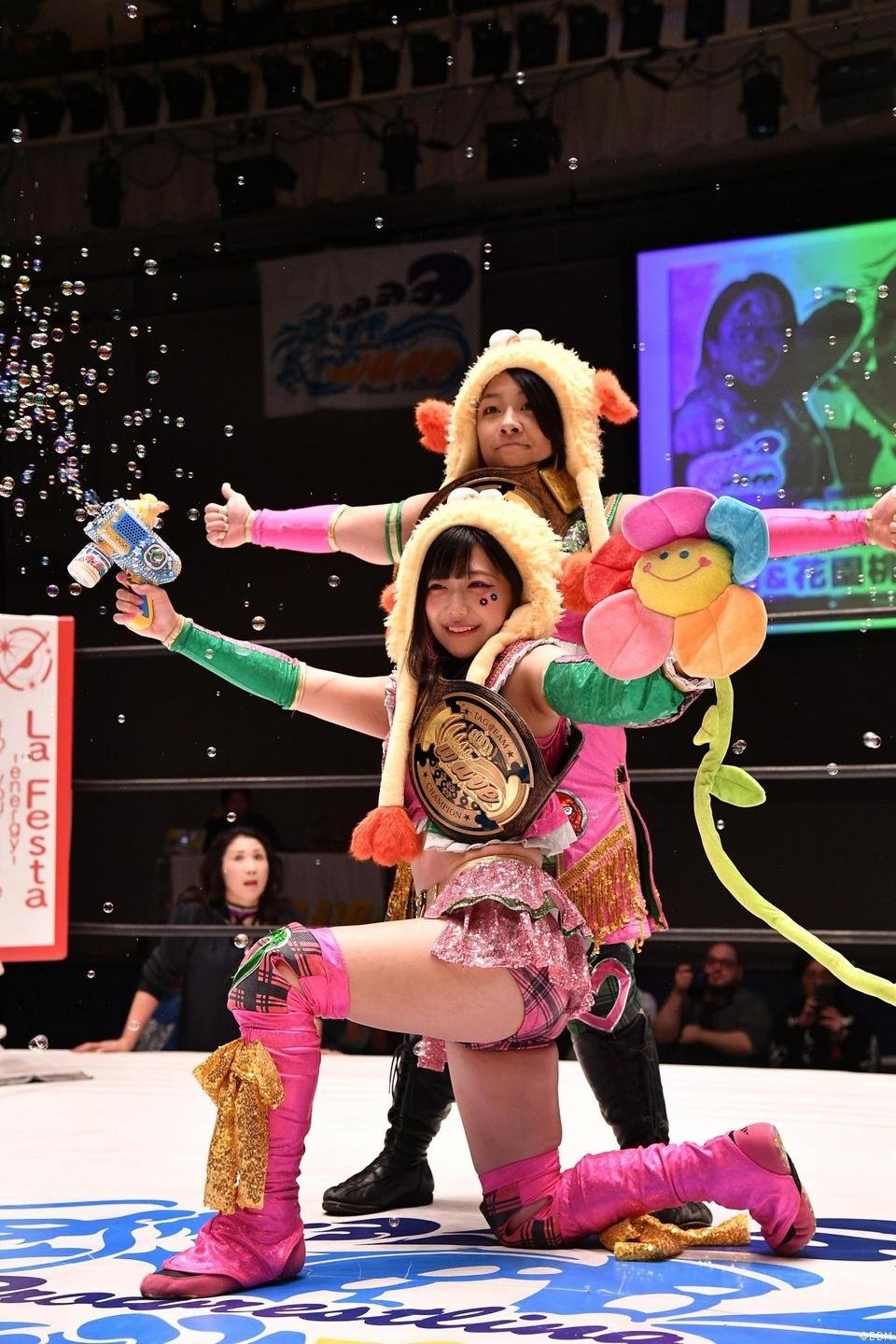
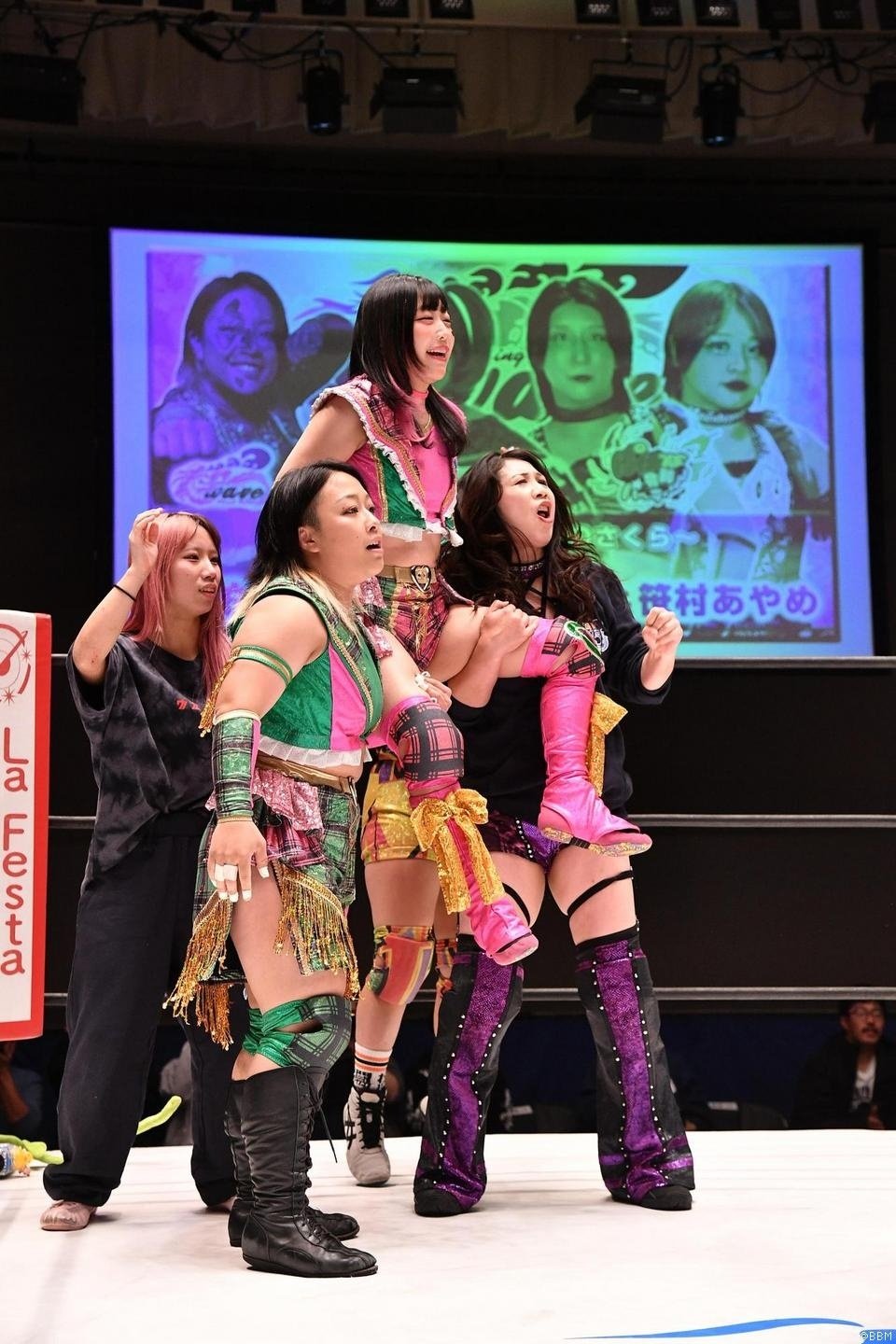

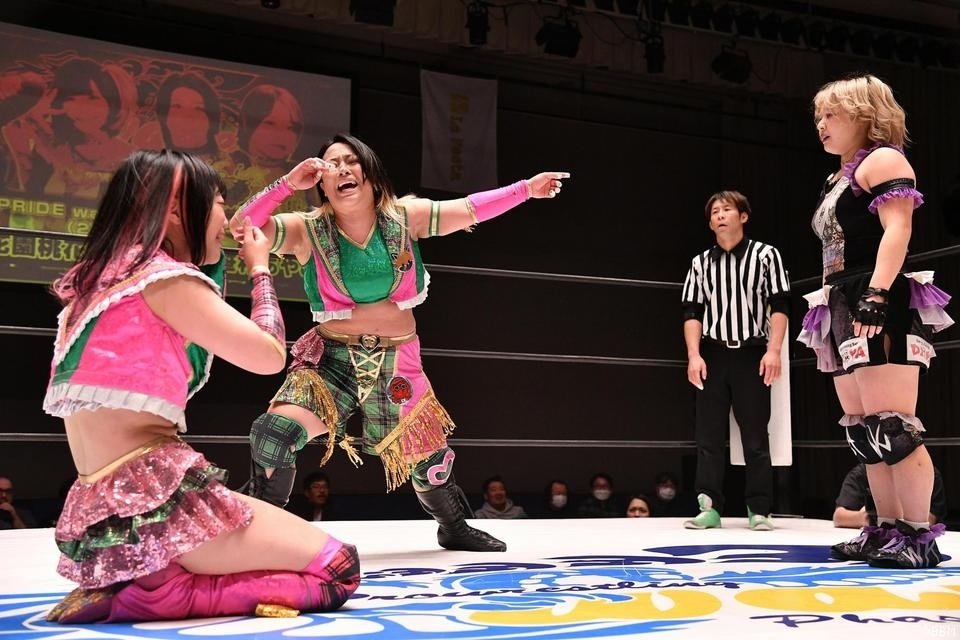
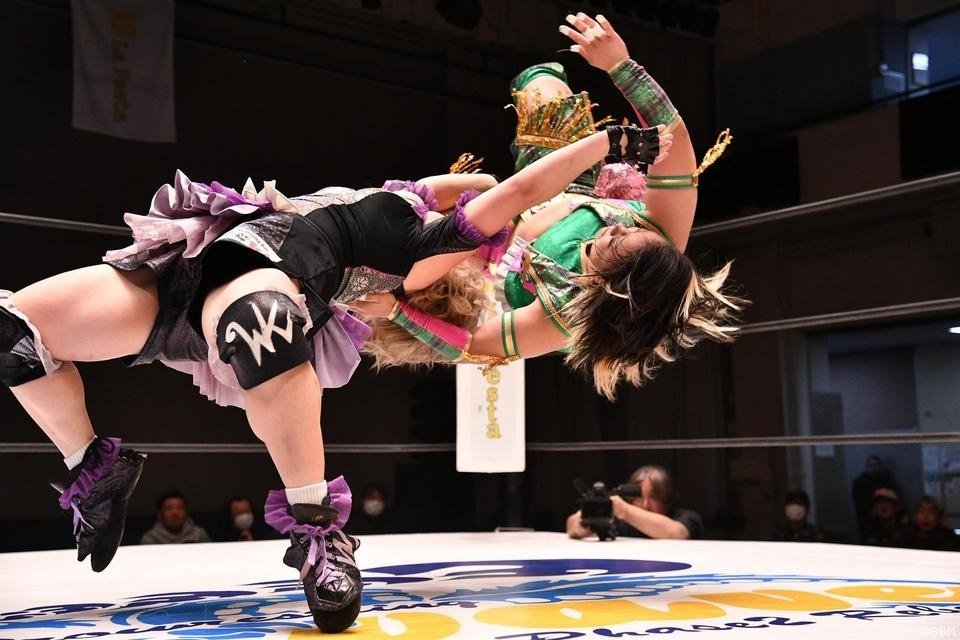

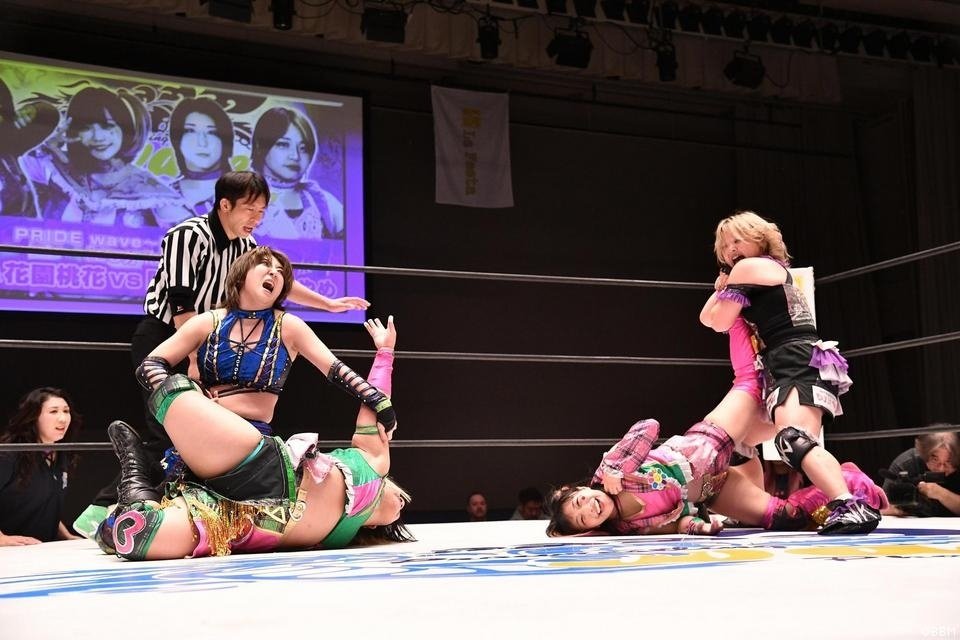

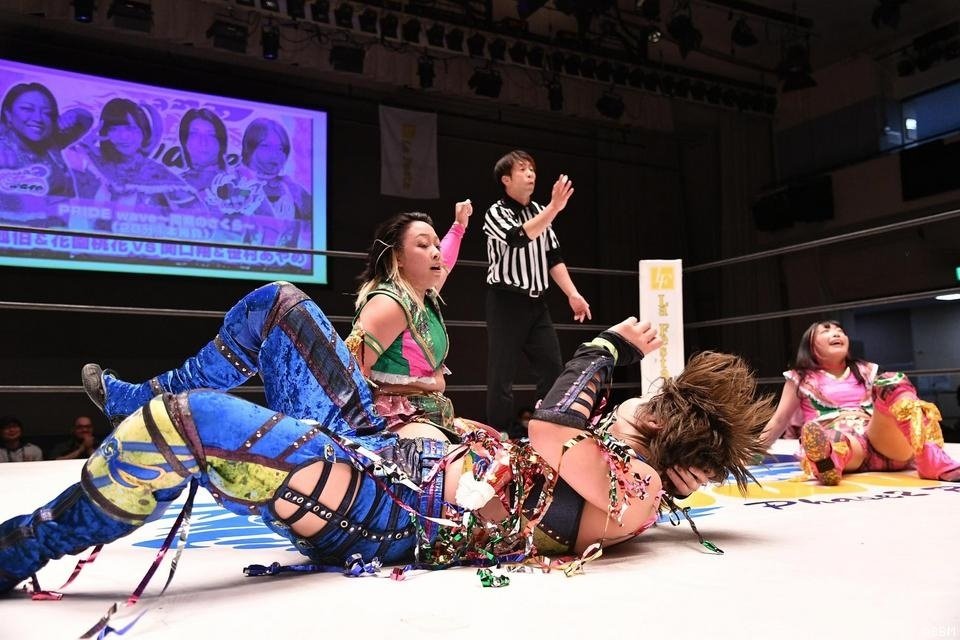

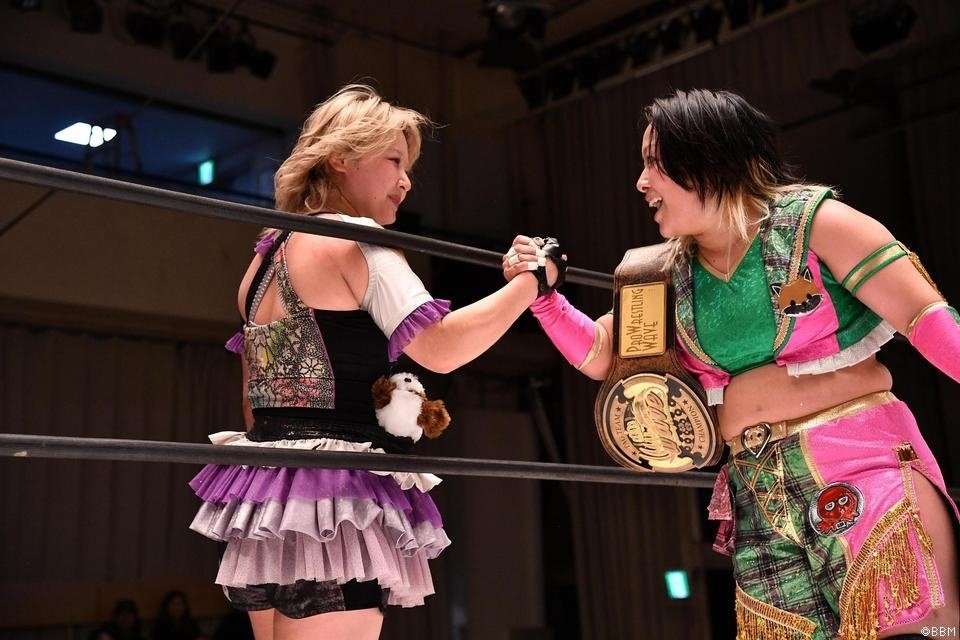
In Japanese workplace culture, and especially inside pro wrestling, your doki, the peers who entered the business in the same rookie class as you, occupy a complicated space. You share the same starting line, which builds a real bond, yet you also spend the rest of your careers measuring your progress against theirs. Fresh off winning the tag team titles from Natsu Sumire and YuuRI in Sapporo on November 15, Cohaku and Momoka Hanazono stepped into Korakuen Hall to face their same-class contemporaries from Papapa Reiwa Party, Kakeru Sekiguchi and Ayame Sasamura.
Doki no Sakura (同期の桜, “Cherry Blossoms of the Same Class”): A traditional Japanese expression honoring members of the same entering cohort, used here as the match subtitle to frame the shared rookie-class bond connecting both tag teams and later challengers Hikari Noa and Rina Amikura.
Even before the physical contest settled in, Hanazono framed the blurry loyalty lines of independent wrestling with complete honesty.
Hanazono: “It’s turning into a Papapa vs. WAVE interpromotional war, though it doesn’t really have anything to do with me. Still, since I’m part of Kids Club today, I’ll side with WAVE. Speaking of faction wars… what comes to mind?!”
That question sparked chants for a cavalry battle across Korakuen Hall, and for a brief moment they tried to line one up before the whole formation collapsed straight into a ringside brawl. The Papapa Reiwa Party seconds flooded in to run a corner train attack, only for Yumi Ohka and Saito to storm in right behind them and flip the tables with a train attack on Sekiguchi. When Saito tried to charge ahead with her “Shu! Shu!” routine, Sasamura kicked her from the side and drew loud boos from the crowd. Hanazono answered with a bubble attack, and Cohaku followed right behind with a low dropkick.
Now, look. Outsiders sometimes mistake this kind of absurdity for a lack of seriousness, when in reality it takes sharp timing to pull an entire hall into a gag without losing the thread of a match. Hanazono and Sekiguchi traded roll-ups back and forth in a rocking seesaw sequence until everyone except Sasamura, inexplicably including the ringside seconds, suddenly burst into tears. Sasamura refused to play along and mercilessly kicked them away. When she looked to press her advantage, Saito stepped in to intimidate her with “Shu! Shu!”, creating the opening for Cohaku to hit a missile dropkick from behind and trade elbows with Sasamura.
From there, the physical edge came right back into focus. Sasamura caught Cohaku from behind with a knee attack, and Sekiguchi connected with a Codebreaker and a low dropkick for a two-count before flowing from a llave trapping both the arm and leg into a Fujiwara armbar. Still, the comedy kept weaving through the tension. Hanazono and Sasamura got tangled up in a tug-of-war over hostages (?), agreeing to a pact to let go at the exact same moment, only for Sasamura’s team to betray the deal and draw another wave of boos. Sekiguchi and Sasamura chained together a 619 and knee attack sequence, then locked in simultaneous llaves.
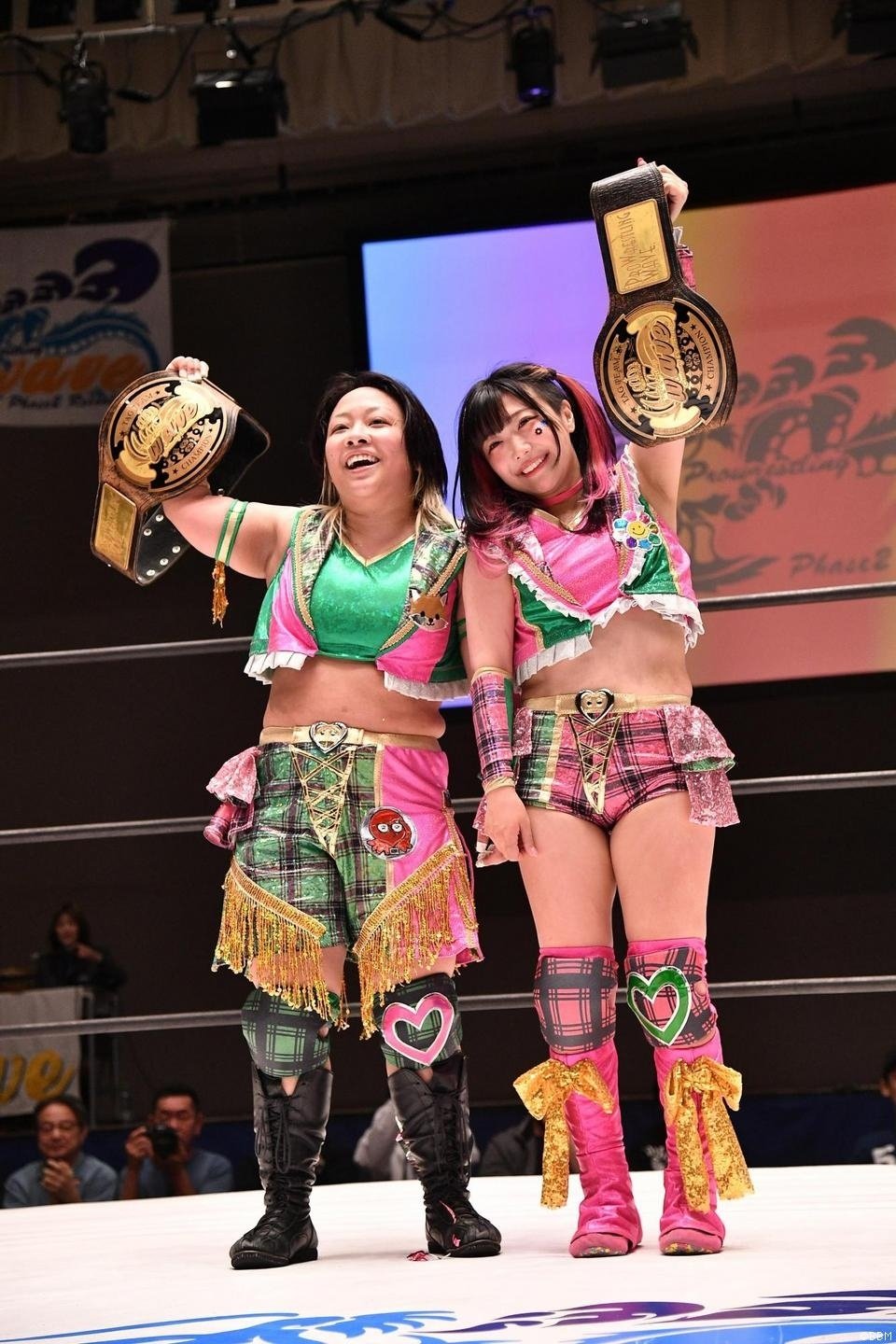
Right when Papapa Reiwa Party had control, a motorized toy dog appeared and distracted Sasamura, prompting Sekiguchi to hurl the toy dog away to a chorus of boos. Hanazono capitalized with a diving double foot stomp, and Cohaku added a diving body press for a two-count. Sekiguchi fired back with a Fisherman’s Buster, Sasamura landed a diving double foot stomp, and Sekiguchi struck with a missile dropkick. Sasamura even landed a lariat while still clutching the toy dog, followed by a dropkick from Sekiguchi for a close two-count.
The turning point came when Papapa Reiwa Party overreached. Sasamura tried to launch Sekiguchi at her opponents with a Frankensteiner, only for the move to be evaded and backfire. Hanazono immediately fired off a party popper attack, giving Cohaku the split second she needed to trap Sekiguchi in La Magistral for the three-count at 18:51.
Once the bell rang, Cohaku stepped onto the microphone and showed how a champion uses one win to build two separate bridges at the same time.
Cohaku: “Our first title defense will be on November 29 at the Kariya show. Our opponents are ‘Noamin’, Hikari Noa and Rina Amikura. Those two are from our same rookie class. Setting faction wars aside, let’s have a fiery match among peers.”
Noa: “We’re coming at you for real. Make sure you practice your cavalry battle properly.”
Cohaku: “Sasamura-san, it looks like you’re holding a pretty big belt too [SEAdLINNNG’s BEYOND THE SEA Championship]. I’m thinking I’d like to have that belt myself. I’m coming to grab my chance, so I’ll be seeing you.”
Notice what Cohaku did there. She honored her immediate obligation to WAVE by setting up her November 29 defense in Kariya against another pair of same-class peers, and in the very next breath she reached across promotional lines to stake a claim toward SEAdLINNNG’s top singles title. In modern joshi wrestling, defending your house and expanding your footprint are no longer separate jobs.
The Main Event: Pride, Generational Friction, and Refusing the Quick Check
Match 6: PRIDE wave ~THE FINAL BET~ (No Time Limit)
Honoka def. Unagi Sayaka (18:24, Guruncho)

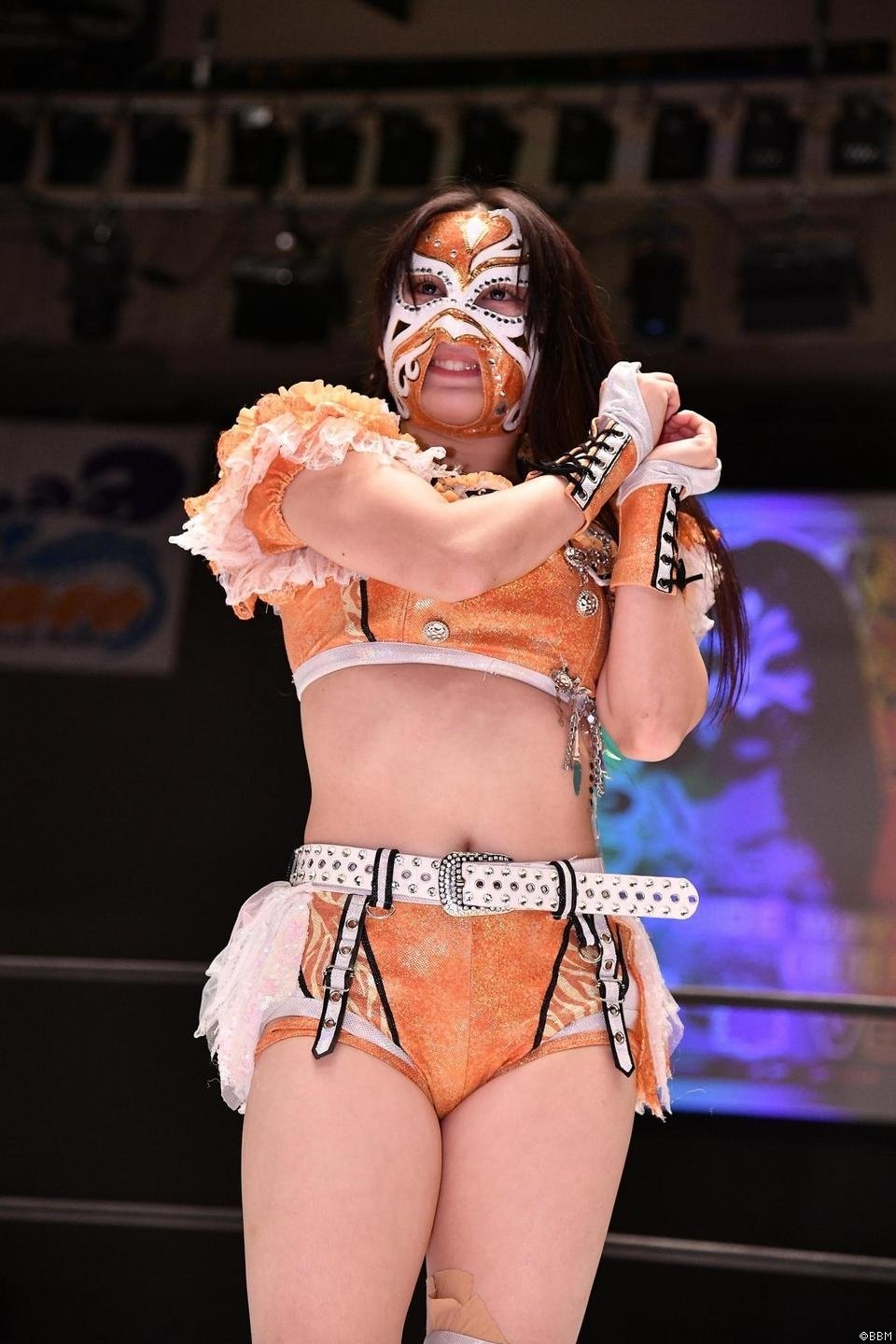
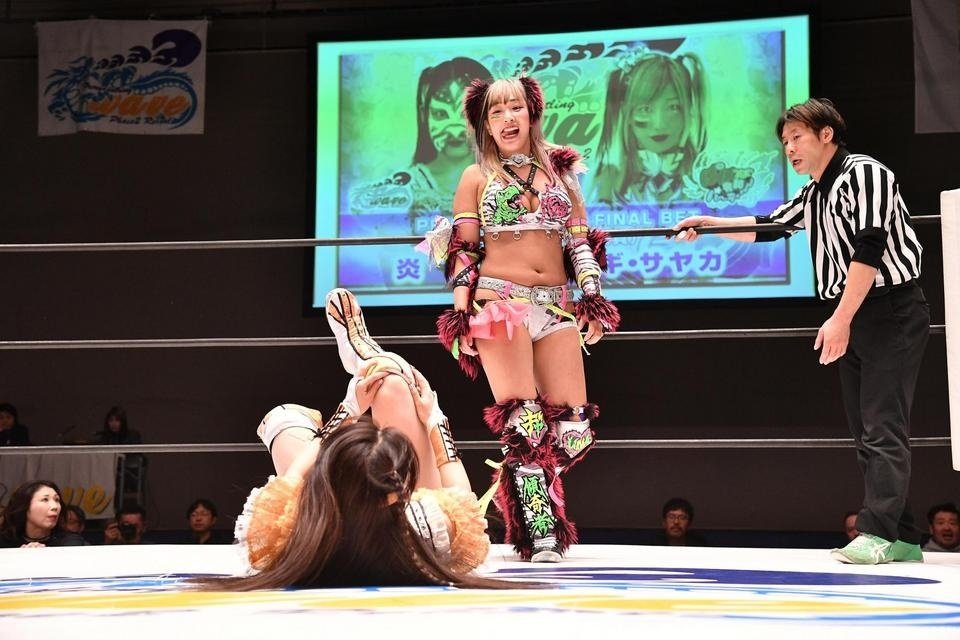
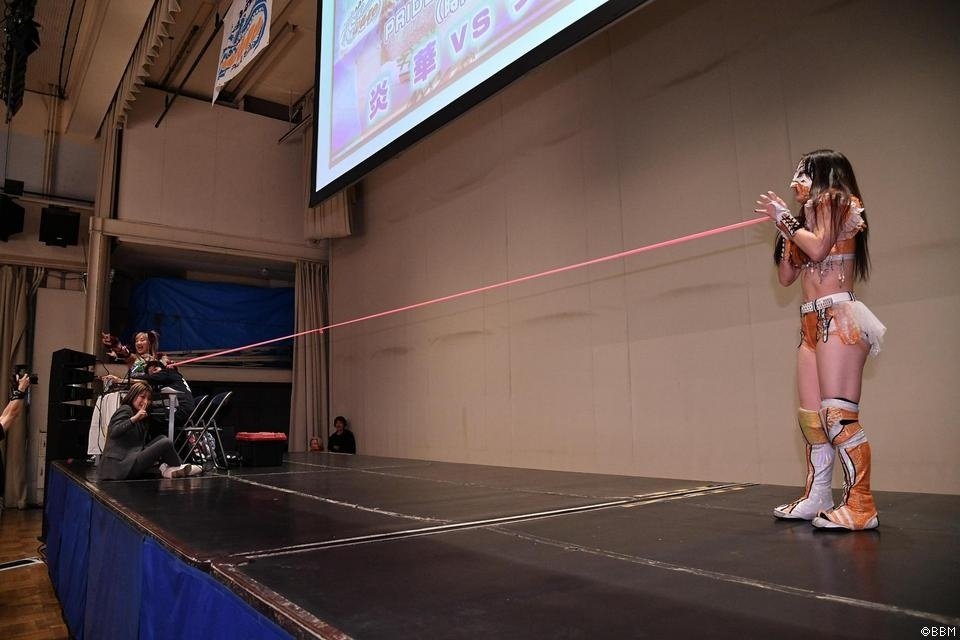
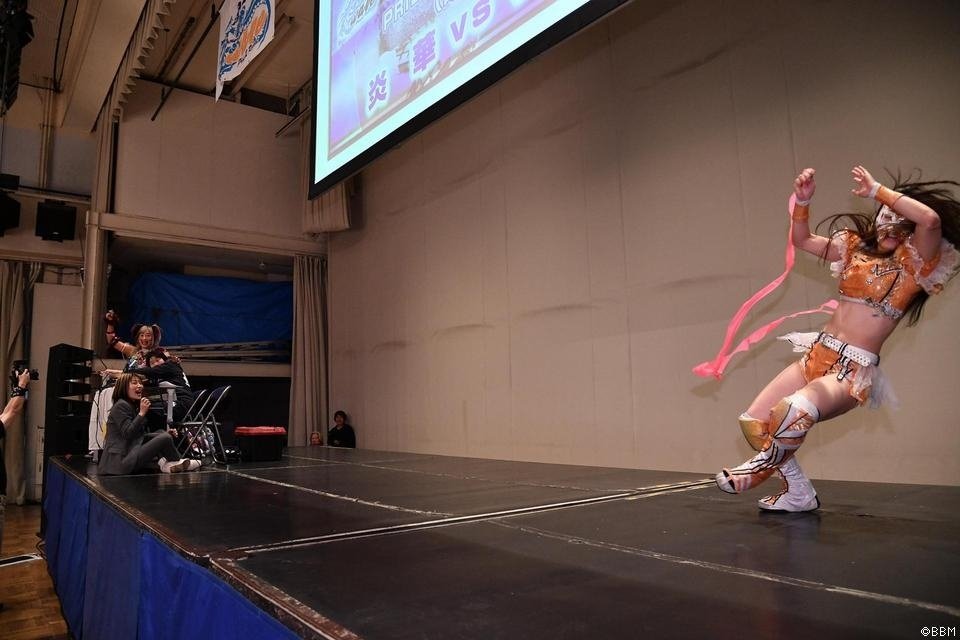
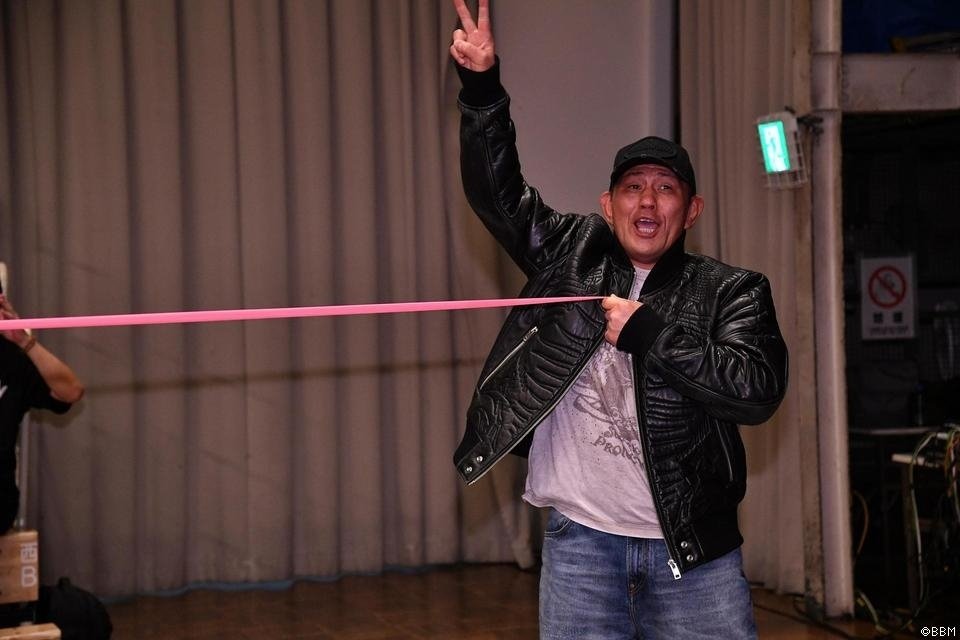
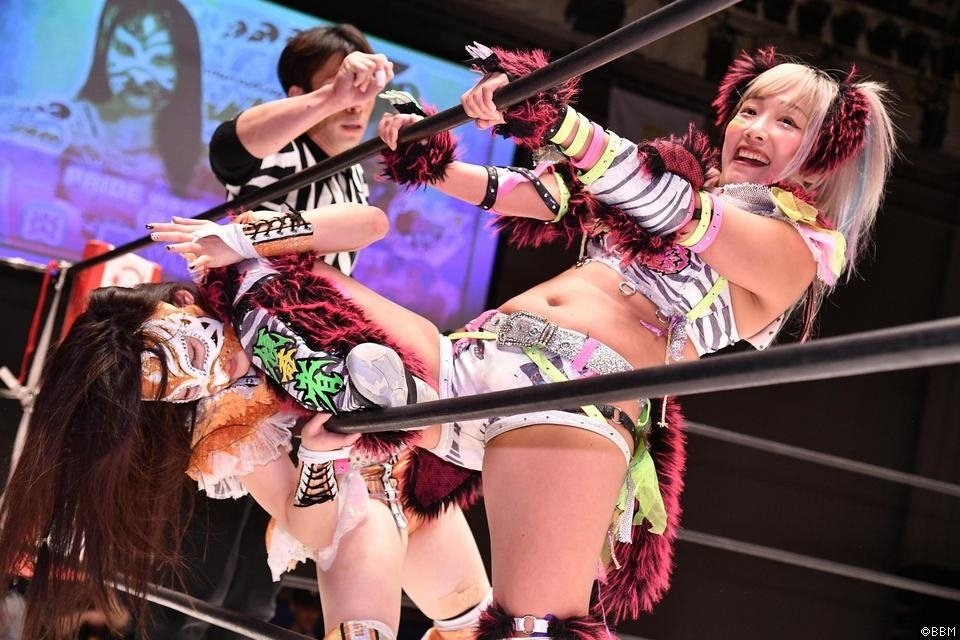
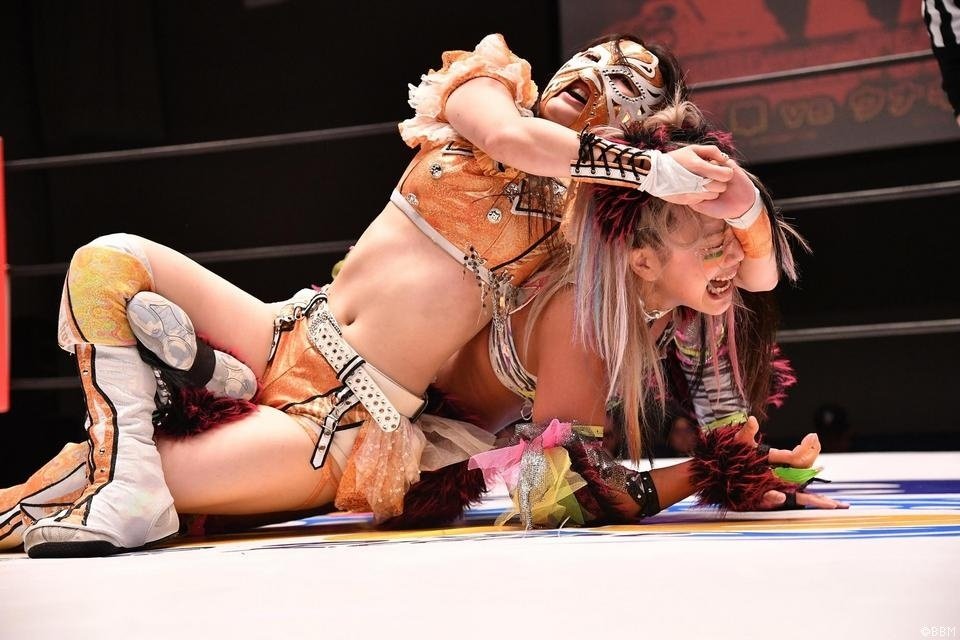

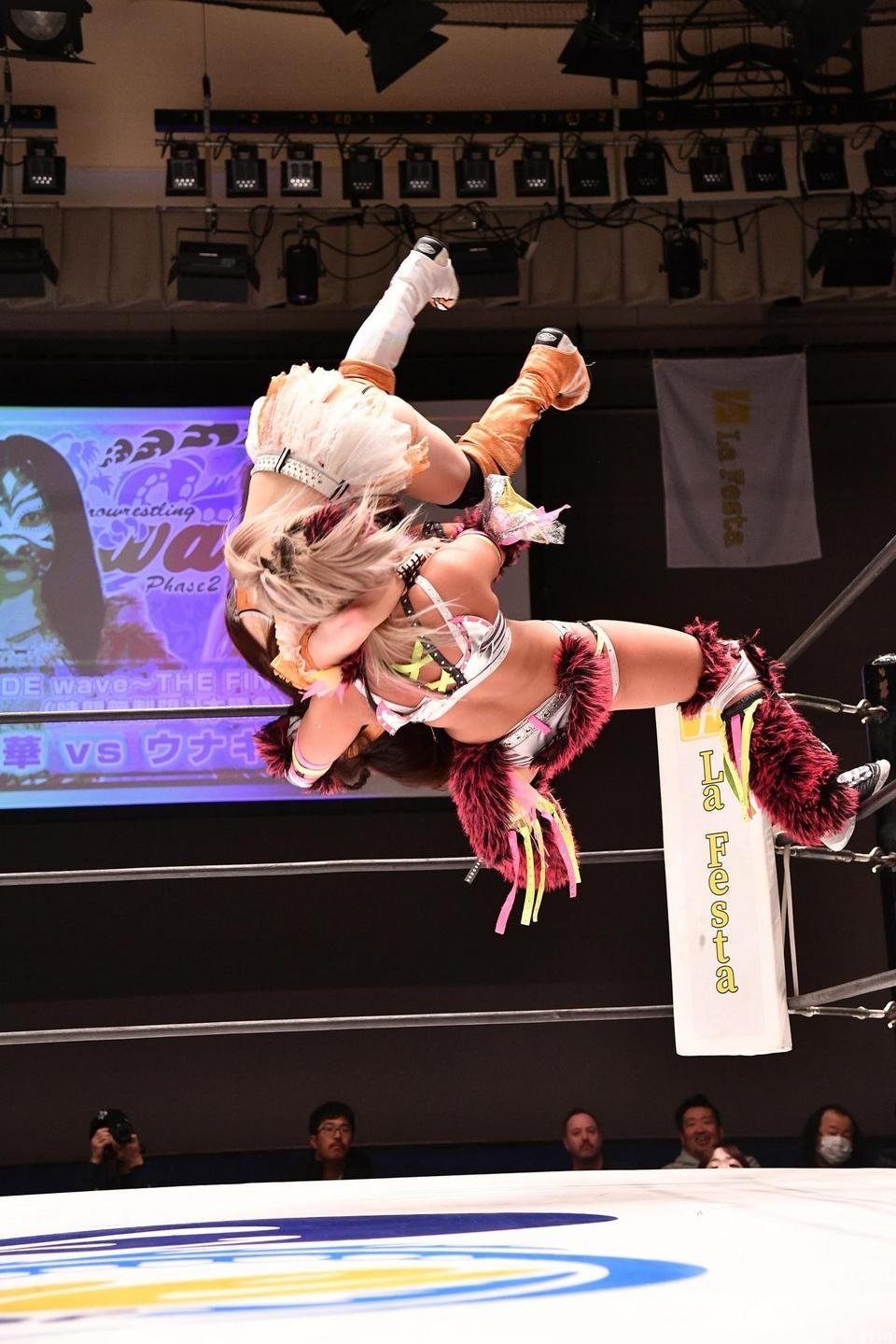
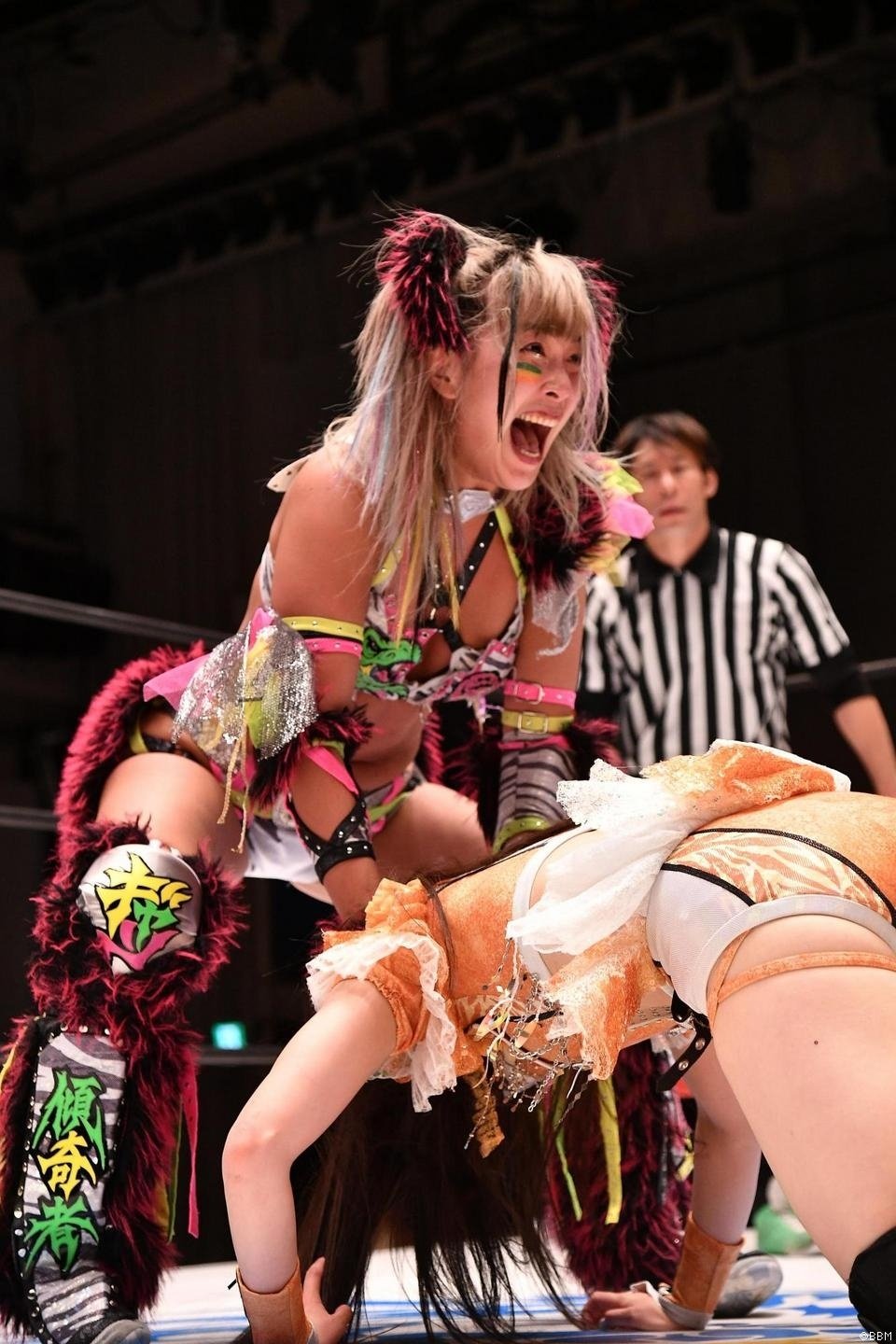

That brings us to the Korakuen Hall main event, where Unagi Sayaka came hunting for the deed to WAVE and ran straight into Honoka in a no-time-limit singles match.
Early on, this played out like a clash between a scrappy young homegrown fighter and a freelancer who knows how to turn every square inch of an arena into her personal stage. Honoka came out firing with a barrage of dropkicks, only for Unagi to halt her with a counter big boot and stomps. Unagi tried to pull off a rubber band snap attack from atop the entrance stage, yet Honoka smartly let go so the band snapped straight back into Unagi. Unagi adjusted on the fly, using GAMI as a human shield so Honoka could not release the band and landing the rubber band snap attack cleanly. She even roped in Minoru Suzuki, who happened to be in the building, to assist with another rubber band snap attack.
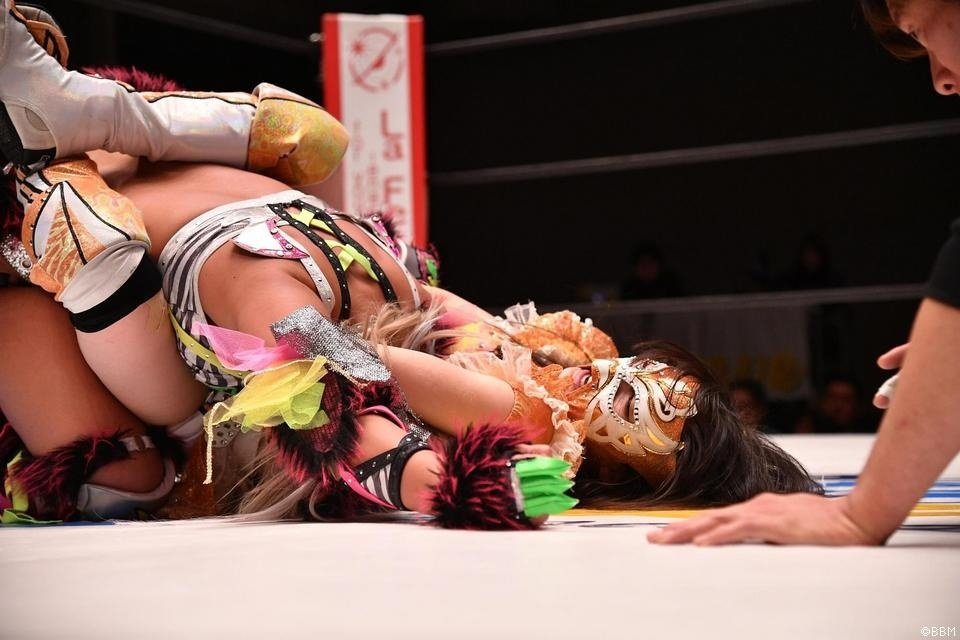


When the action returned to pure wrestling, the intensity climbed steadily. Honoka went for a Space Rolling Elbow, which Unagi sidestepped to unload a string of corner elbows. Honoka rallied back with a diving crossbody, a Space Rolling Elbow, and a face crusher into an STF. Unagi won an exchange of suplexes and followed up with a corner back elbow, a split-legged facebuster, and a guillotine leg drop for a two-count.
Honoka refused to shrink under the spotlight. Shouting “Don’t look down on me!”, she fired back with a dropkick and reapplied the STF, pressing forward with a corner low dropkick before soaring off the turnbuckle to the floor with a plancha. Back inside the ring, Honoka connected with a missile dropkick as the match crossed the 10-minute mark. When she climbed the corner again, Unagi recovered in time to bring her crashing down with a superplex, then hauled Honoka up to drive home a hard elbow.
What followed was a raw generational test of nerve. Honoka yelled “I won’t lose!” and fired back with elbows of her own, while Unagi barked “Get up! Come at me!” and blasted her back. Unagi stood tall, shouting “Not yet, give me more!”, before flooring Honoka with a heavy elbow. Honoka dug back in with a front necklock and a DDT, following with a low dropkick to the side of the head for two and a leaping neckbreaker drop off the corner.
Unagi tightened the screws with the Daifuhen-gatame and struck with an axe kick for a near fall. Honoka answered with Time Machine ni Notte for two, only for Unagi to intercept her with a counter big boot for another two-count. Shouting “It’s over!”, Unagi rolled Honoka into a Japanese Leg Roll Clutch Hold, yet Honoka kicked out at two. Unagi hit a leg-drop arm breaker and a Sliding TANAKA, and here is where pride finally cost the veteran freelancer. Rather than simply taking the pin, Unagi deliberately pulled Honoka up to go for the Jomon Toppa. Honoka fought it off and reversed straight into a Japanese Leg Roll Clutch Hold, recorded as Guruncho, to score the upset three-count at 18:24.


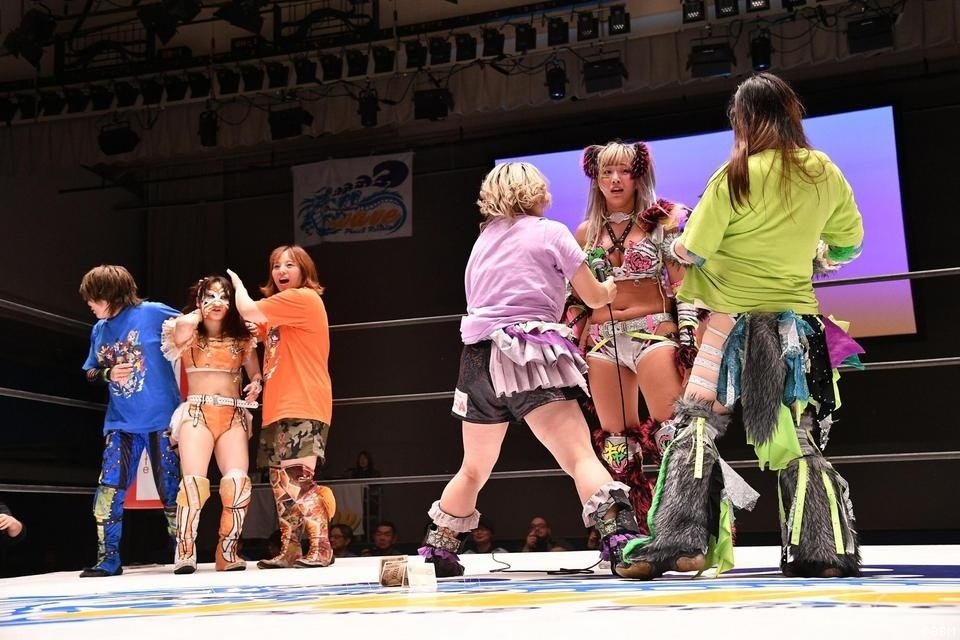

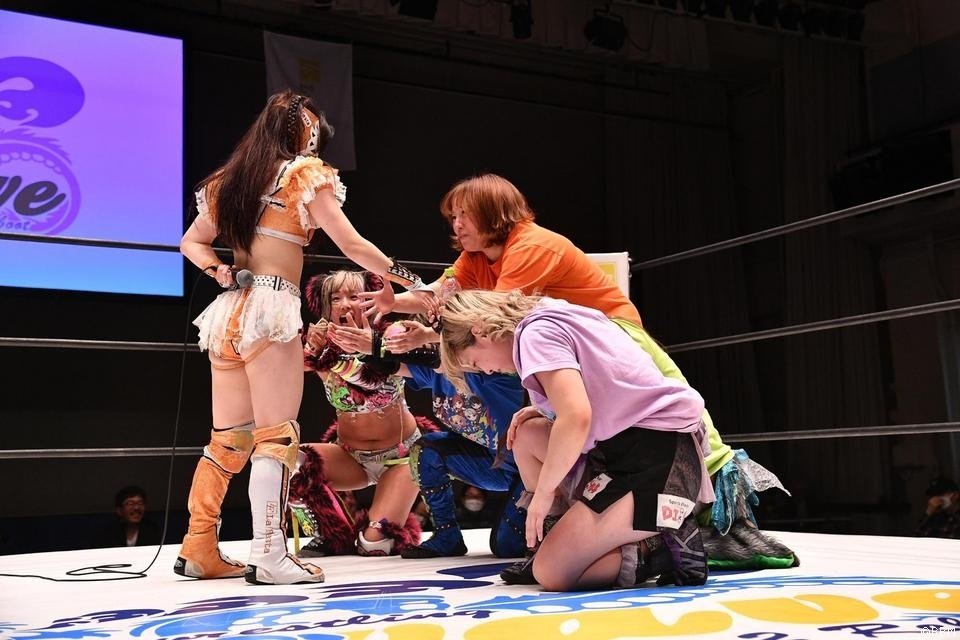
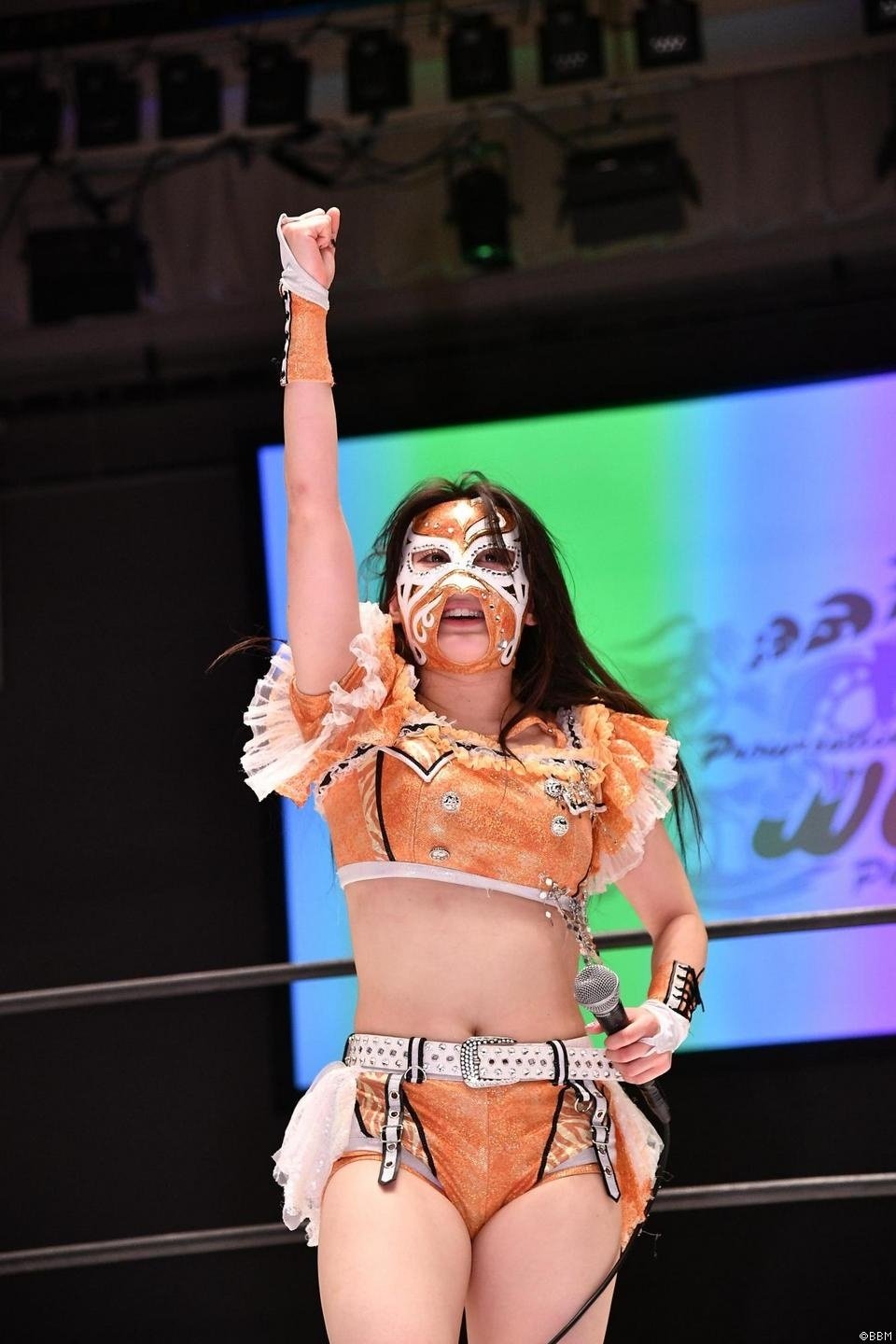


WAVE had swept Papapa Reiwa Party on the night, and the deed stayed home. And yet, the most revealing part of the entire evening happened after the bell.
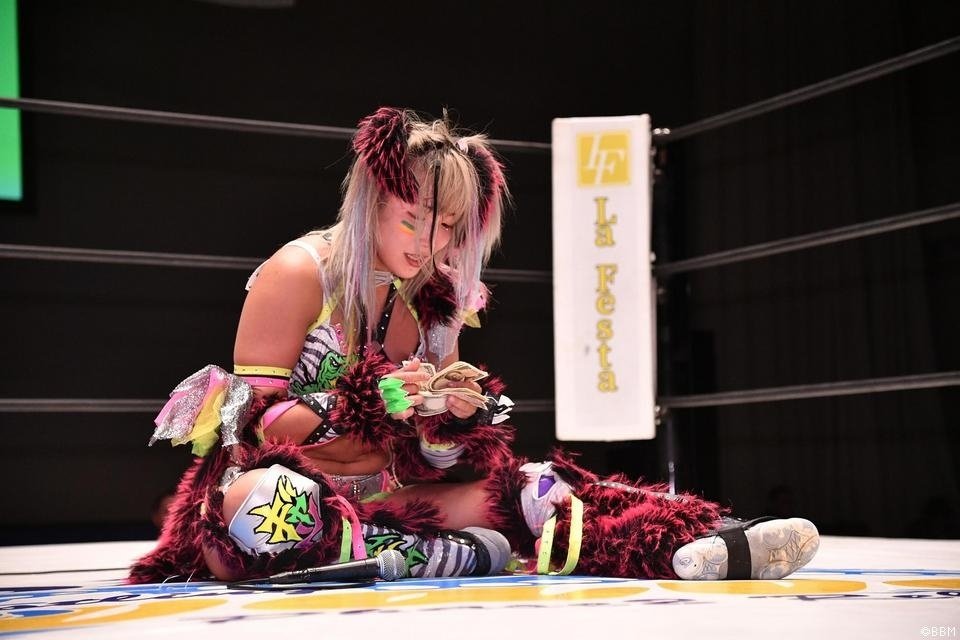
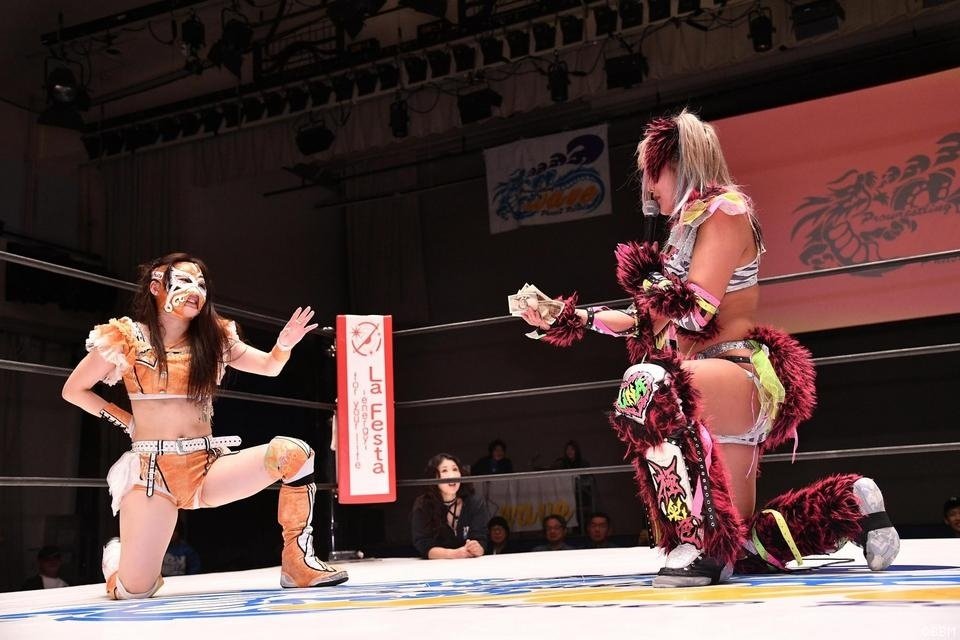
Because Unagi had pledged to pay 100,000 yen if she lost, chants of “100,000 yen!” filled Korakuen Hall. Unagi sent Rina Amikura to bring out the cash, counted out ten 10,000-yen bills, and presented them to the winner.
Unagi: “Here is 100,000 yen. Please accept it…”
Honoka took the money and thrust it straight back into Unagi’s hands.
Honoka: “I don’t need 100,000 yen. I don’t want something as measly as 100,000 yen.”
Unagi: “Huh?! Look, with 100,000 yen you could buy stickers, decorate a sticker book, and become super popular!”
Honoka: “Your mindset is like an old lady’s… young people today don’t do sticker books!”
Unagi: “Hey, don’t look down on me!”
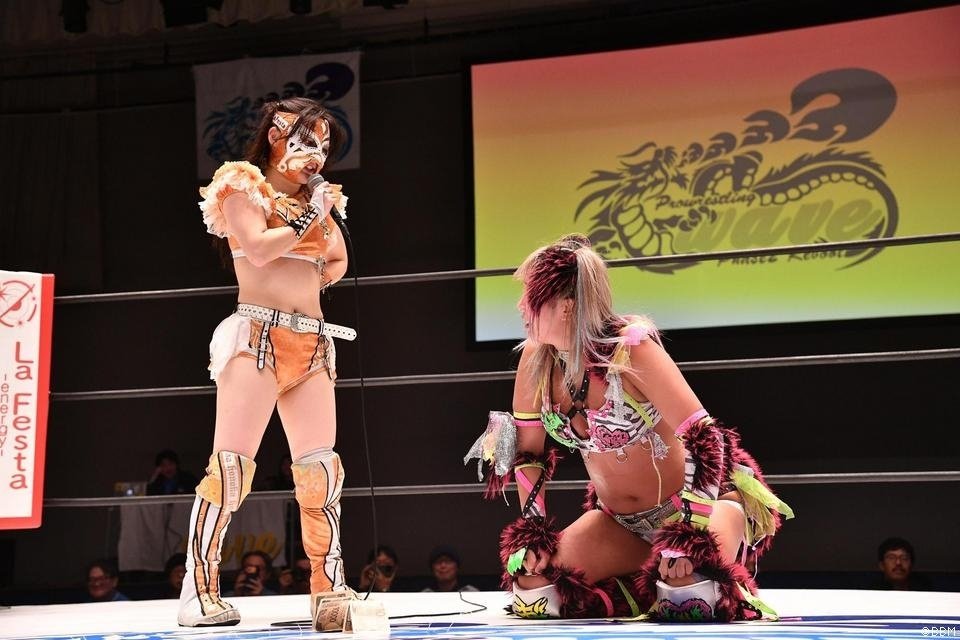
Honoka: “Unagi-san, do you know what ‘looking down on someone’ actually means? It means belittling your opponent and making a fool of them. I have never once made a fool of you, Unagi-san. Since I won today, that means I’m allowed to talk down to you from above, right? Get down below me.”
Unagi reluctantly dropped down onto her hands on the canvas, and Honoka flipped the entire dynamic of the rivalry on its head.
Honoka: “Since I won today, pardon me for speaking from up here. If you want me that badly, I guess I could join Papapa Reiwa Party for you?”
Unagi: “Nooo!”
While Unagi recoiled, the rest of Papapa Reiwa Party scrambled in a panic to lock Honoka in.
Unagi: “In Papapa Reiwa Party… we trade stickers, you know!”
Even as Yumi Ohka objected, Honoka stood firm on her decision.
Honoka: “…I’ll join! Joining seems like it’ll get me something worth more than 100,000 yen. Nice to work with you, Unagi!”
“Joining seems like it’ll get me something worth more than 100,000 yen.”
Honoka
Honoka extended a handshake from above.
Honoka: “All of you… we’re going to Ryogoku together!”
Ryogoku Kokugikan (両国国技館): Tokyo’s historic sumo arena and one of Japanese wrestling’s premier big-venue benchmarks, representing the level of scale Papapa Reiwa Party is aiming to reach again.
After shaking hands with the rest of the unit from above, Honoka closed the show with total clarity about where her feet were planted.
Honoka: “Even though I’ve joined Papapa, I’m obviously still with WAVE. Today was Papapa vs. WAVE, and WAVE swept every single match! With me, the one who cleanly closed out the main event, joining Papapa, Papapa’s future is looking bright! I believe the path I choose is the right one for me, and I’m going to push straight ahead. Thank you so much for today! Are you ready?! Here we go! This is WAVE! Thank you very much!”
Backstage Realities: Negotiating Value Without Giving Up Your Home
Once everyone stepped behind the curtain, the post-match comments stripped away the theatrical shock and revealed the practical math underneath.
Honoka: “At first, when it was suddenly brought up, I was caught off guard, and I thought really hard about it from there. I felt there was more value in this than taking 100,000 yen, and I also wanted to challenge myself with something new, so this time I made the decision to join Papapa Reiwa Party!”
Unagi: “Well, in the end… didn’t it turn out pretty well? In the end… I didn’t lose my 100,000 yen, and Honoka joined us, so didn’t things end up going in the happiest possible direction?”
Sasamura: “That’s the first time I’ve ever seen Unagi-san get down that low.”
Honoka: “Naturally.”
Unagi: “If you’re going to act like the leader, I’m making you do all the work, got it?”
Honoka: “…Then let’s just keep things the way they’ve been.”
Unagi: “With a super sparkling kid like Honoka joining us, even though I’m an old hag who only trades stickers, all I can see ahead is a bright future. We’re going to run Ryogoku Kokugikan one more time, so you all better watch! Sure, there are groups like Hehehe [Hehehe Heisei Garakei☆Carnival] running around, but Honoka is going to become the greatest thing in WAVE, so every single one of you keep watching! And since all of us lost tonight, it’s time for a post-match review meeting!”
Here is the real issue worth sitting with as you look at how all of this landed. On the surface, turning down 100,000 yen looks like a wild gamble. In real terms, though, 100,000 yen is a one-time payout. You spend it once, and it is gone. Joining Papapa Reiwa Party on her own terms, right after pinning Unagi Sayaka cleanly in the Korakuen Hall main event and literally making Unagi get down on her hands to hear the offer, is an investment in leverage.
Think about the position Honoka just engineered for herself. She did not defect from WAVE, and she did not join Papapa Reiwa Party as a rookie begging for a spot under someone else’s wing. She proved WAVE’s banner could sweep the entire card, claimed moral and competitive authority over Unagi in front of Korakuen Hall, and then stepped into a high-profile freelance faction with sights set on running Ryogoku Kokugikan again. Meanwhile, Unagi kept her 100,000 yen, gained a rising young star who just beat her in the main event, and walked away with a fresh narrative counterweight to rival groups like Hehehe Heisei Garakei☆Carnival.
That is the quiet lesson sitting at the center of Prime wave ’26. From Cohaku defending WAVE’s tag belts while eyeing SEAdLINNNG gold, to GAMI joking about handing over ZABUN’s corporate debt alongside the company deed, to Honoka trading a quick stack of bills for a seat on the road to Ryogoku, nobody in modern independent joshi wrestling can afford to think small anymore. Loyalty to your home promotion still means something real, because that is where your roots and your craft are forged. Still, the performers who actually shape the next era are the ones who know when to defend their house, when to step across the aisle, and how to walk into the next room without ever giving away the upper hand.
Event & Editorial Notes:
- Show Record: Pro Wrestling WAVE, Prime wave ’26, November 21, 2026, at Korakuen Hall in Tokyo.
- Editorial Brackets: Square-bracketed clarifications inside direct quotes ([SEAdLINNNG’s BEYOND THE SEA Championship] and [Hehehe Heisei Garakei☆Carnival]) identify referenced championships and outside units for reader context.
Originally published in Japanese on Weekly Pro-Wrestling’s (週刊プロレス / Shukan Puroresu) website. Published by Baseball Magazine Sha Co., Ltd. (ベースボール・マガジン社). All original Japanese text and photography copyrights belong to Baseball Magazine Sha Co., Ltd. and their respective creators. This English translation and archival localization is produced for historical documentation, critical commentary, and international journalistic accessibility. Readers are strongly encouraged to support the original Japanese creators by purchasing print or digital editions of Weekly Pro-Wrestling and subscribing to Weekly Pro-Wrestling Mobile Premium (週プロモバイルプレミアム).