September 18
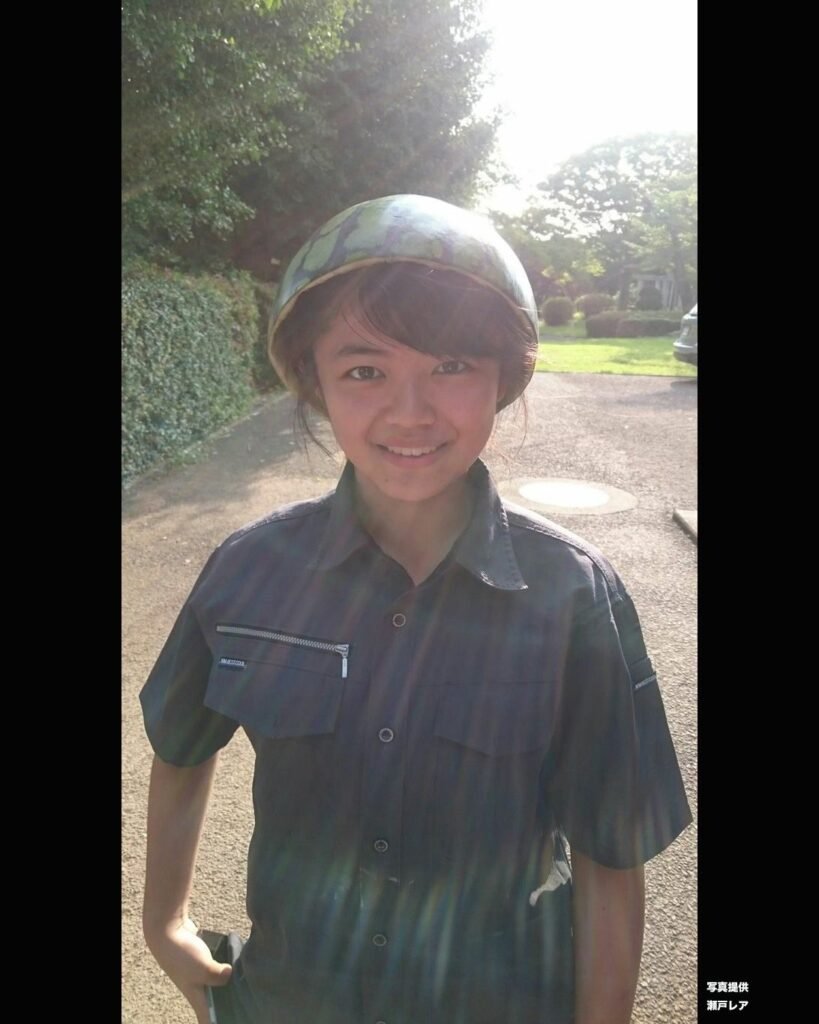
How Would You Like That Cooked? “Rea”
Thank you for visiting our establishment.
This time around, I’m going to be talking about the early chapters of my still-short 25 years of life.
I’m sure everyone reading this has experienced a “chance encounter” to some degree—whether it’s happened once or twice, or three or four times.
Of course, I have too. But personally, I choose to interpret all “coincidences” as either “destiny” or “inevitability.”
Why? Because treating them that way makes life so much more dramatic and fun, don’t you think? It really is that simple.
With that in mind, I recently found myself looking back on my life and wondering, “What was the absolute biggest ‘fated encounter’ I’ve ever had?”
…Well, the answer came to me almost immediately.
・
In the 25 years since Rea Seto was brought into this world, my greatest “fated encounter” is…
“Pro wrestling.”
Without a doubt, it’s this.
Over these past 25 years, I’ve had so many encounters—some good, some bad. But among all of them, the one that stands head and shoulders above the rest—the one event that became a massive turning point in my life—was pro wrestling. I truly believe there’s nothing else quite like it, before or since.
Will I ever face a turning point that surpasses pro wrestling in the future? Honestly, I can’t even imagine it right now… If I had to guess… maybe meeting a lifelong partner? I suppose that would be a turning point in its own way… lol.
But still, that feels like an entirely different category. Even then, I don’t think it could top pro wrestling.
Because, as those in the know already know, my introduction to pro wrestling actually came through “agriculture.”
“Agriculture” and “pro wrestling” are about as far apart on the spectrum as you can get.
Normally, there’s zero overlap there. Two worlds that should never cross paths… And yet, by coincidence… no, by destiny, they met.
Now that is a “fated encounter.”
_
So, with all that said, I’d like to use the next installment to talk about the origin story of how Rea Seto became a professional wrestler—something I’ve always glossed over in interviews up until now.
………Look, I really did intend to write about it this time. I even got halfway through it!
It’s just, well… I am so incredibly bad at summarizing my thoughts that the draft easily blew right past the 2,000-character mark…
And even after 2,000 characters, I still wasn’t finished…
I figured it would be exhausting for you all to read a column that long, so I decided to split it up.
Consider this a special courtesy from Rea-sama. ^_^
・
Thank you for visiting Vol. 3 of How Would You Like That Cooked? “Rea”.
By the way, to everyone reading this: what was your “fated encounter”? If you’d like, please tell me about it the next time you come to a two-shot photo session or an autograph signing! (Look at me, sneaking in a shameless business plug ^_^)
Until next time, I sincerely look forward to your next visit.
・
-Horror movies I’ve watched recently- “BRING HER BACK” “Grapefruit”
Translator’s Notes:
- Title Pun & Motif: Rea Seto’s given name (レア – Rea) is phonetically identical to the English word “Rare.” The title of her column, 『焼き加減』は『レア』 (Yaki-kagen wa Rea), literally translates to “Degree of doneness: Rare,” doubling as a pun on her ring name. She leans heavily into this steakhouse/restaurant motif throughout the column by greeting readers as “customers” visiting an establishment.
- Pronoun Shifts: In the original Japanese text, Rea shifts between using the casual feminine pronoun Atashi (アタシ) and the highly formal, haughty Atakushi (アタクシ). Atakushi is a classic linguistic trope used by wealthy or arrogant female villains (ojou-sama) in Japanese media. It is a subtle nod to her current heel persona in the Darkness Revolution faction.
- Rea-sama: In the sentence regarding the column length, she refers to herself in the third person as Rea-sama (レア様). The “-sama” honorific is a highly respectful suffix; using it on oneself is incredibly arrogant and perfectly fits her egotistical character work.
- Agriculture Reference: Rea mentions that “agriculture” was her gateway into wrestling. Prior to becoming a pro wrestler, Rea Seto legitimately worked in the agricultural sector, a unique background piece of trivia she occasionally brings up.