AEW FULL GEAR 2026 EDITORIAL DISPATCH
The reality of All Elite Wrestling’s Full Gear 2026 pay-per-view, was a sprawling, exhausting tale of two entirely different promotions colliding under the same roof. On one hand, the talent on this roster delivered sensational professional wrestling, particularly across the final four bouts of the evening. Even allowing for varying tastes on the chaotic spectacle of Anarchy in the Arena, that closing stretch featured extraordinary athleticism and heart. On the other hand, this broadcast was a monument to a company indulging its absolute worst impulses. From gratuitous, stomach turning shock value to a complete refusal to edit match lengths, the main card alone stretched past the five-hour mark. In the entire history of the promotion, only All In Texas lasted longer.
It was the best of AEW and the absolute worst of AEW rolled into a single night.
Archival Dossier
- Broadcast Marathon: Main card runtime exceeded five hours, ranking as the second-longest pay-per-view in AEW history behind only the previous year’s All In Texas (six hours on the main card, eight hours including the pre-show).
- Main Event Bell Time: Will Ospreay and Kyle Fletcher locked up for the AEW World Championship at 12:17 a.m. EST.
- Championship Changes (3): Swerve Strickland, Kofi Kingston, and Austin Creed captured the AEW World Trios Titles; Kris Statlander and Harley Cameron won the AEW Women’s World Tag Team Titles; Ilja Dragunov dethroned Tommaso Ciampa for the AEW National Title after a seven-day reign.
- Successful Title Defenses (4): Kazuchika Okada (AEW International Title), The Young Bucks (AEW World Tag Team Titles), Mercedes Moné (AEW Women’s World Title), and Will Ospreay (AEW World Title).
- Commemorative Milestone: AEW unveiled redesigned World Trios Championship belts featuring a custom Brutalizer side plate and a strap engraving honoring the late PAC (“In Memory of Benjamin Satterly 1986 to 2026”), recognizing his record 360 combined days as champion across two reigns.
The Rainmaker’s Arrogance and Adam Copeland’s Tokyo Dome Crossroads
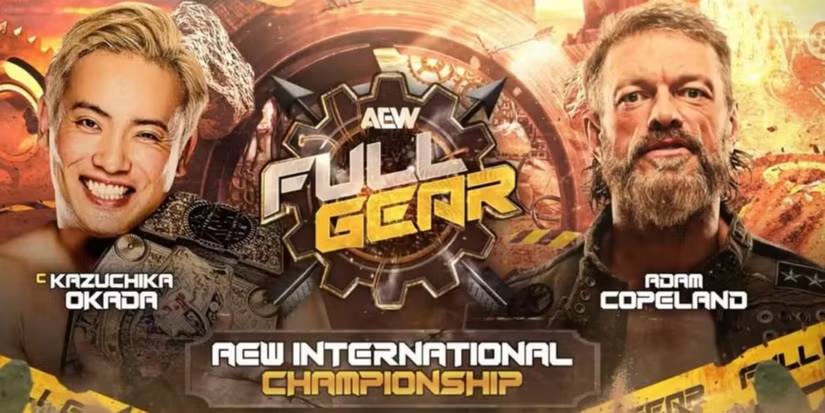
The main card opened with Adam Copeland challenging Kazuchika Okada for the AEW International Championship, and the Phoenix crowd lost its collective mind before a single lockup occurred. Much of that electricity stemmed from the sheer novelty of seeing two generational stars cross paths in a matchup nobody ever expected to witness. Once the bell rang, however, this settled into a classic Okada tempo, slowing to a deliberate crawl during the opening chapters before building toward the finish.
When the pace accelerated, Okada leapfrogged a charging Spear and planted the challenger with a Tombstone Piledriver. Rather than dropping down for a pinfall, the champion stood up and mockingly signaled for a Spear of his own. Copeland cut him off instantly, flipping Okada’s signature Rainmaker middle-finger pose right back in his face before setting up for another Spear. Okada bailed to the floor to regroup. When Copeland hit the ropes to build steam, Don Callis reached in from ringside and tripped him up. Refusing to be deterred, Copeland charged onto the apron to Spear Okada while the champion had his back turned. What Copeland failed to see was the AEW International Championship belt clutched in Okada’s hands. Okada spun around at the last fraction of a second, sending Copeland crashing face-first into the gold, and immediately followed with an Impaler DDT off the ring apron straight onto the bare arena concrete where the protective floor mats had been peeled back earlier in the bout.
Copeland lay motionless on the cement. Okada had a count-out victory gift-wrapped for the taking, yet chose instead to roll the challenger back under the bottom rope at the final second. He covered Copeland, then arrogantly yanked his shoulders off the mat before the referee’s hand could slap three. He hooked the leg a second time and pulled Copeland up again. By every traditional rule of wrestling psychology, that level of hubris is supposed to trigger a champion’s downfall. Not here. Okada simply hauled Copeland up, uncorked a flush Rainmaker lariat, and pinned him in the center of the ring to retain the title.
The humiliation did not end with the bell. After exiting the ring and waiting until the referee physically helped a battered Copeland back to his feet, Okada climbed back through the ropes, leveled him with a second Rainmaker, offered a mocking “I’m so sorry,” and strolled up the aisle. Okada remains a master of petty, villainous disdain.
It was a strong, compelling opener that almost certainly functioned as the first chapter of a multi-match series. Crucially, even though Okada used the title belt behind the official’s back on the apron, he controlled the bulk of the bout prior to that shortcut and thoroughly embarrassed the challenger at the end. Later in the evening, Mick Foley sat down with Copeland backstage, remarking that he had never seen Copeland swallow such a decisive defeat and asking where his head was.
“I wanted this match. I was hoping this match would answer a lot of questions, and it did,” Copeland said, before sulking away in silence.
The narrative foundation is unmistakable: an aging legend confronting self doubt on his road toward the World Championship, questioning whether he still has enough gas left in the tank. That vulnerability points directly toward Japan on January 4. Copeland has made no secret of his desire to perform inside the Tokyo Dome before his career concludes, and with him entering his final year and only one wrestling event scheduled at the Dome next year, his presence on that card feels mandatory. While the early lineup for January 4 reads heavily like an interpromotional AEW versus New Japan card akin to Forbidden Door, Copeland does not need to face a current New Japan roster member. Running back Copeland versus Okada at the Tokyo Dome, where Copeland can capture the International Championship on a grand stage, writes itself. Okada built a legacy inside the Tokyo Dome, even defeating Hiroshi Tanahashi there in The Ace’s retirement bout earlier this year. If Copeland could not solve Okada in Phoenix, asking how he intends to walk into Okada’s backyard and pull off the upset is a ready made story.
Tokyo Dome (東京ドーム, January 4 Tradition): New Japan Pro-Wrestling’s flagship annual showcase on January 4 inside the Tokyo Dome is where Kazuchika Okada established his legacy as the promotion’s ace, culminating in his victory over Hiroshi Tanahashi in Tanahashi’s retirement match earlier in 2026.
A Stacked Tag Team Division Gets Crowded: The Kasper Brothers Arrive
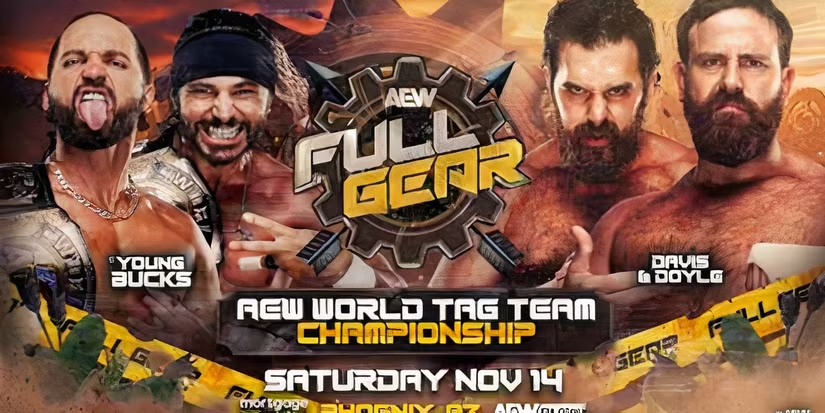
In the second bout on the card, The Young Bucks defended the AEW World Tag Team Championships against Mark Davis and Jake Doyle. Having squashed Matt and Nick Jackson on Dynamite the previous month, the challengers were rightfully booked as dominant heavyweights again here, even if they had zero realistic shot at walking out with the belts. Davis absorbed a direct BTE Trigger and powered out before three, leaving the champions stunned. When the Bucks set up for a Meltzer TK Driver, Doyle charged in to break it up. Moments later, Matt Jackson attempted a hurricanrana off the ring apron, only for Doyle to roll through and plant him with an awkward, ugly powerbomb onto the timekeeper’s table. Back inside the ropes, Davis drilled Matt with a gutwrench piledriver for a near-fall that brought the building to its feet, before Matt salvaged the reign by catching Doyle with a desperation flash pin. Despite a few clunky sequences involving Doyle down the homestretch, it was a very good contest in which the champions escaped by the skin of their teeth.
The real seismic shift happened after the bell. Out walked the Motor City Machine Guns, who pulled the exhausted Bucks to their feet and raised their hands in respect. Having just defeated FTR on Wednesday night to win the deciding fifth match of a tremendous Best of Five series, the Machine Guns had earned their spot as number one contenders, sparing the audience a thirteenth installment of FTR versus the Bucks in favor of a fresh marquee showdown.
Then an unfamiliar siren echoed through the arena. The Phoenix crowd sat in baffled silence as a graphic reading “The Kasper Brothers” flashed across the big screen.
Out marched Jacob and Drew Kasper, known until days ago in WWE as Julius and Brutus Creed. The brothers hit the ring at full sprint and dismantled the Young Bucks, then battered the Motor City Machine Guns when they stepped in to help, though commentary will certainly need a better name for Drew’s cannonball senton than “the Drew Ball.” Moments later, FTR arrived alongside Stokely Hathaway, stepping nose to nose with the newcomers before swerving the building and joining the Kaspers in a four on four beatdown of both babyface teams. When the dust settled, Jacob Kasper and Dax Harwood gripped one tag team title belt simultaneously while Drew Kasper and Cash Wheeler held the other. Hathaway wedged himself between the two tandems, convinced all four men to release the leather, and hoisted both belts overhead himself. The Kasper brothers wrapped Hathaway in a massive bear hug and shook hands with FTR. As they backed up the entranceway, a fired up Drew Kasper barked directly into the camera lens that AEW houses the best tag team wrestling on the planet, tracing the letters “A-E-W” in the air with his index finger just as Bret Hart traced “W-C-W” in Montreal nearly three decades ago. He looked like a young athlete harboring deep resentment over his tenure with his former employer, stepping onto a new stage with everything to prove.
The Kasper Brothers (Jacob and Drew Kasper): Competing under their real-life surname following the expiration of their WWE contracts, the former Julius and Brutus Creed reunited with manager Stokely Hathaway, who previously guided the brothers as Malcolm Bivens in NXT’s Diamond Mine faction.
Just one week after news broke that their WWE contracts had expired, the brothers bypassed a developmental detour in Japan and plunged straight into the deepest tag team pool in the industry. Pairing them with Hathaway is a sharp nod to continuity, rekindling their days together in NXT’s Diamond Mine when Hathaway operated as Malcolm Bivens. While the alliance with FTR is all smiles today, the long-term trajectory naturally points toward FTR splitting from Hathaway and colliding with the younger duo. Make no mistake: losing the Creeds will not hurt WWE one bit, simply because WWE management did not bother featuring them on the main roster and does not care about tag team wrestling. Still, one company’s neglect is another’s asset. The Kaspers do not need championship gold tomorrow; working nightly against veterans of the caliber of the Bucks, FTR, and the Machine Guns will polish their rough edges and elevate their game in ways their previous home never allowed.
Skewers, Staples, and Crossed Lines in a Forty Minute Texas Death Match
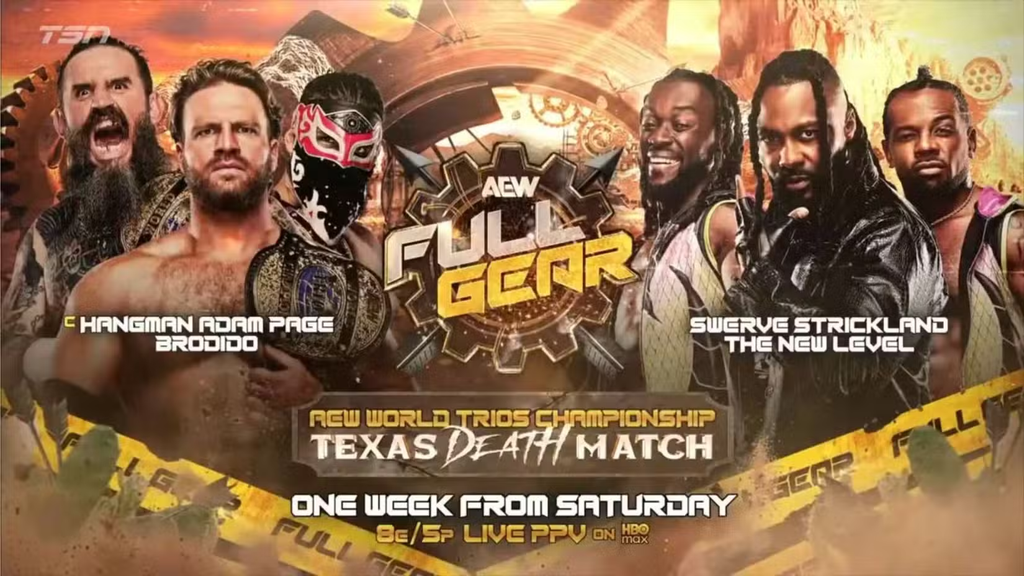
Before the carnage of the AEW World Trios Championship Texas Death Match began, the promotion delivered a moment of genuine class. As Adam Page, Brody King, and Bandido prepared to defend against Swerve Strickland and The New Level’s Kofi Kingston and Austin Creed, cameras revealed newly redesigned trios belts honoring the late PAC. One custom side plate features PAC locking in the Brutalizer above an infinity symbol flanked by arrows, while the tip of the leather strap bears the engraving: “In Memory of Benjamin Satterly 1986 to 2026.” It is a fitting tribute to the man who still holds the all-time record of 360 combined days as AEW World Trios Champion across two reigns, first with Death Triangle alongside Penta and Rey Fenix, and later with the Death Riders alongside Claudio Castagnoli and Wheeler Yuta.
Once the bell sounded, dignity exited the building. Within minutes, all three members of Swerve’s unit had wooden barbecue skewers driven into the crowns of their skulls. Austin Creed reached beneath the apron and retrieved a barbed-wire-wrapped trombone, raking it across Brody King’s forehead until King bled like a crime scene. In the center of the ring, Page and Strickland sat and traded casual shots with an industrial staple gun. Creed then slipped on a gimmicked Nintendo Power Glove that erupted in pyrotechnic sparks as he cracked King with a Shoryuken dragon fist. Kofi Kingston dove headlong into a glass light tube, came up covered in crimson, and moments later launched himself off the ringside barricade with a Boom Drop that drove Page through a pane of glass on the floor. Staging shattered-glass spots five feet from the front row remains reckless negligence; if performers insist on using real glass, it belongs inside the ring ropes, not spraying toward paying customers.
Then came the moment that crossed every boundary of professional standards. Echoing the infamous spot from their previous Texas Death Match where Page drank Strickland’s blood, Strickland pulled a lacerated Page close and positioned his open mouth beneath Page’s forehead, letting the champion’s blood drip directly onto his tongue.
It was repulsive, lowest common denominator garbage the first time they did it, and just like the hypodermic syringe stunt in their steel cage match a few years back, it was repulsive, pointless shock value here.
Eventually, Strickland spat the blood back into Page’s face. Page rallied to nail a Buckshot Lariat to the back of Strickland’s neck and connected with a second flush Buckshot to the chest, but when he flipped over the top rope for a third, Strickland intercepted him with a steel chair shot and drilled him with a House Call kick. Page could not beat the referee’s ten-count, crowning Strickland, Kingston, and Creed the new AEW World Trios Champions.
There is no defending that blood drinking spot, especially when you consider who was sitting ten feet away at the broadcast table. If you listen back to the audio feed, commentator Nigel McGuinness went completely silent and dropped off the broadcast for several minutes immediately following that visual. Who could blame him? Here is a veteran whose own in-ring career was derailed by a hepatitis diagnosis, and who spent years publicly campaigning against blading as an outdated, unnecessary hazard. Blood will always have a dramatic place in professional wrestling when used with restraint, and McGuinness voluntarily cashes checks from a company known for pushing the envelope. Yet forcing a man with his history and stated convictions to call two performers drinking each other’s blood right in front of his face reveals an organization with zero internal guardrails. To draw a line in the sand, a company first needs a boss with enough common sense to hold the chalk.
Nigel McGuinness and Blading Ethics: Following a career-altering hepatitis B diagnosis near the end of his active in-ring tenure, veteran broadcaster Nigel McGuinness spent years publicly advocating against the use of blading and open blood in professional wrestling.
To draw a line in the sand, a company first needs a boss with enough common sense to hold the chalk.
You can complain all night about sitting through ten repetitive Superman Punches in a Roman Reigns match, at least Reigns is not drinking Sami Zayn’s blood, spitting it onto his knuckles, and punching him in the mouth. When your corporate parent is under new management, your pay-per-view is streaming on their platform, and your executive suite is praying for a media-rights renewal at the end of the current contract, basic business survival dictates dialing back the grotesque carnival stunts. Instead, the cultists spent days defending it as high art, that is the exact brand of blind devotion that would praise a live beheading at center ring the second outsiders criticized it.
Lost inside the forty minute runtime, which peaked ten minutes before the finish, drained the live crowd, and left two more nearly forty minute bouts still waiting on the card, was a remarkably strong showing from Kingston and Creed. Operating completely outside their career comfort zone, both men embraced a vicious edge, with Creed in particular working like a man possessed and visibly having the time of his life.
A Thankless Comedown and a Premature Women’s Tag Title Switch
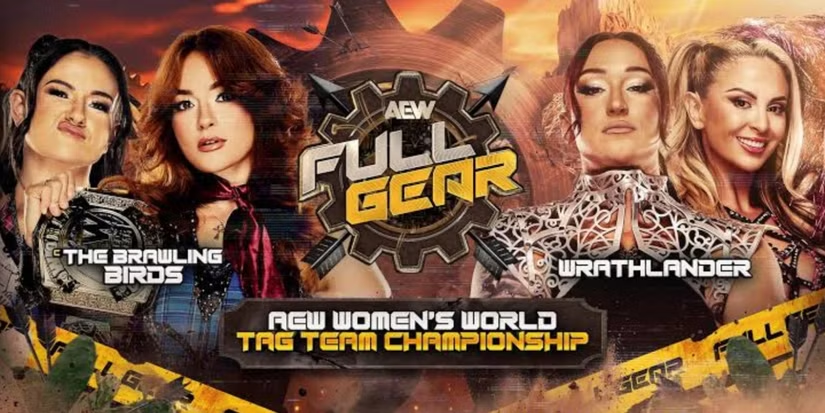
Following forty minutes of flying glass, skewers, and bodily fluids, somebody had to walk through the curtain and wrestle a standard match. That unenviable assignment fell to AEW Women’s World Tag Team Champions The Brawling Birds, Jamie Hayter and Alex Windsor, defending their belts against Kris Statlander and Harley Cameron.
With new champions already crowned in the preceding bout, a second consecutive title change felt unlikely, particularly since Hayter and Windsor had barely been given time to establish their reign. Yet the booking team pulled the trigger anyway. After the champions misfired on their Two Birds, One Stone double-team finisher, Cameron yanked Hayter off the apron to the arena floor, isolating Windsor in the center of the ring for Statlander to connect with Saturday Night Fever and secure the three-count. The action itself was perfectly solid, and no observer could fault four professionals forced to follow a forty-minute bloodbath, even if pulling the titles off Hayter and Windsor this early shortchanged a team that deserved a genuine run.
Seven Days and Out: Ilja Dragunov Dethrones Tommaso Ciampa
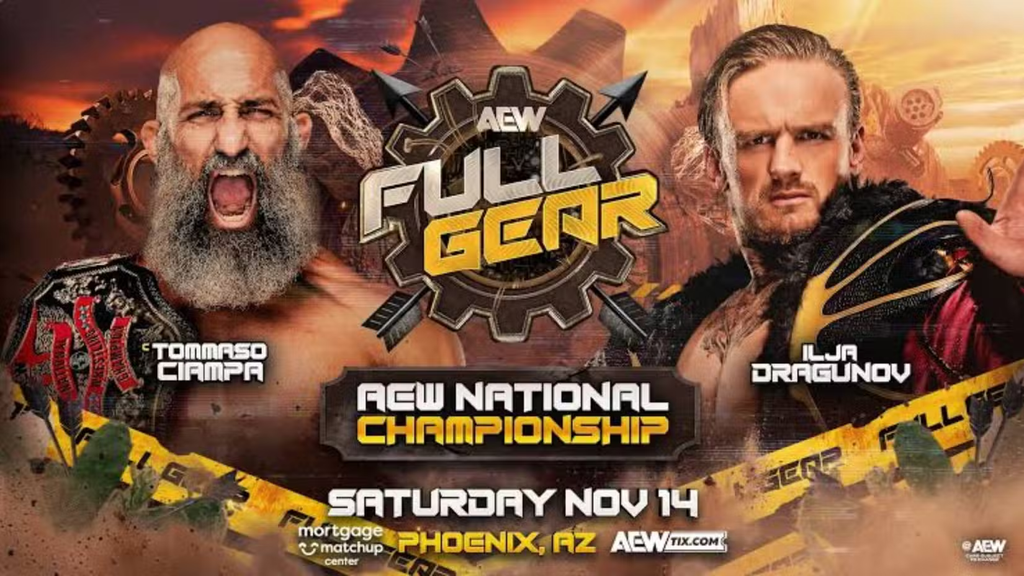
Few bouts on the Full Gear card carried higher expectations for pure physical combat than Tommaso Ciampa defending the AEW National Championship against Ilja Dragunov. Ciampa had captured the strap just seven days earlier aboard the Jericho Cruise by defeating Andrade. Having already stripped Ciampa of the TNT Championship after an eleven-day reign earlier in his run, management surely was not about to cut his legs out from under him a second time inside of a week.
They did it anyway.
What unfolded inside the ropes, however, was an absolute war. At one point, Ciampa hoisted Dragunov onto his shoulders and drove him down with an Air Raid Crash directly onto the sharp steel edge of the ring steps, a collision that hurt just watching from the press row. Ciampa punished the challenger without mercy, and Dragunov sold the beating with every fiber of his body. When Ciampa locked in a grueling Fujiwara armbar and wrenched back on the joint, Dragunov refused to quit, fighting free of the hold multiple times before uncorking the H-Bomb to score the pinfall and capture the title.
The match itself lived up to every ounce of its billing, even if the surrounding booking defies common sense. Why reduce Ciampa to a seven-day transitional champion just to pivot the belt off one babyface in Andrade and hand it to another in Dragunov? There is nothing wrong with putting gold around Dragunov’s waist, yet rushing the switch at Ciampa’s expense was entirely avoidable. Later in the broadcast, cameras cut to a backstage stairwell where a furious Ciampa delivered a lengthy, impassioned promo demanding entry into the Continental Classic.
“I want to be in the C2. Put me in,” Ciampa barked at Tony Khan.
On a broadcast already groaning under its own five hour weight, that segment belonged on Wednesday night’s Dynamite. Because the Continental Classic selection show airs Sunday, the production team felt compelled to shoehorn it onto the pay-per-view. Still, putting both Ciampa and Dragunov into the tournament field is the right call, especially if it gives Ciampa an avenue to avenge this loss in block play.
Marina Shafir Steps Into the Spotlight Against Mercedes Moné
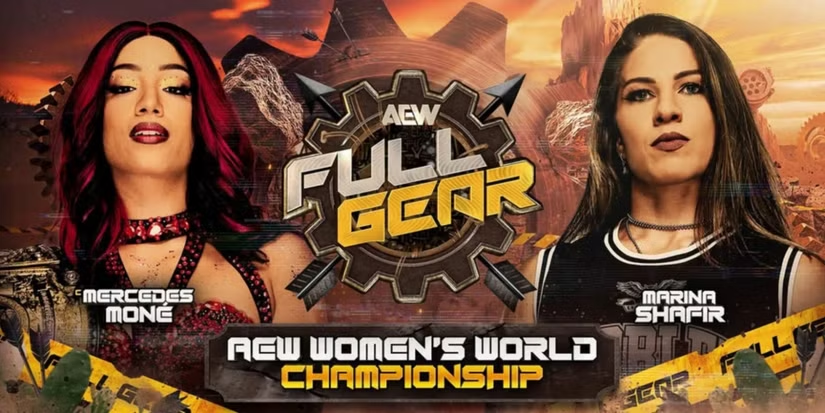
For Marina Shafir, challenging Mercedes Moné for the AEW Women’s World Championship represented the defining test of her professional career. Paired with the premier worker in the division on a major stage, Shafir passed that test with flying colors, turning in the finest performance of her life. The Phoenix audience badly wanted to see a title change and treated the challenger like a bona fide main event star from bell to bell.
Only one glaring flaw in ring psychology held the bout back from the very top tier of Moné’s 2026 catalog: the champion’s repeated, futile attempts to force Shafir to submit to her finisher. Not a single paying customer in the building or watching at home believed for a second that a legitimate combat athlete like Shafir was going to tap out to Mercedes Moné. Yet Moné went back to the well over and over, failing every time. Shafir managed to cinch in her Mother’s Milk submission on the arena floor, where the hold could not legally produce a title change, before bringing the crowd to a fever pitch late in the contest by locking Moné inside PAC’s signature Brutalizer in the center of the ring.
Just when a submission victory appeared imminent, Moné rolled through the hold into a cradling pin and reached back to prop her boots on the ropes for illegal leverage. She largely whiffed on catching the ropes with her feet, leaving the visual execution of the finish a bit messy, though the referee counted three regardless. Moné escaped with her championship intact, while Shafir walked out having proven she belongs under the brightest lights.
Forks, Flaming Tables, KeMalito, and a Fifteen Minute DMX Loop
The clock on the East Coast already read past 11:00 p.m. when the ring introductions for Anarchy in the Arena finally began.
Calling the ensuing spectacle between the Death Riders and The Conglomeration against The Cut ridiculous barely scratches the surface. Even the abbreviated ledger of what transpired reads like a fever dream. Jon Moxley made his entrance to his old theme music, “Wild Thing,” before the audio cut out. Once Daniel Garcia found himself surrounded inside the ring, he broke into his signature dance as DMX’s “Party Up” began blasting over the house speakers for the next fifteen minutes straight. Moxley and Orange Cassidy proceeded to stab their opponents in the forehead with dinner forks. Out ran the Phoenix Suns Gorilla mascot armed with a massive smoke cannon, blasting Austin and Colten Gunn square in the face with plumes of smoke and knocking Austin clean off the top turnbuckle. Ace Austin retaliated by kicking the mascot in the head, drawing louder heat than any heel on the card up to that point, before hoisting the oversized Gorilla onto his shoulders and knocking out a set of squats.
Naturally, broken glass soon littered the canvas, because no brawl in this promotion is considered complete without it. When the production truck cut the DMX track, the audience booed until the rafters shook. Inside the ring, The Cut attempted to recruit Gabe Kidd into their ranks, directly contradicting Jay White’s declaration a few weeks ago that keeping Kidd out of the group was the one principle uniting him and David Finlay. Kidd played along, slipping on the faction’s T-shirt to tease a defection before turning on them, prompting the sound crew to fire “Party Up” right back up to a deafening roar.
Moments later, The Cut produced a branding iron bearing their insignia, heated the metal with a live blowtorch, and prepared to sear Roderick Strong’s flesh. Marina Shafir sprinted back down the aisle to shield her husband, only for the heels to turn the glowing iron toward her until Wheeler Yuta charged in for the save. Then out marched Shane Taylor Promotions for no logical reason whatsoever, fresh off losing to the Death Riders on the Jericho Cruise the previous weekend. Mercedes Moné followed right behind them, sneaking into the ring to drill Moxley with a low blow in retaliation for the cutter he gave her days earlier.
Then the arena lights blacked out. When they snapped back on, CMLL legend KeMalito stood in the ring decked out as an honorary Death Rider.
The building erupted for the diminutive icon. KeMalito promptly stomped on Moné’s foot and sent her flying with a headscissors takedown before Willow Nightingale charged out of nowhere to launch Moné across the ringside floor with a running Pounce. Unfortunately for KeMalito, Shane Taylor Promotions cornered him on the ring apron and recreated his técnico counterpart, Kemonito’s famous viral spot from Arena México, delivering a running dropkick from behind that launched the poor man into orbit toward the floor and nearly broke him in half. They tossed KeMalito back inside for Shane Taylor to flatten him with a heavy splash, conjuring immediate flashbacks to King Kong Bundy avalanching Little Beaver at WrestleMania III.
Kemonito (Consejo Mundial de Lucha Libre): The revered CMLL micro estrella and técnico mascot became an international viral phenomenon for a classic Arena México spot in which Ultimo Guerrero dropkicked him off the ring apron to the floor, a sequence recreated by Shane Taylor Promotions prior to a splash echoing King Kong Bundy and Little Beaver at WrestleMania III.
Before the crowd could catch its breath, a car horn blared and cameras cut to the exterior parking lot, where Claudio Castagnoli pulled up just weeks after being wheeled out of television on a stretcher. Given the full Steve Austin monster-truck return treatment, Castagnoli stormed into the arena and cleaned house on every body in sight. Up on the entrance stage, Clark Connors doused a table in lighter fluid, lit it on fire, and assisted in powerbombing Gabe Kidd straight through the flames. Back inside the ring, Jay White caught Moxley out of nowhere with a Blade Runner and pinned his shoulders to the mat.
White pinning Moxley was the sole sensible piece of business in the entire match, establishing a clear path toward a high-stakes singles clash between the two in the Continental Classic, potentially in the tournament finals. Taken in isolation, Anarchy in the Arena always delivers chaotic entertainment, and this installment had plenty of crowd-pleasing peaks. Yet management simply does not know when to call it a night. Just when the brawl hits its natural climax, you realize they are only in the third inning. Even on a tight three-hour card, this match would have overstayed its welcome. Booking a forty minute Texas Death Match and an Anarchy in the Arena spectacle on the same bill is creative malpractice. Pick one or the other; running both is complete overkill.
Past Midnight in the Desert: Will Ospreay, Kyle Fletcher, and the Return of MJF
By the time the ring crew began sweeping broken glass off the canvas, the clock had ticked past midnight in the East. To buy time for the cleanup, the broadcast aired the pre-taped Mick Foley sit-down with Adam Copeland, followed by Nick Wayne popping up in a luxury skybox to remind the world once again that he defeated Chris Jericho twice.
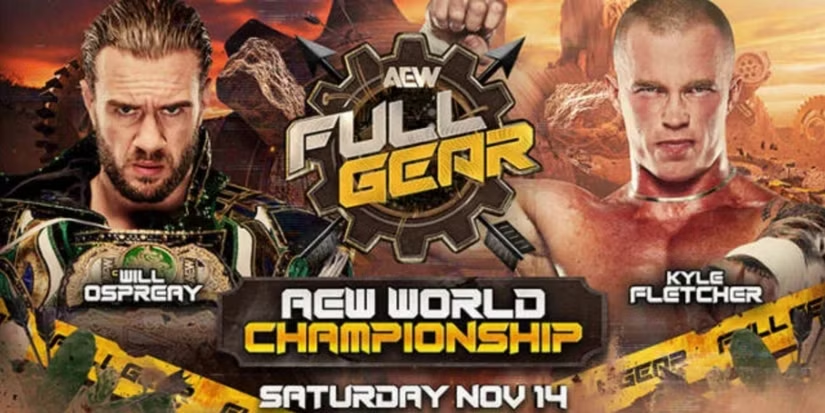
It was 12:17 a.m. Eastern when AEW World Champion Will Ospreay and challenger Kyle Fletcher finally locked up for the main event, and both men immediately paced themselves for a nearly forty minute marathon. You have to sympathize with any two athletes tasked with headlining one of these pay-per-views. Imagine sitting in the locker room taping your wrists while watching everyone on the undercard empty the entire toolbox: glass, fire, skewers, mascots, run-ins, and weapons of every description, leaving barely a scrap of oxygen for the title match. Going out after midnight and keeping an exhausted arena invested requires elite talent.
Ospreay and Fletcher possessed the skill to hold the crowd, though the partisan split inside the building raised an immediate red flag. Much like the treatment Cody Rhodes received at Crown Jewel, the Phoenix audience actively booed Ospreay whenever the promotion’s top babyface went on offense, rallying instead behind Fletcher as if he were the sympathetic underdog fighting from underneath. While the reactions leveled out down the stretch and never crossed into outright rejection of Ospreay as a performer, having your flagship hero jeered in the main event is a warning sign the front office cannot ignore.
During the closing chapters, Ospreay pointed toward the rafters to tease PAC’s Black Arrow, taking a fraction too long on the ascent and allowing Fletcher to intercept him with an avalanche brainbuster. Ospreay powered out at two. Desperate to finish his former mentor, Fletcher tore the protective pad off the top turnbuckle. When referee Paul Turner stepped in to admonish him, Fletcher shoved the official away, a reckless mistake in a World Championship bout. As Fletcher set up for a kill shot, Ospreay slipped free, swept Fletcher’s legs out from under him to send him crashing face-first into the bare steel turnbuckle, and followed with a Hidden Blade that left both men laid out on the mat.
Moments later, Ospreay charged in for another Hidden Blade, only for Fletcher to collapse from exhaustion with his back turned at the exact millisecond Ospreay swung, a spot timed to perfection. Ospreay eventually connected with a flush Hidden Blade and planted Fletcher with the Storm Breaker, yet Fletcher kicked out before three. Bloodied and on his knees in the corner, Fletcher glared up at the champion in defiance.
“I hate you! I hate you! I hate you so much! Come on, kill me! Do it! Do it!” Fletcher screamed.
“I hate you! I hate you! I hate you so much! Come on, kill me! Do it! Do it!”
– Kyle Fletcher to Will Ospreay
Ospreay sprinted across the ring for another Hidden Blade, which Fletcher countered into a tight backslide for a near-fall. Ospreay answered with a Hidden Blade right on the button, only for Fletcher to kick out at the count of one and roar back to his feet. Left with no other option, Ospreay blasted him with one more Hidden Blade and drilled him vertically into the canvas with the Tiger Driver ’91 to retain the championship. It was poetic retribution: just days earlier on Wednesday night, Fletcher had boasted on television that he, not Jon Moxley, was the man who broke Ospreay’s neck using that exact Tiger Driver.
If the creative endgame here is launching Fletcher into the Continental Classic as a minted main-event babyface, pulling the trigger on this matchup now will be vindicated. Otherwise, blowing past a marquee pairing that could have headlined a stadium show further down the road felt premature. Regardless of the timing, both men delivered a tremendous athletic contest under punishing schedule conditions.
Approach the post-match angle with care: after the bell, Ospreay embraced his fellow United Empire members in the center of the ring, including Andrade, who kept his championship contract briefcase clutched tightly in hand to remind Ospreay that a guaranteed title shot is hanging over his head. Then, in the oldest wrestling trope in the book, the entire United Empire contingent walked back up the ramp pumping their fists and left their exhausted champion standing completely alone in the ring.
Sure enough, a masked assailant carrying a canvas bag slid in and ambushed Ospreay from behind. The attacker reached into the bag, pulled out the custom Triple B championship belt, and peeled off the mask to reveal Maxwell Jacob Friedman. As United Empire sprinted back down the aisle to make the save, MJF bailed out of the ring, vaulted over the ringside barricade, and inadvertently kicked a female fan square in the face. At the broadcast desk, Tony Schiavone, completely oblivious to the spectator taking a boot to the face, solemnly remarked that MJF’s return was “a horrible black eye on a wonderful night.” Not nearly as bad as the shiner that poor woman was going to wake up with on Sunday morning. True to form, MJF hopped online later that night and posted: “Tell that lady she should watch where she’s going.”
With Winter Is Coming scheduled for Mexico next month, the stage is set for Andrade to call his shot and cash in his briefcase on home soil. MJF’s return positions him either right at the front of the line or immediately behind Andrade, and putting the World Championship back around MJF’s waist is a tempting proposition. Even with the promotion laying long-term breadcrumbs for Adam Copeland to challenge Ospreay, a collision between Copeland and MJF in 2026 is mandatory viewing whether the belt is on the line or not, and holding Copeland’s title bid until the second half of the year gives the booking committee plenty of runway to do both.
The final four matches of Full Gear 2026 ranged from very good to sensational, and having MJF back in the fold injects immediate electricity into the main-event picture. Yet the overarching lesson of Phoenix remains unchanged: until this promotion learns to let great matches breathe and peak on time instead of stuffing ten pounds of spectacle into a five-pound bag, even its finest nights will feel like an endurance test.