Chaos on the Floor, Business in the Ring: Syuri and Ami Sourei Kept Out of the Decision as Tessa Blanchard Steals the Show at Arena Coliseo
Aggregation & Source Credit: This column is an English translation and editorial adaptation of the official World Wonder Ring Stardom and Consejo Mundial de Lucha Libre (CMLL) match dispatch written by veteran puroresu journalist Kounosuke Izui, with official ringside photography by Alexis Salazar for CMLL. All play-by-play sequences, historical notes, and scheduling facts are credited to Izui’s original report. Readers are encouraged to follow and support official Stardom and CMLL broadcasts and press dispatches.
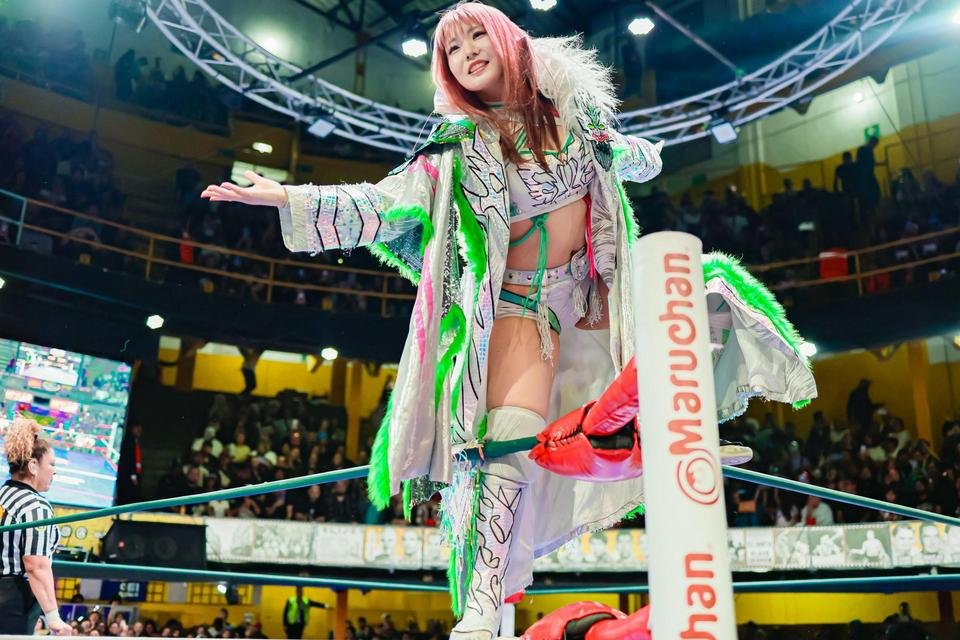
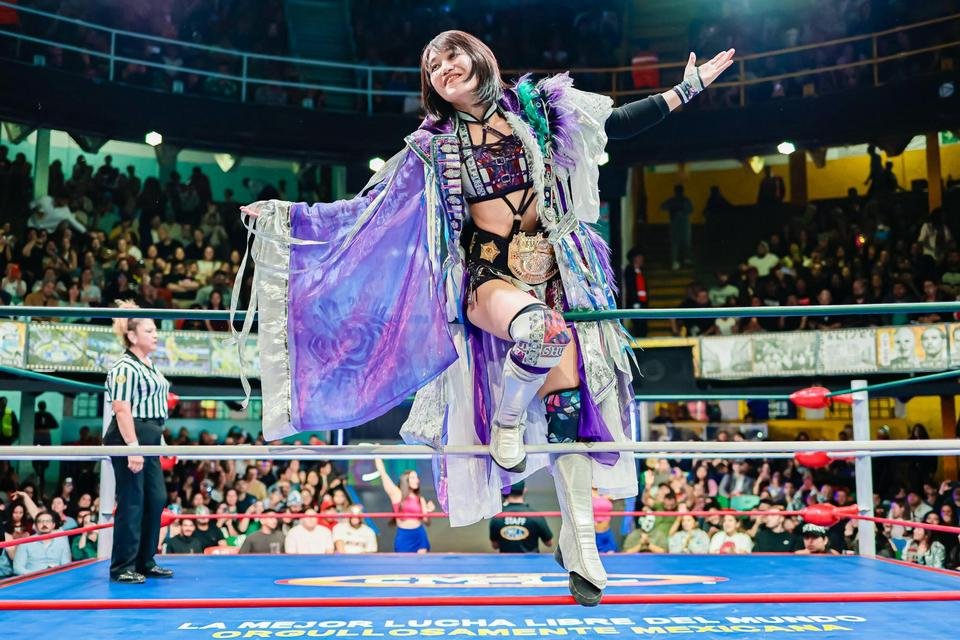
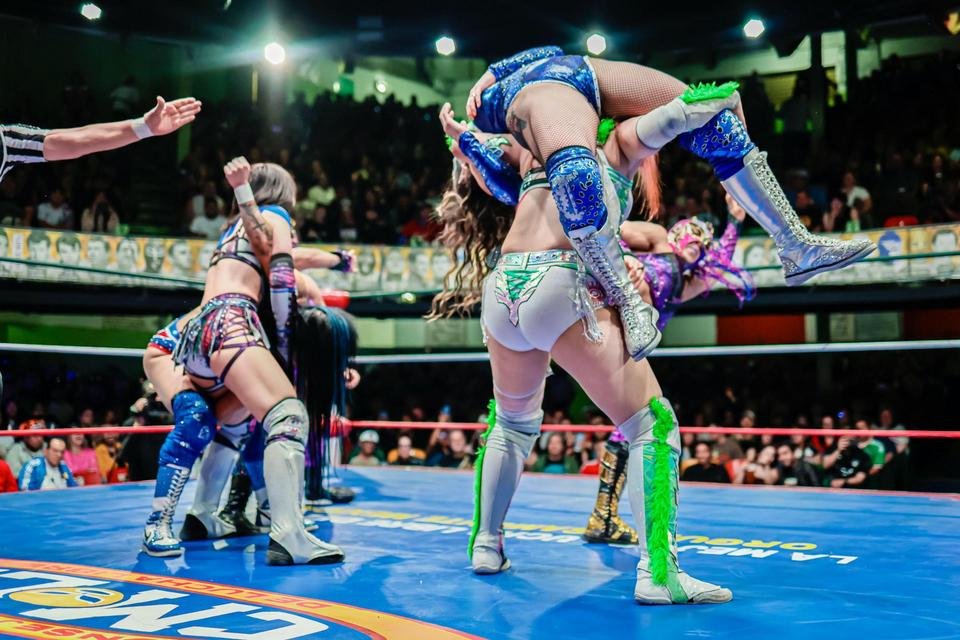
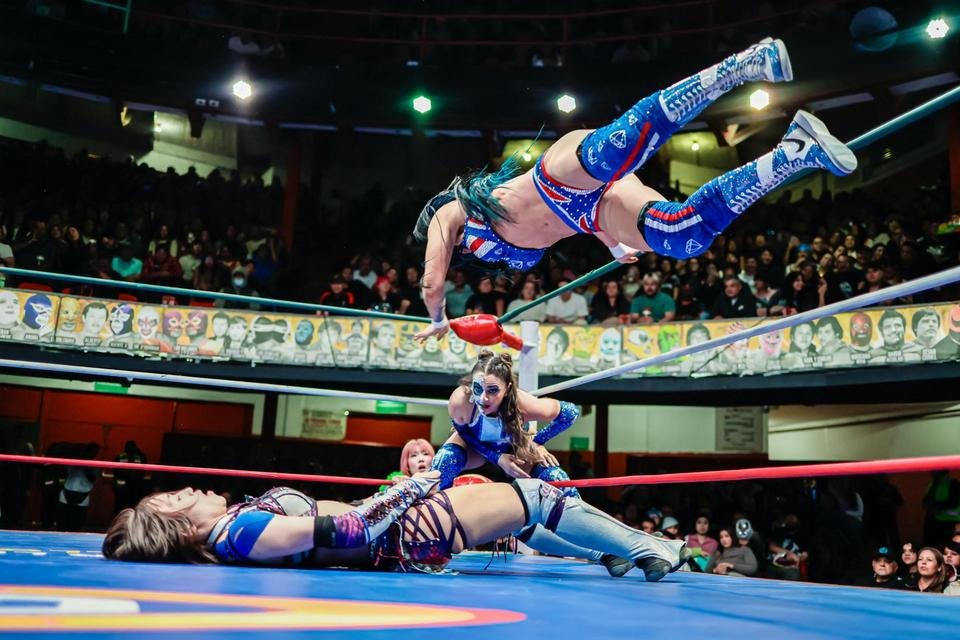
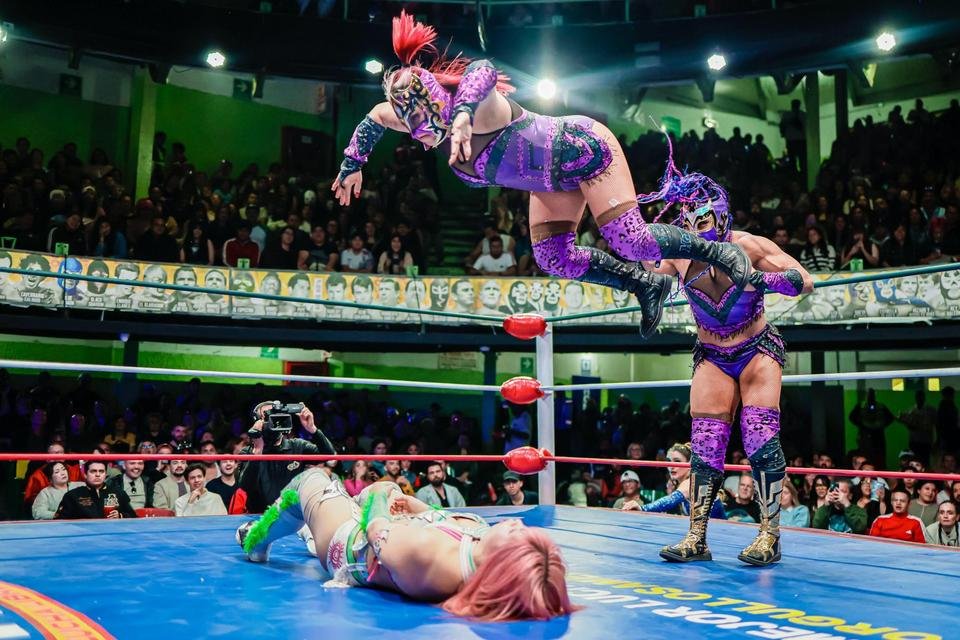
When you walk into Arena Coliseo on a Saturday night, one of the first things you learn is that Mexican multi-team rules do not care about your reputation. You do not have to be pinned to lose at the Embudo de Peru 77. You just have to be in the wrong zip code when the three-count hits the canvas.
That was the harsh lesson awaiting World Wonder Ring Stardom’s Syuri and Ami Sourei on November 14 during the second stop of their Mexican tour for Consejo Mundial de Lucha Libre.
For Syuri, stepping through the curtains at Arena Coliseo marked a homecoming 11 years in the making. For Sourei, it was her first time ever setting foot inside the historic venue. Before the bell even sounded, the building was reminded of the stakes of this tour: a promotional video for the upcoming “Lucha Kingdom” card aired for the crowd, featuring clips of Syuri’s fight scenes. Even the officiating carried history. Standing in the ring as the assigned referee was Comandante, a veteran who spent years trading blows with Syuri back in Japan before trading her boots for a referee’s shirt.
Yet nostalgia pays zero dividends once the bell rings in a CMLL specialty three-way tag team match. Facing the dangerous tandem of Tessa Blanchard and Thunder Rosa alongside the powerhouse Mexican duo of Hera and Olympia, Syuri and Sourei walked out of Arena Coliseo without a blemish on their shoulders, and without the victory either.
You do not have to be pinned to lose at the Embudo de Peru 77. You just have to be in the wrong zip code when the three-count hits the canvas.
Official Match Result: CMLL at Arena Coliseo (November 14)
- Amazonas’ 3-Way Tag Team Match: Tessa Blanchard & Thunder Rosa defeated Syuri & Ami Sourei and Hera & Olympia when Blanchard pinned Hera via a Codebreaker from the corner.
Archival Dossier
- Publication Source (リリースの通り, as per the official release): Dispatched from Mexico City by veteran Japanese wrestling reporter Kounosuke Izui with ringside photography by CMLL staff photographer Alexis Salazar.
- Venue Milestones (11年ぶり / 初登場): The November 14 card at Arena Coliseo (known in Mexico City as the Embudo de Peru 77, or the Funnel of Peru 77) marked Syuri’s first appearance in the building in 11 years and Ami Sourei’s Arena Coliseo debut.
- Shared Ring History (かつて日本で朱里と戦ってきた間柄): Assigned referee Comandante (La Comandante) competed regularly in Japan during the early 2010s as a prominent foreign heel, frequently clashing with Syuri before transitioning into her current role on the CMLL officiating staff.
- Three-Day Mexico City Itinerary (November 14 to 16): Following Saturday’s three-way tag bout at Arena Coliseo, Syuri and Sourei move to Arena Mexico on Sunday, November 15 to face India Sioux and Kira, culminating on Monday, November 16 at Arena Mexico’s “Lucha Kingdom” event where Syuri defends the IWGP Women’s Championship against Kira.
Six Women, Three Corners, Zero Breathing Room
The bout opened with Sourei, Hera, and Blanchard stepping in as the legal starters. On paper, Sourei and Hera had the right tactical instinct, immediately zeroing in on Blanchard as a common target. In practice, alliances in a three-way tag last about as long as a two-count. Within moments, the pact dissolved into a three-way shoulder tackle collision, followed by a frantic sequence of cradles and roll-ups before a three-way dropkick exchange sent Sourei tumbling out to the arena floor.
Takkuru gassen kara marumekomi gassen (タックル合戦から丸め込み合戦, tackle battle to flash-pin battle): In Japanese match reporting, an opening takkuru refers to a standing shoulder-block collision test of strength, while marumekomi describes a rapid sequence of schoolboy roll-ups, small packages, and flash cradles.
That left an opening, and Syuri did not wait for an engraved invitation.
She darted in and drilled Thunder Rosa with a dropkick, only for Olympia to barrel across the ring and level Syuri with a corner lariat. When Rosa and Olympia began trading shots of their own, Syuri forced her way right back between them, blasting Olympia off the apron and down to the floor with a sharp sobat. Turning her attention back to Rosa, Syuri connected with a corner knee strike and followed straight into a half-hatch suplex.
Kushizashi (串刺し, skewered corner attack): Literally meaning “skewered on a spit,” kushizashi is the standard puroresu term for a running strike delivered against an opponent trapped upright against the turnbuckle pads, used here for both Olympia’s corner lariat and Syuri’s running corner knee strike before her half-hatch suplex.
Then the numbers game caught up with the IWGP Women’s Champion.
Rosa reached up from the mat and yanked Syuri’s legs out from under her, setting her up on the apron where Blanchard was waiting. Together, Rosa and Blanchard crushed Syuri with a sandwich knee attack. Blanchard immediately scaled the ropes and sailed over the top with a flying body press, and Rosa followed right behind with a low dropkick as the pair isolated Syuri for a concentrated assault. When they pressed for the cover, Sourei charged in to break up the count, triggering an all-out six-woman scramble.
Out of that chaos stepped the home promotion muscle. Hera and Olympia seized control with a double-team release powerbomb, followed immediately by Hera climbing onto Olympia’s shoulders to drop down with a high-angle body press. It took both Syuri and Blanchard diving in at the count of two to save the fall, after which Blanchard promptly dumped Syuri out to the floor to clear the deck.
For the next stretch, Blanchard and Rosa went toe-to-toe with Hera and Olympia while the Stardom contingent regrouped outside. When Syuri and Sourei finally stormed back in, they did so with clinical precision. They split Blanchard and Rosa apart and took turns hammering them with alternating corner charges. Once the rhythm was theirs, Syuri twisted Blanchard into an agonizing cobra twist while Sourei hoisted Rosa into a backbreaker right beside her.
It was a textbook veteran clampdown. It also lasted only until Hera and Olympia marched back in to break up both submissions.
Olympia’s Power Display and a Veteran Theft
If anyone doubted the physical toll of working against CMLL’s heavy hitters, Olympia erased it in the next sequence. She scooped Sourei off the canvas, pumped out a set of squats with the Stardom powerhouse across her shoulders, and slammed her forward to the mat.
Hera and Olympia were not finished. They double-teamed Syuri, lifting her high overhead in a press and dropping her straight down onto the prone body of Sourei. For good measure, the Mexican duo hoisted Syuri a second time for a double-team cradle press, swinging her into another crushing impact right on top of her own partner. Hera and Olympia dropped into a simultaneous double cover, forcing Blanchard and Rosa to scramble back in and break up the pin.
Gattai-shiki yurikago puresu (合体式揺りかごプレス, combined-style cradle press): A tandem power maneuver in which two partners suspend an opponent horizontally between them, rock the victim back and forth like a cradle for momentum, and release them downward onto a prone opponent below.
From there, all structure broke down.
With all six women clashing at once, Syuri stepped onto the apron and cleaved Rosa on the arena floor with a stiff middle kick. Moments later, Olympia built up a head of steam and launched herself over the top rope with a dropkick that wiped out Syuri on the outside. Sourei followed them to the floor the hard way, sent crashing from the ring via an over-the-ropes Frankensteiner.
While bodies were scattered across the ringside mats and the brawl raged on the outside, Tessa Blanchard was doing simple arithmetic inside the ring.
While bodies were scattered across the ringside mats and the brawl raged on the outside, Tessa Blanchard was doing simple arithmetic inside the ring.
Left alone with Hera and referee Comandante, Blanchard struck with two consecutive Stunners. She then climbed to the top rope, leaped off the corner, and drove Hera into the canvas with a top-rope Codebreaker. One, two, three.
Syuri and Sourei were still on the outside when the bell rang, shut out of the decision entirely.
Shohai ni karamanakatta (勝敗に絡まなかった, did not factor into the decision): A standard Japanese combat-sports phrase used for multi-person or multi-team bouts when a competitor or team neither scores the winning fall nor drops the losing fall, leaving their tour record technically unblemished by a pinfall loss.
There is no time to dwell on a match that got away. On Sunday, November 15, the tour shifts to the cathedral of Arena Mexico, where Syuri and Sourei will square off against India Sioux and Kira. That bout serves as the second and final preview clash between Syuri and Kira before the main business of the trip arrives on Monday, November 16: the “Lucha Kingdom” supercard at Arena Mexico, where Syuri puts her IWGP Women’s Championship on the line against Kira.
Zenshosen dai-ni raundo (前哨戦第2ラウンド, preliminary battle round two): In Japanese tour booking, zenshosen are multi-person tag team preview matches scheduled on the nights leading up to a major singles championship bout, allowing the champion and challenger to test each other before their title clash.
Surviving a chaotic three-way at Arena Coliseo is one thing. Leaving Arena Mexico with gold still wrapped around your waist is another altogether.